Subversives Design (2022)
Installation and Performance of Single-Purpose Gear
NRW-Forum Düsseldorf, February 10 – May 22, 2022
Curated by Alain Bieber and Judith Winterhager
Materials:
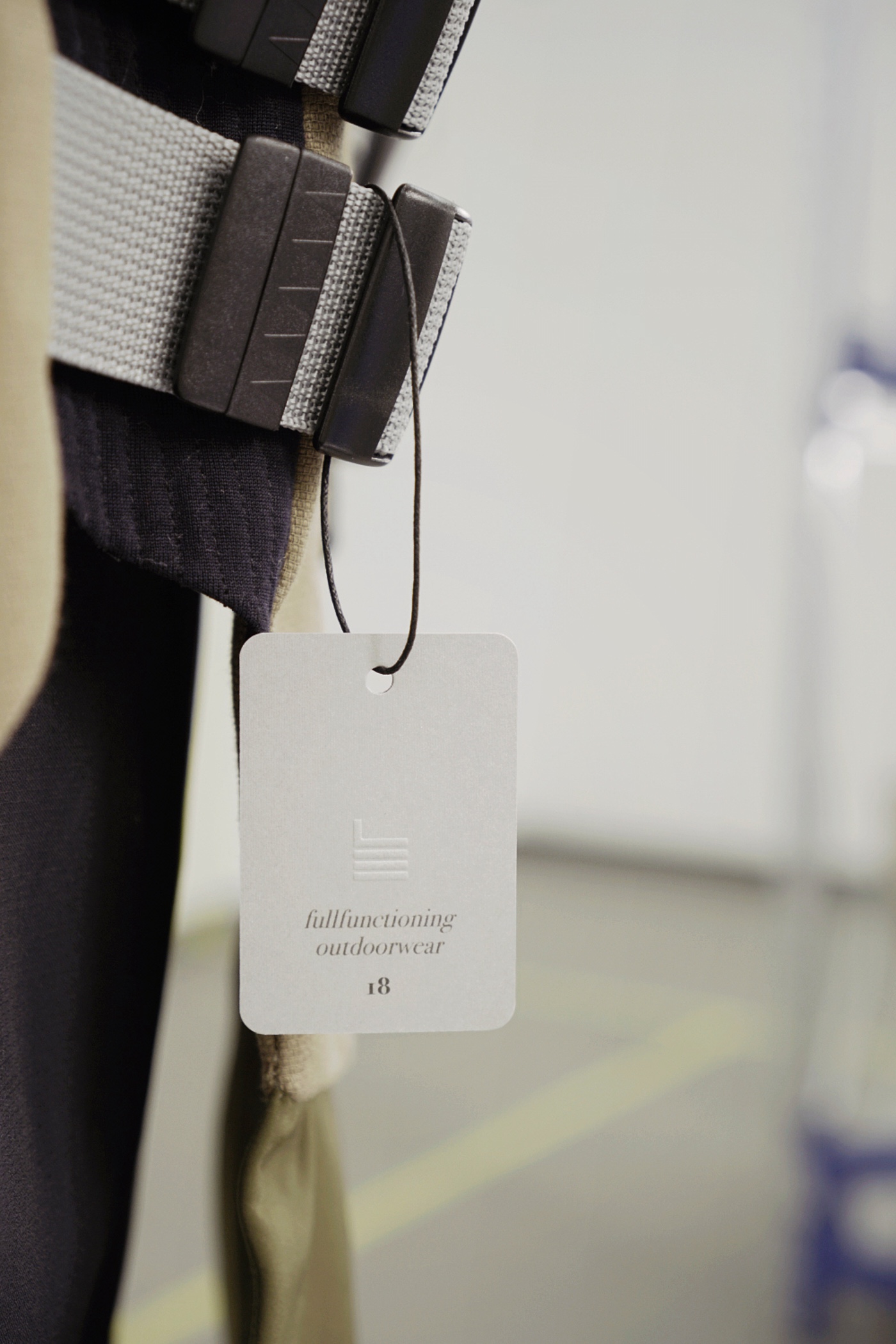
Functional textile, webbing, straps, hangers, felt, polyurethane, a hand-bound edition, cord, hand-embossed hangtags
Dimensions:
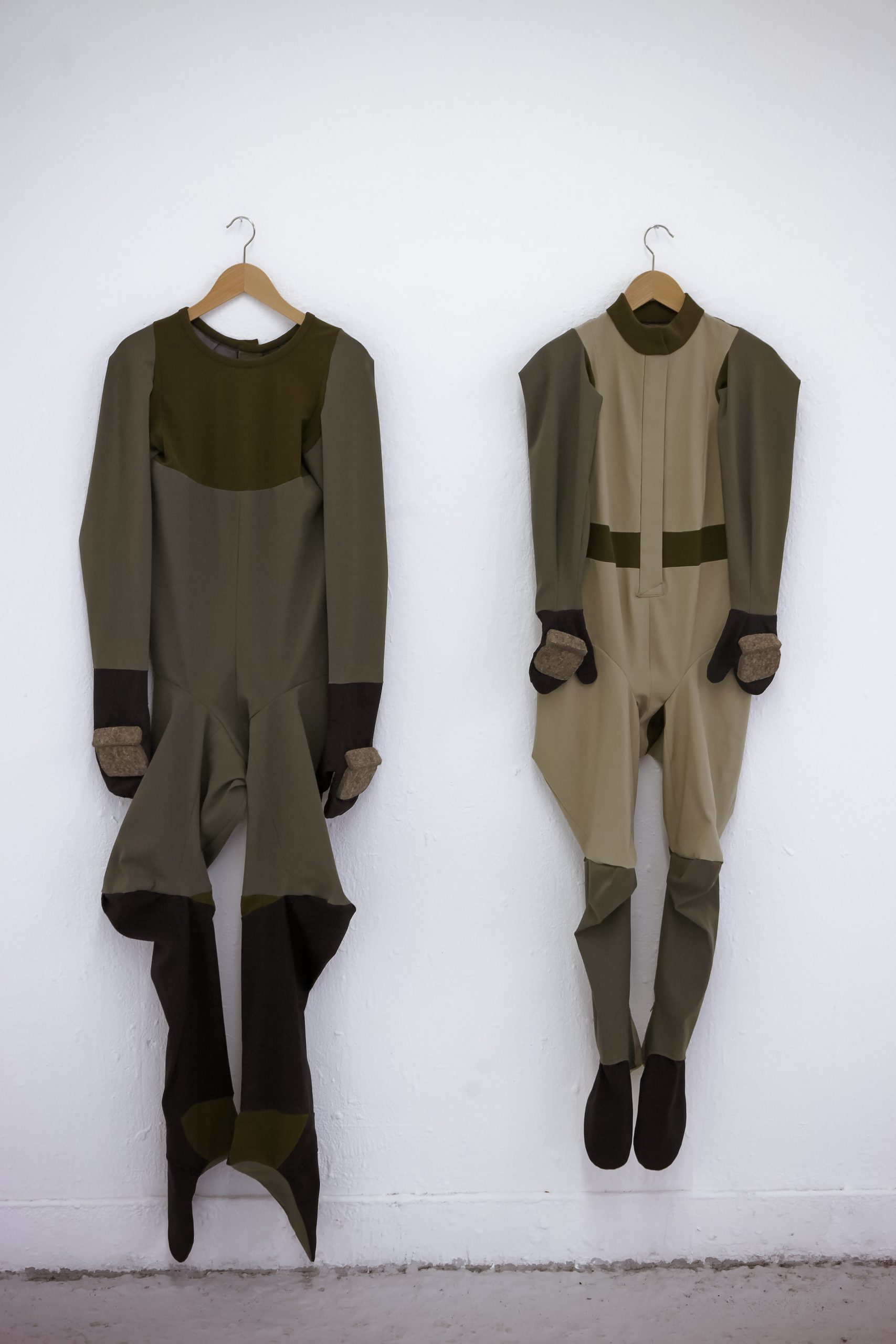
160 × 40 × 20 cm (Crawling Suit)
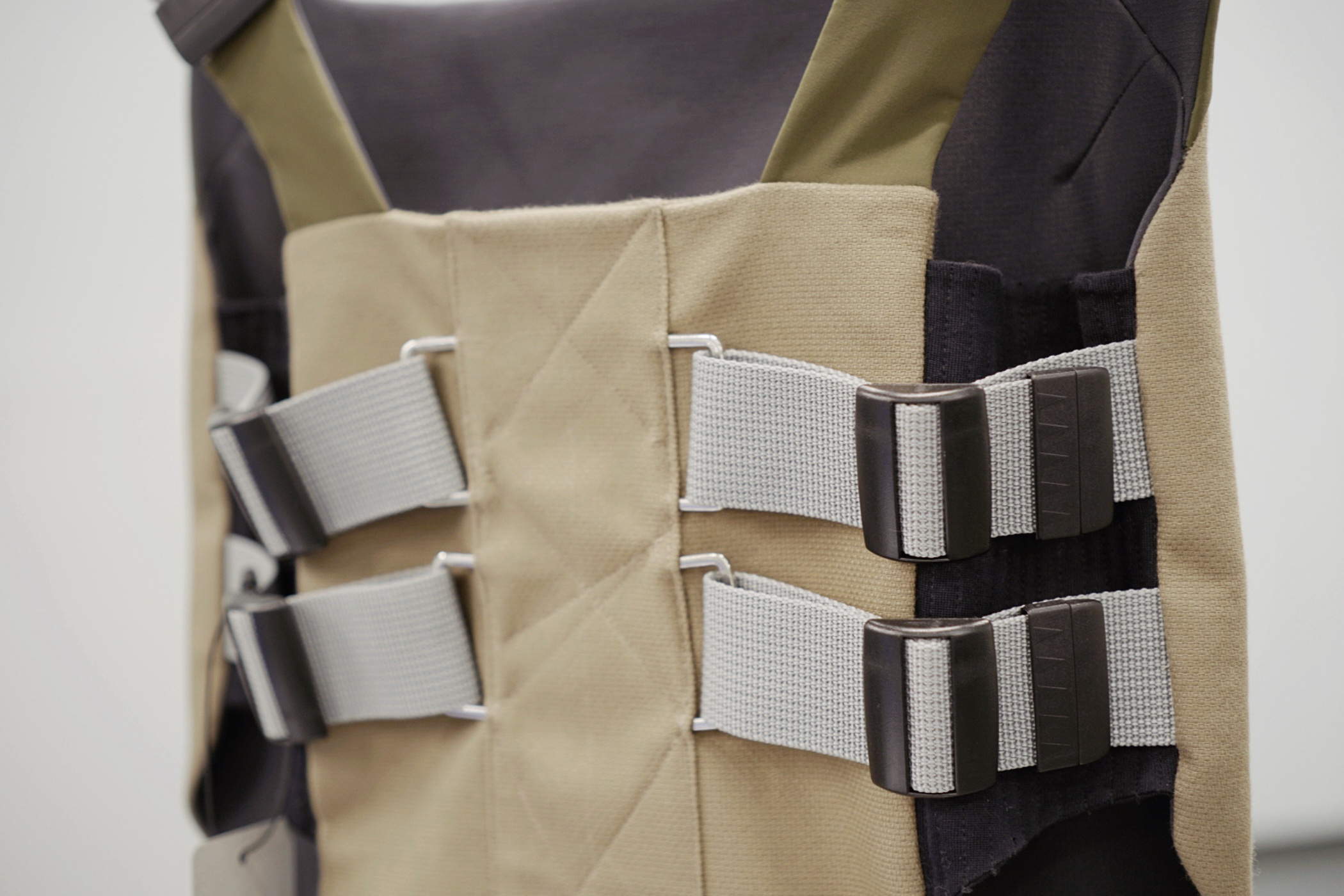
79 × 37 × 10 cm (Chest Pouch)
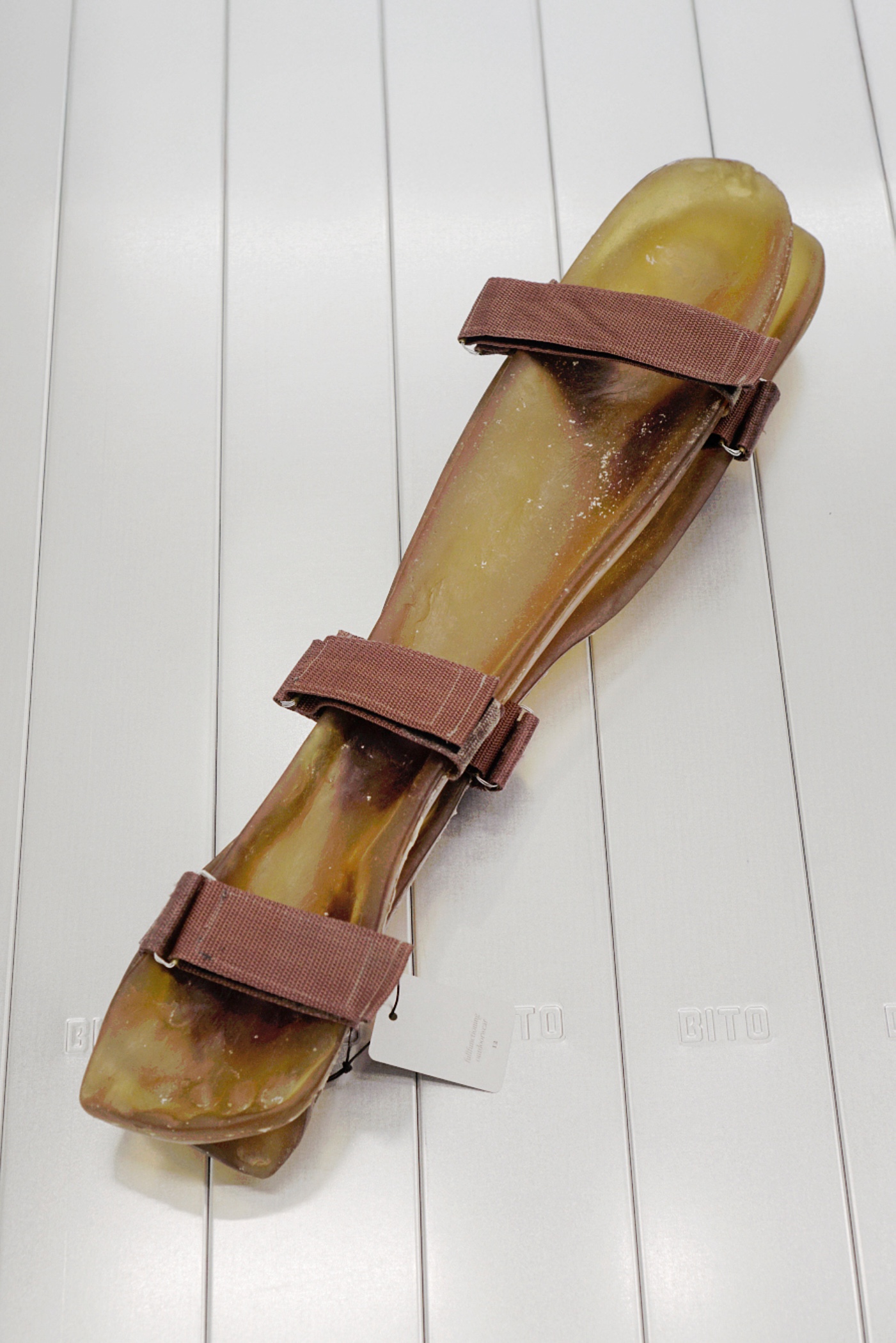
57 × 15 × 7 cm (Soles)
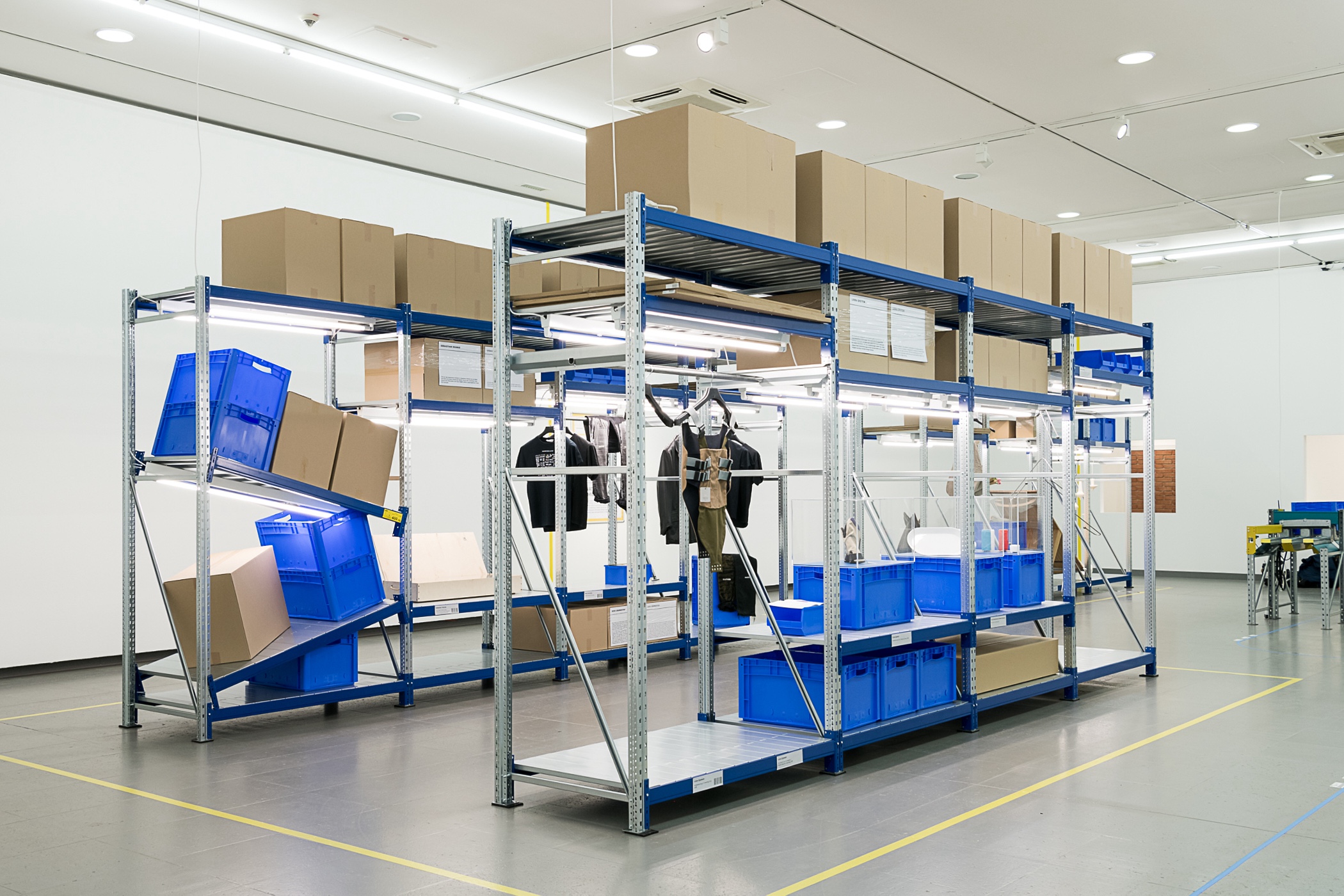
The installation brings together the works Krabbel-Anzüge (Crawling Suits, 2019), Brust-Sack (Chest Pouch, 2019), and Bet-Handschuhe (Prayer Mitten, 2020). Presented within the exhibition Subversives Design, the works operate at the intersection of design, performance, and sculptural practice, addressing the body as a site of regulation, adaptation, and constraint.
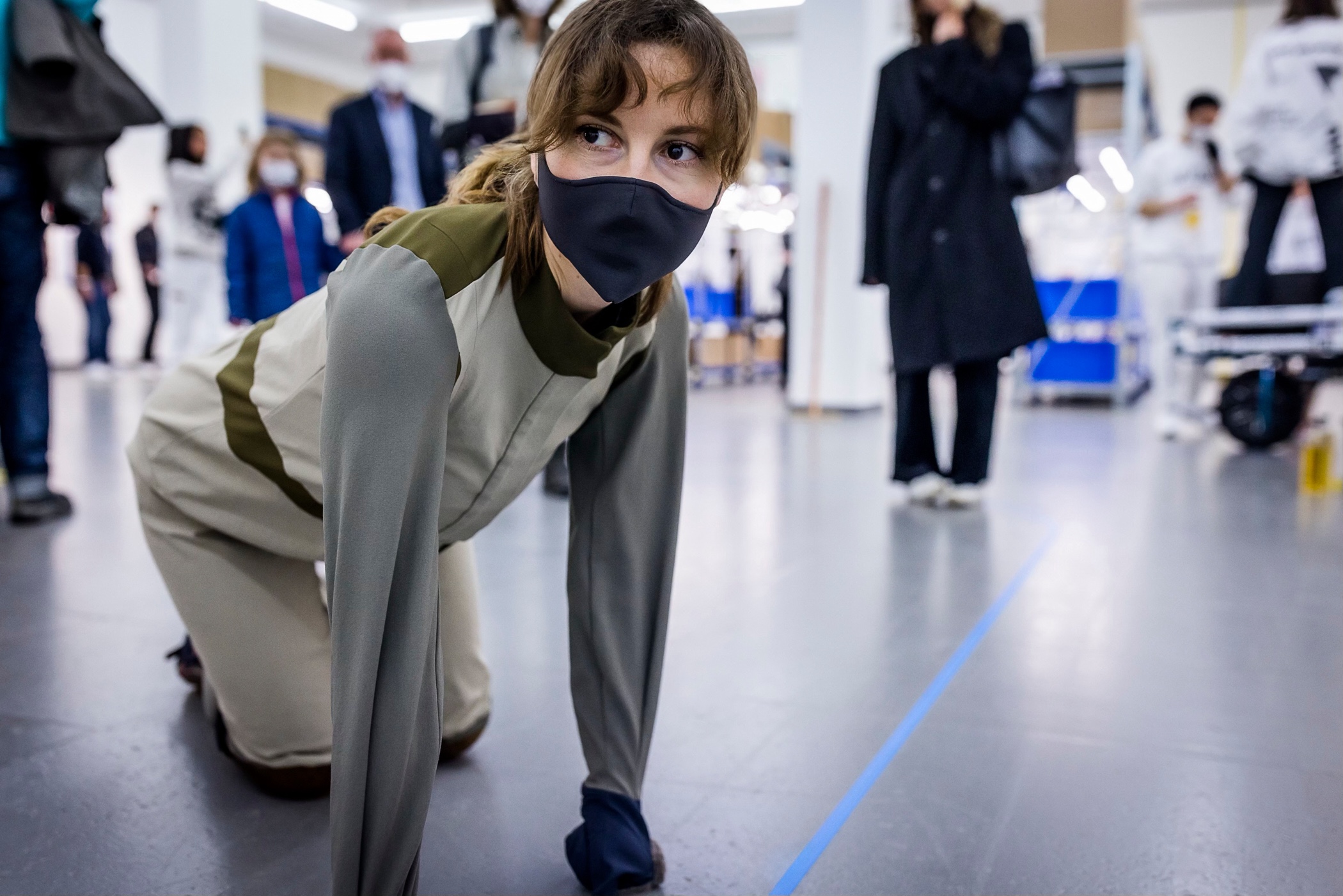
At the center of the installation is the interactive work Crawling Suits, developed in collaboration with artist Hagen Keller. The project consists of two custom-made full-body suits, conceived specifically for the bodies of the two artists. Produced from functional textiles by Schoeller, the suits combine durability, weather resistance, breathability, and thermal insulation.
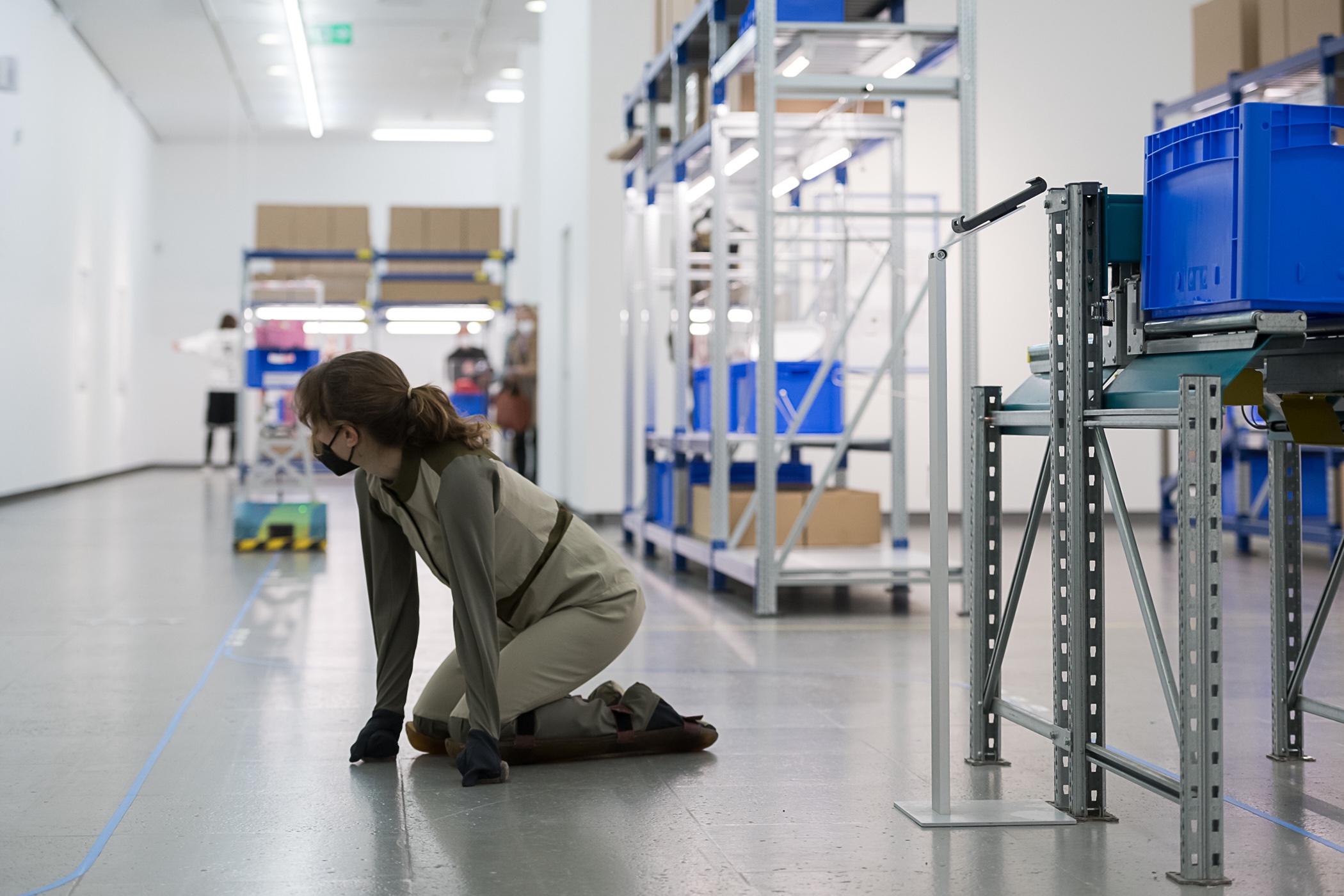
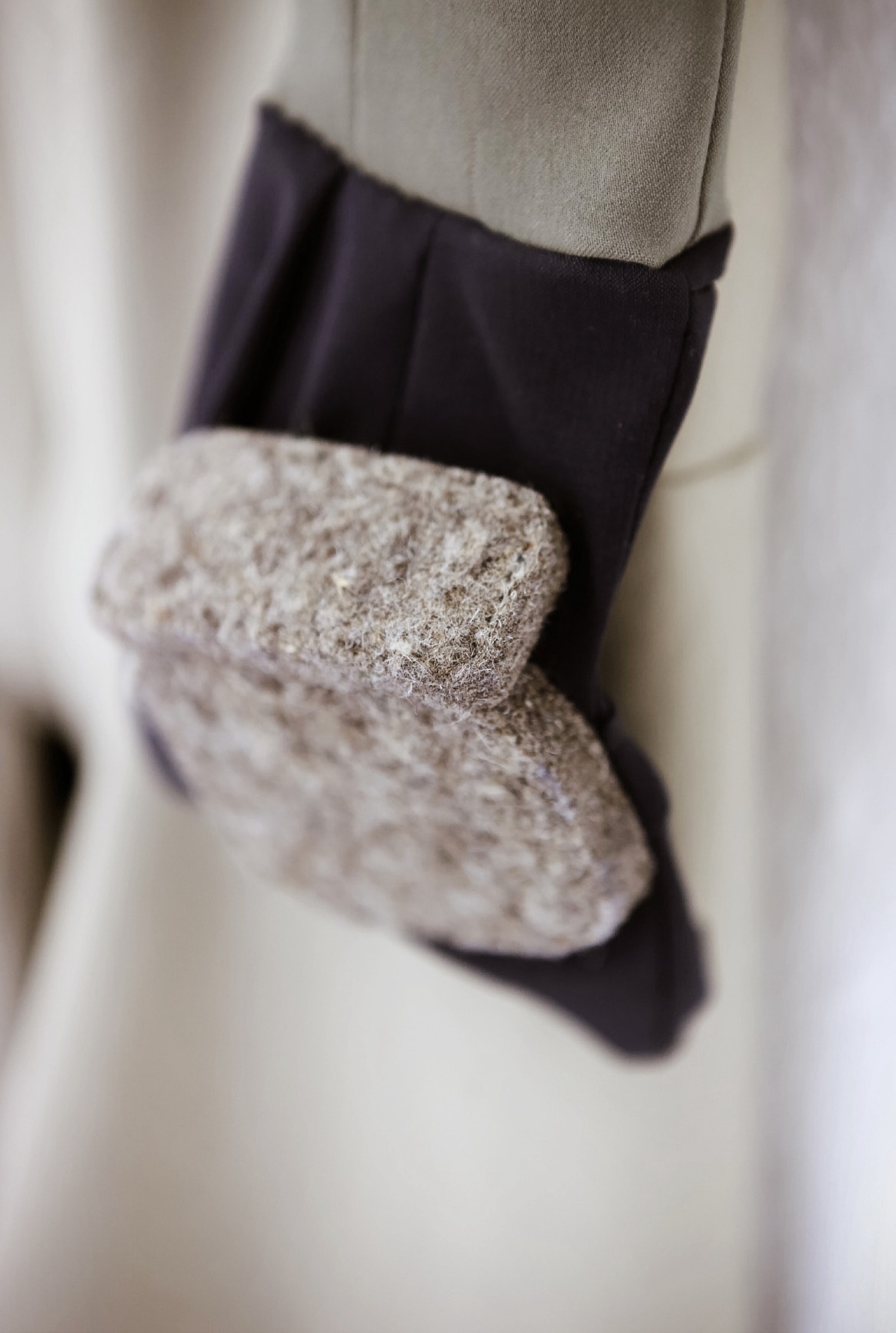
The garments are designed for a single, precise mode of movement: crawling. While certain elements restrict mobility, integrated stretch zones allow for controlled flexibility. The suits only assume their intended form when the body is positioned close to the ground. Mittens integrated into the design force the hands into a clenched position, supported by felt padding on the backs of the hands. Additional sole elements are attached after the suit is worn, extending from the knees to the instep and fixing the legs in a way that makes upright walking impossible.
Funktions-Bekleidung (Single-Purpose Gear) translates the logic of outdoor and protective gear into a performative apparatus. Comparable to how a snowsuit mediates contact with snow, the Crawling Suit enables prolonged proximity to the ground. Through material choice and construction, the suits allow the performers to remain in a crawling position for extended periods of time. The Prayer Mitten also appears in the video performances of logging bad deeds: after each confession, the artist puts it on as an added act of penance.
By exaggerating the logic of functional clothing, the work reveals its latent mechanisms of control and bodily regulation.
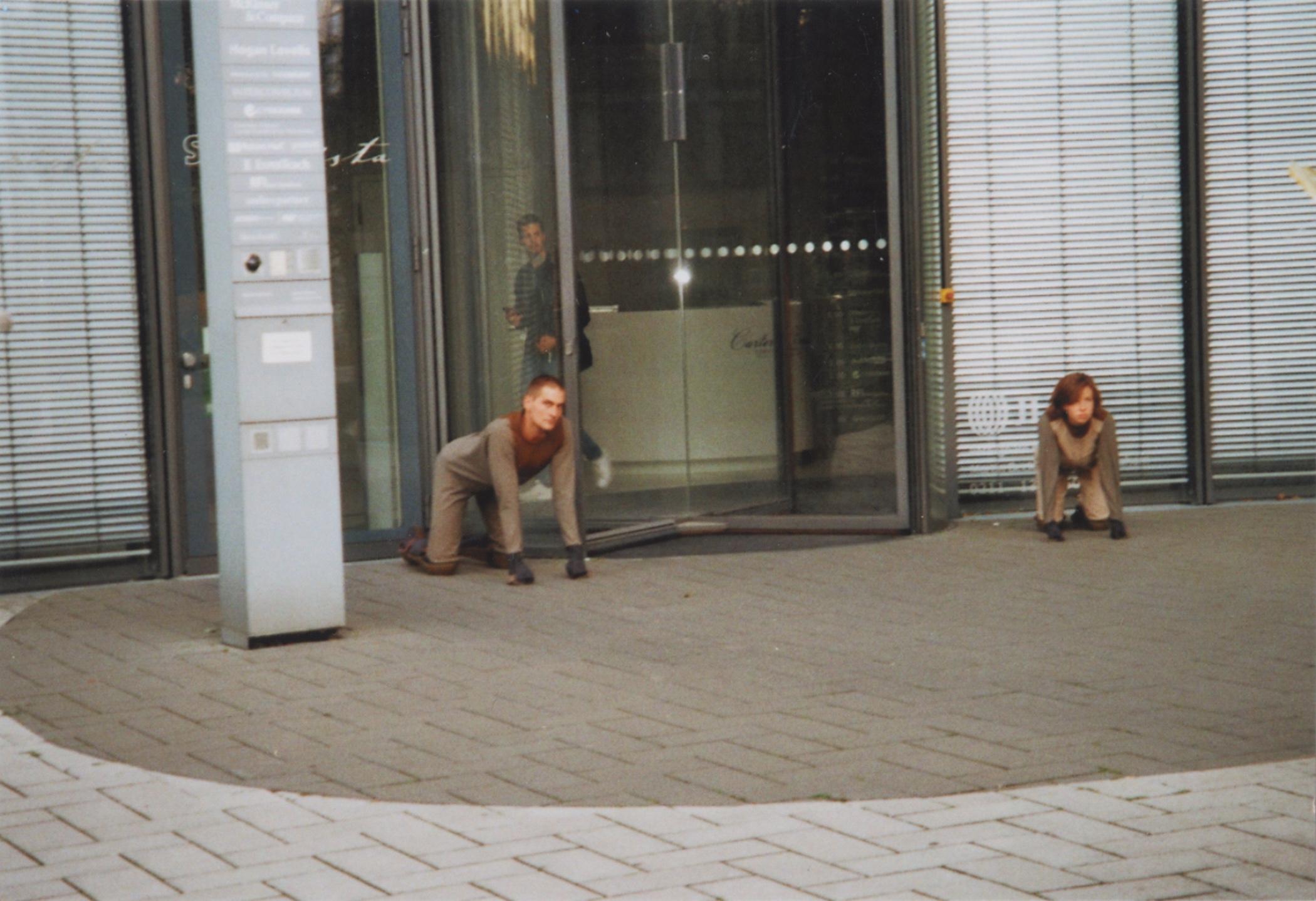
Kunstakademie Düsseldorf @ McKinsey & Company #7 (2019)
Installation and Performance with the work Krabbel-Anzüge (Crawling Suits)
Selected by Konrad Fischer, curated by Janine Blöß and Frauke Weyrather
Presented on the top floor of McKinsey & Company, the Crawling Suits entered a space built for corporate performance, strategic thinking, and optimized productivity. In this context, the suit acts like a functional garment that has been mis-cast: its soles extend from the knees to the instep, making upright walking impossible and anchoring the body in a crawling posture.
The suit is engineered for crawling. It is wind- and waterproof, dirt-repellent and weather-resistant, breathable and insulating. Stretch inserts allow flexibility in specific positions, while integrated gloves keep the hands locked into a fist. The soles extend from the knees to the instep, preventing upright walking and forcing a return to the ground.
The sacrifice of ordinary movement is compensated by a shift in perception: lowered eye level, slowed rhythm, heightened tactility. Crawling becomes a prolonged state—mechanical and animal-like, yet strangely intimate. The work uses the language of functional clothing to reveal its own contradiction: optimization as a form of constraint.
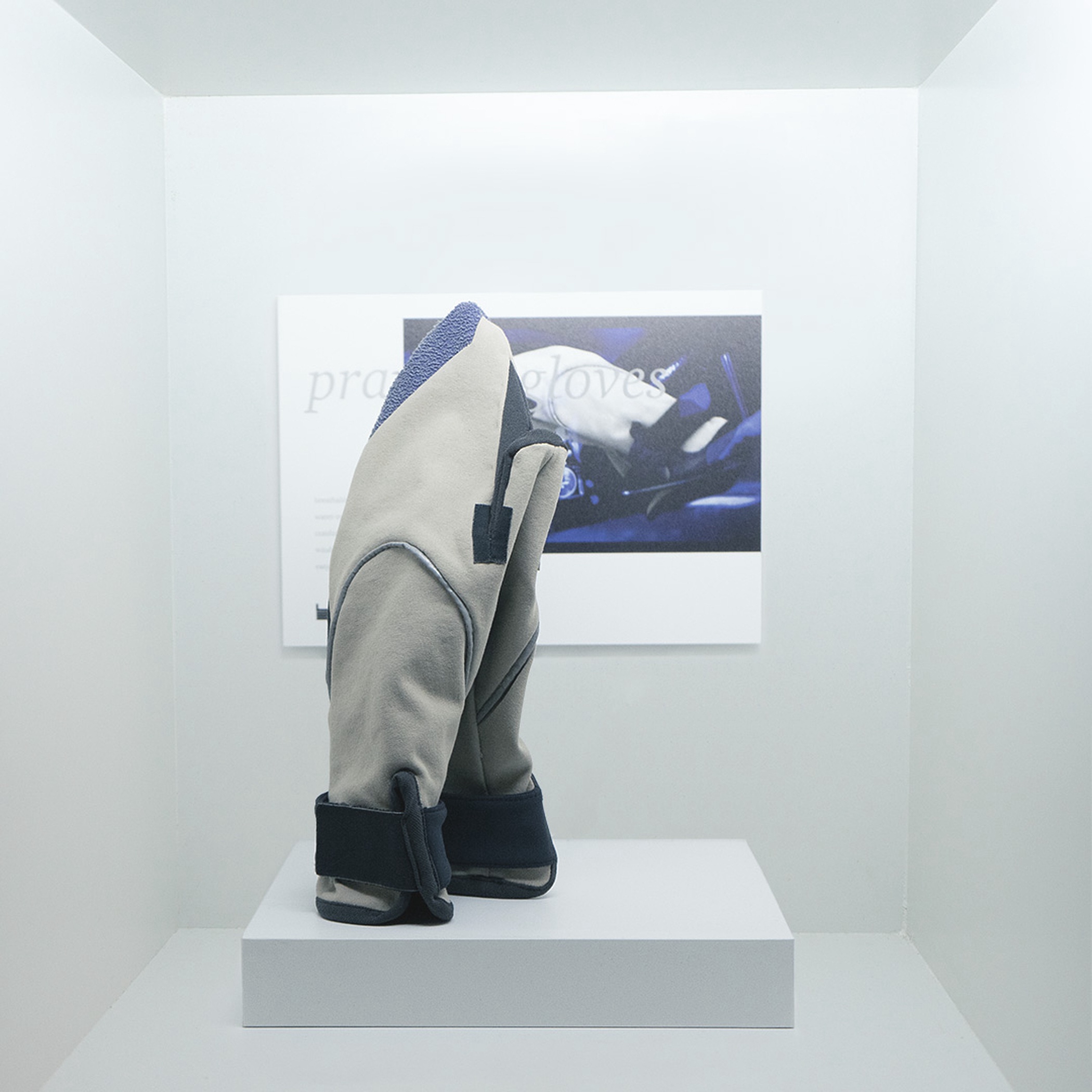
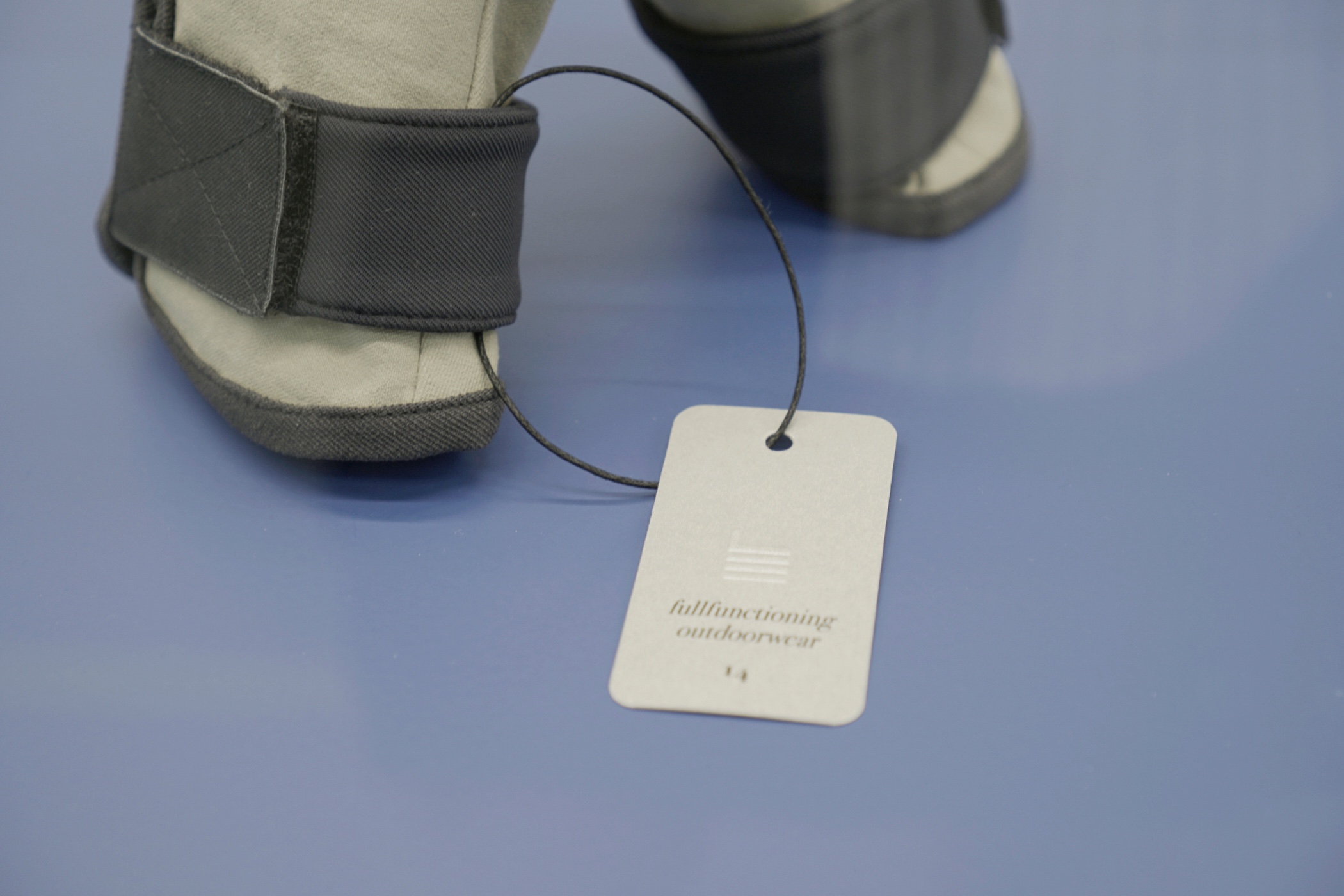
Bet-Handschuh (Prayer Mitten) (2020)
Materials:
High-performance functional textiles and technical appliqués
Dimensions:
26 × 12 × 3 cm
The first image features a collaboration with the artist Sebastian Jung as part of his project Museumexpress, 2022.This project developed a special presentation format during the Covid-19 pandemic that allowed viewers to experience artworks outside the museum—both in public spaces and privately at home.
Bet-Handschuh (Prayer Mitten) is a functional unit for comfortable praying – designed for “prayer-to-go.” It enables inner impulses to be directed at any deity or any object, anytime and anywhere: centering, focusing, meditating. Or doing penance.
The hand is read not only as a body part, but as an interface: the mitten orders the gesture, standardizes the posture, and makes spirituality portable. Sporty-futuristic design, guaranteed institution- and religion-independent. Available in every size.
- Easy to care for
- 80% windproof
- Breathable
- Water and dirt repellent
- Cut-resistant on the fingertips
- Practical handling thanks to the Velcro fastener
Image 1 Performance in the Crawling Suit
for the exhibition Subversives Design, 2022
Photo by Anne Orthen
Image 2 Installation view of Single-Purpose Gear
for the exhibition Subversives Design, 2022
Image 3 Performance in the Crawling Suit
for the exhibition Subversives Design, 2022
Photo by Katja Illner
Image 4,6 Installation view Crawling Suits, 2020
Photos by Stephan Eichler
Image 5,7,8 Detail views Chest Pouch
and Crawling Suits, 2020
Photos by Liora Epstein
Image 9 Performance in the Crawling Suit for the exhibition Kunstakademie Düsseldorf @ McKinsey & Company #7, 2019
Photo by Andrea Marcellier
Image 10 Installation view Prayer Mitten, 2022
Photo by Sebastian Jung (© Museumexpress)
Image 11 Installation view Prayer Mitten
for the exhibition Subversives Design, 2022
Photo by Liora Epstein
© VG Bild-Kunst, Bonn