foraging (2017)
Installation and performance in the exhibition Vertrauen (Trust), KIT – Kunst im Tunnel, Düsseldorf, June 24 – September 24, 2017 Curated by Prof. Tomma Abts Film: amber (2017), in collaboration with Nora Zielinski
Medium: functional fabrics, technical appliqués, straps, ribbons, wood, plants, 6 cultivation sets, 6 planting sets Dimensions variable
Dimensions variable
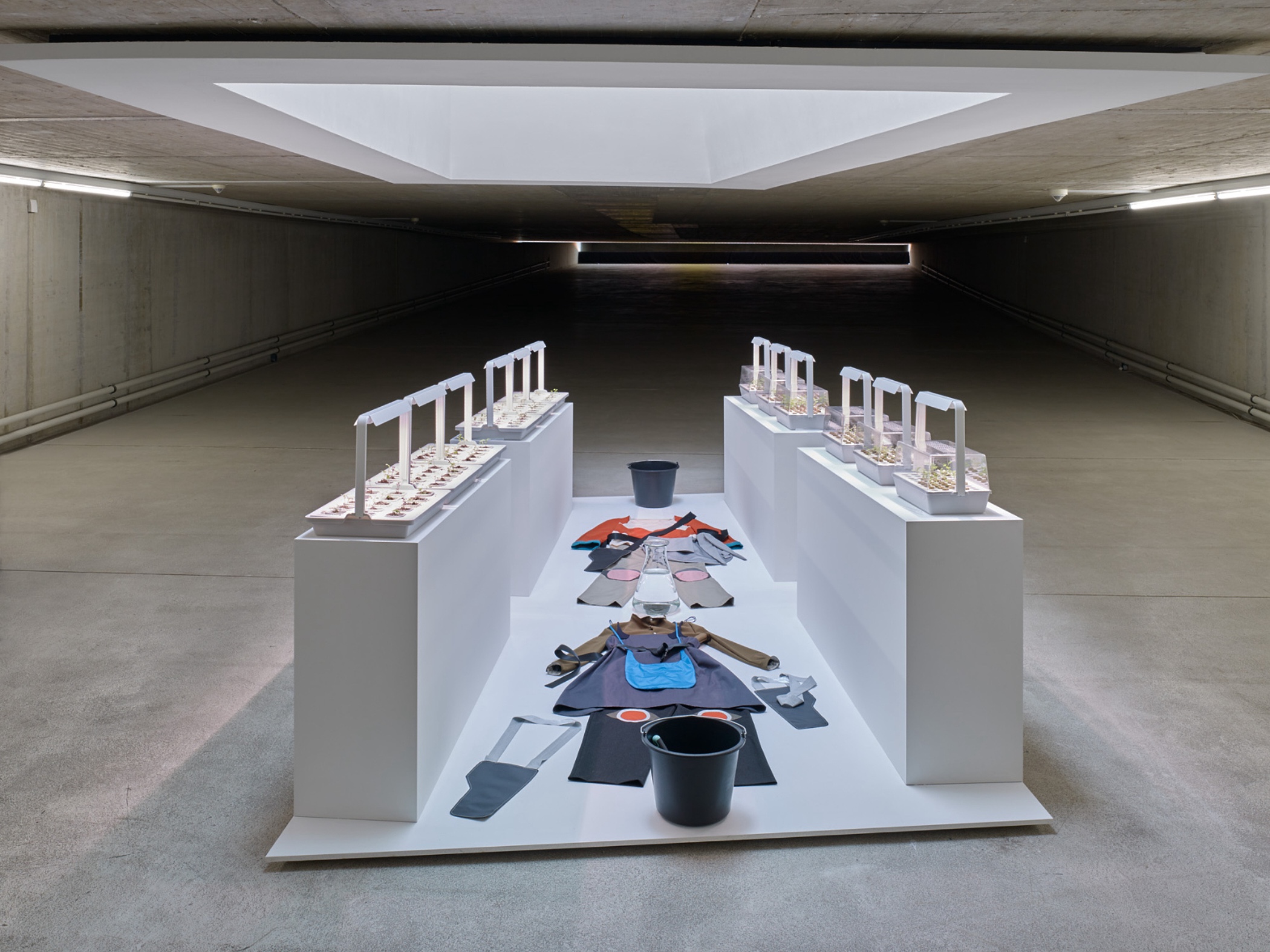
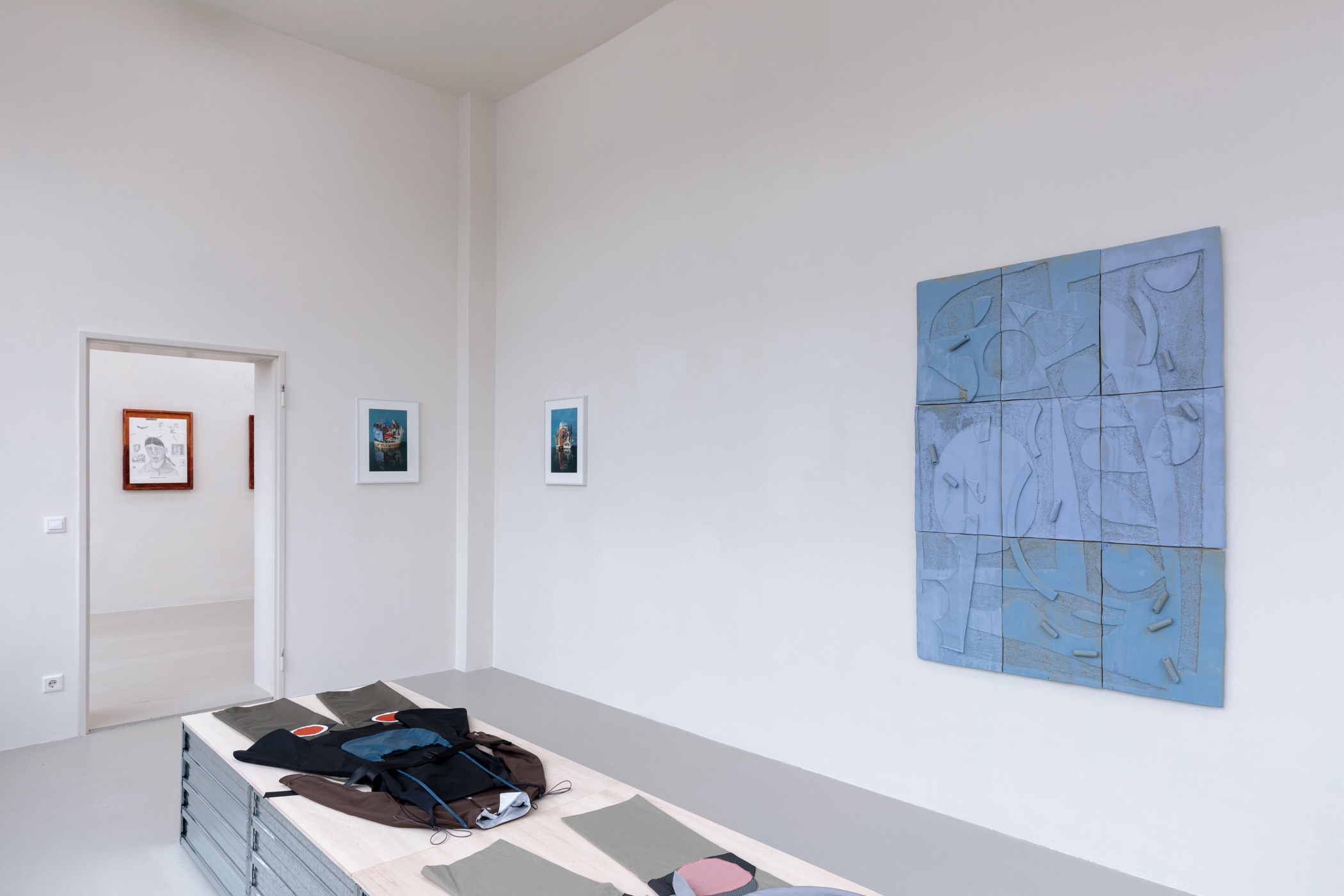
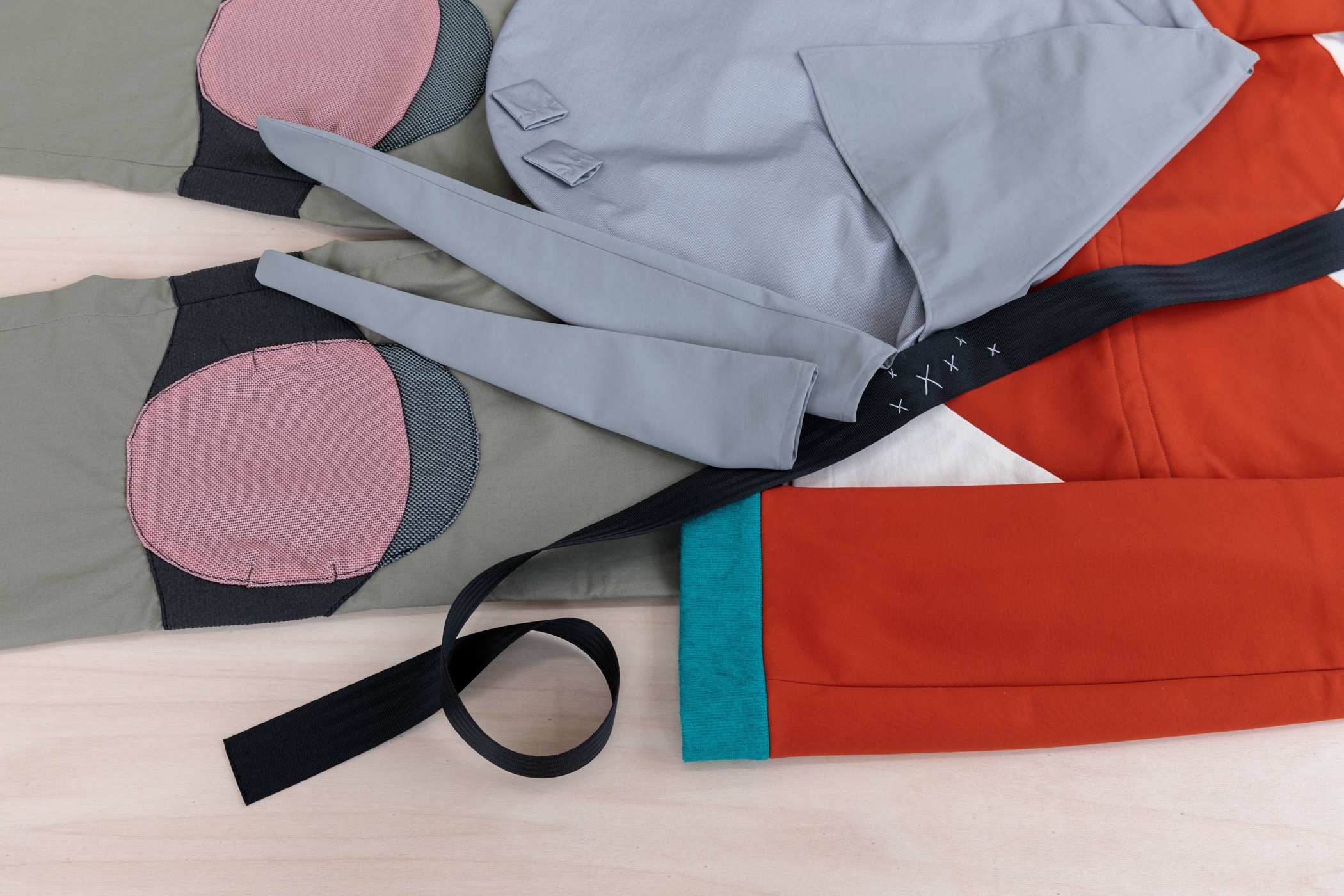
foraging presents two functional outfits for gardeners — one for men, one for women. Liora Epstein designed the outfits, drafted the patterns, and sewed them herself from high-tech fabrics by Schoeller and Extremtextil. The garments are robust and weatherproof, built for comfort and protection, with practical details such as adjustable drawstrings and multiple tool pockets.
The installation stood in the entrance area of the tunnel at KIT. The outfits rested on a pedestal, flanked by two cubes holding hydroponic cultivation and planting sets and aligned with the tunnel’s slope. The arrangement worked like a stage on which clothing, art, and technologized plant cultivation converged.
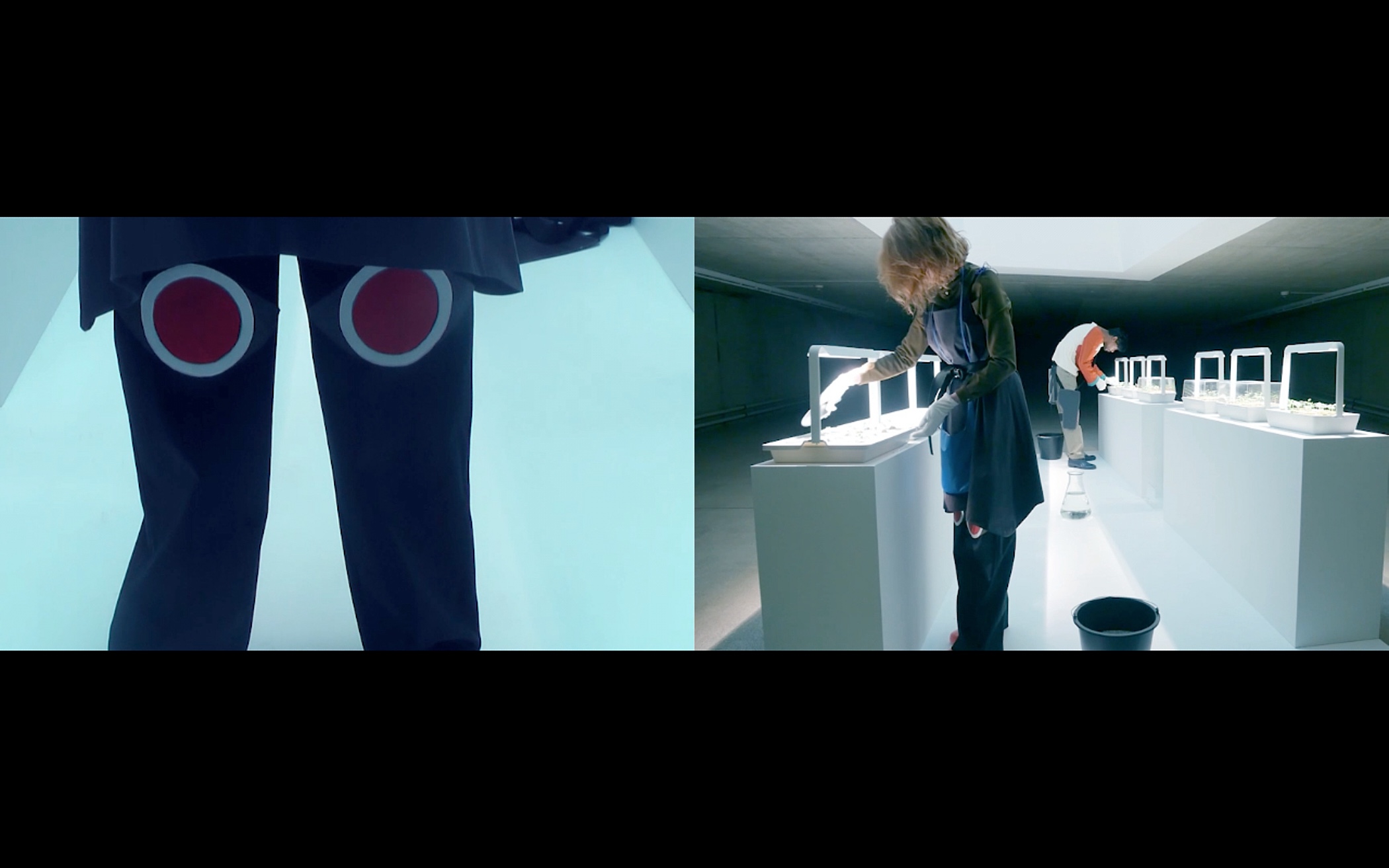
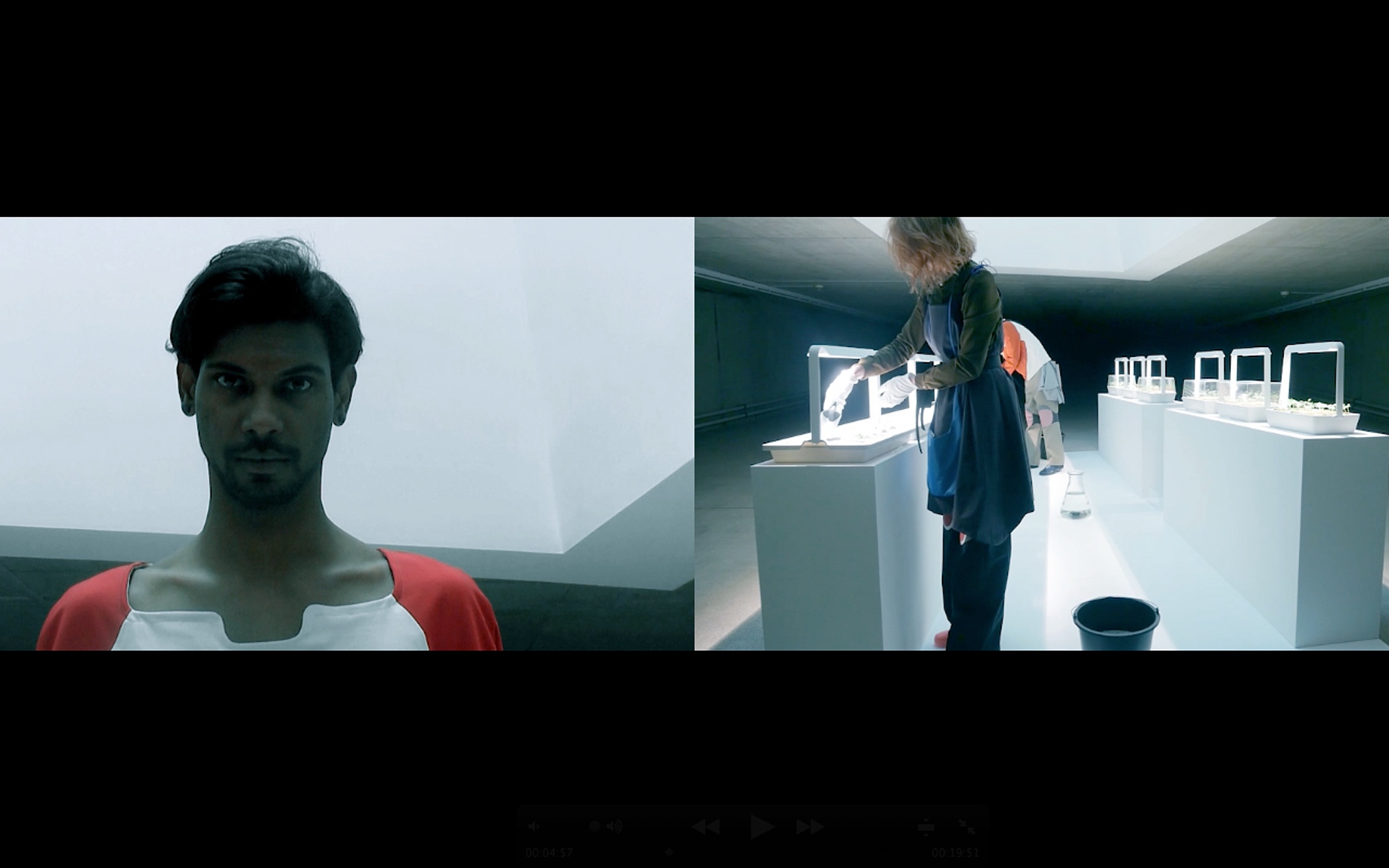
At the opening on June 23, 2017, two performers repotted plants. The scene stays familiar and turns uncanny at the same time: the repotting seems to repeat itself, as if it were happening in a dream rather than in the exhibition. What is shown is not the bond between people and plants itself, but a picture of it, caught in a loop. The performance entered the science fiction film amber, made in collaboration with the artist Nora Zielinski, which then became part of the exhibition. Over the course of the show, visitors could follow the plants’ growth and, at the end, eat the harvested herbs and salads.
amber (2017)
Medium: film Duration: 19:52 min Format: 1920 × 1080 px
re-foraging (2024)
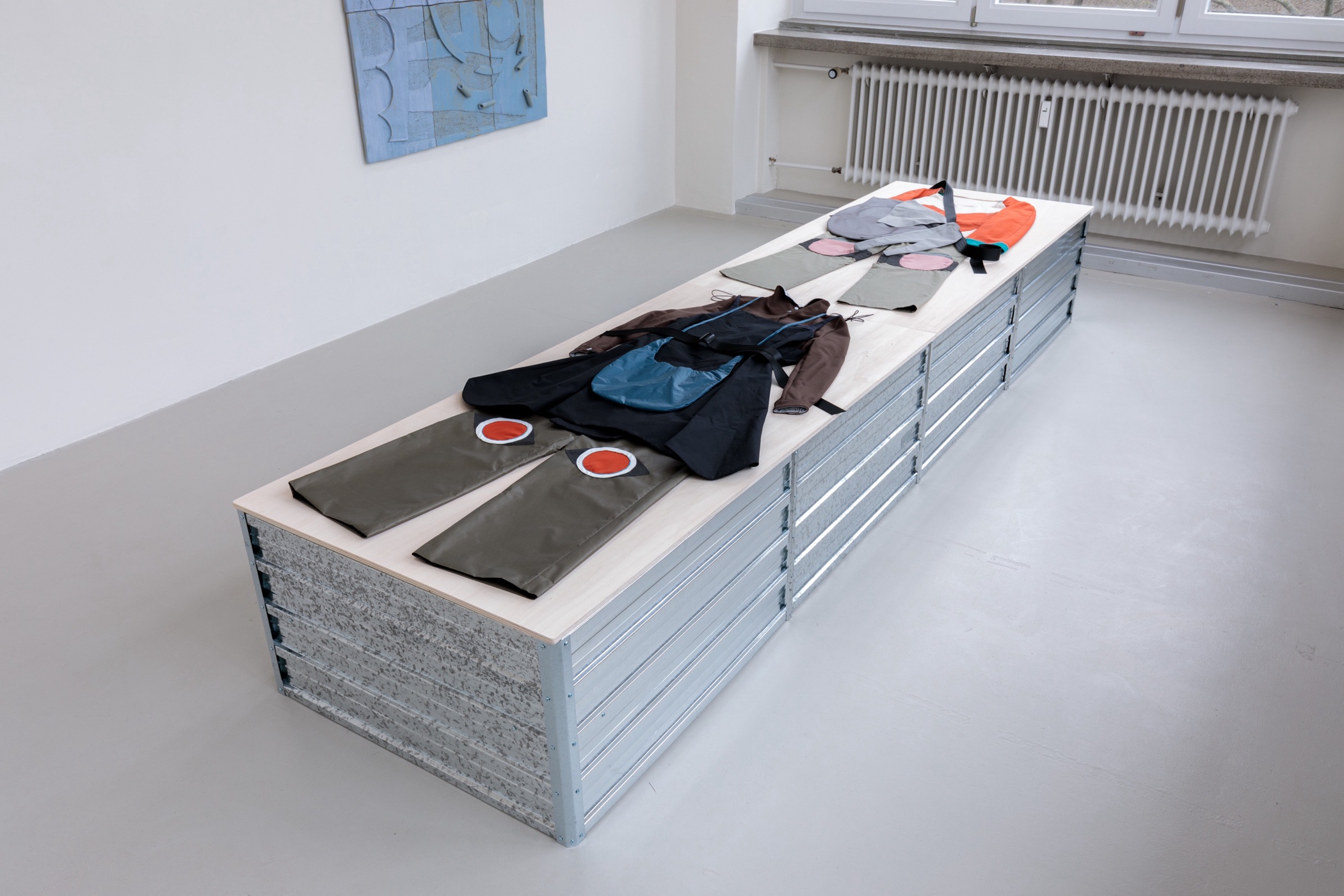
reworked version of foraging (2017) Installation in the exhibition Asking for a Friend, Kunstverein Nürnberg – Albrecht Dürer Gesellschaft, February 24 – April 5, 2024 Curated by Achinoam Alon
Medium: functional textiles, technical appliqués, straps, ribbons, raised beds, wood
Dimensions variable
For Asking for a Friend, Liora Epstein reworked foraging. The hydroponic cubes of the 2017 version gave way to raised beds — cultivation moved from water back into soil.
The exhibition brought together predominantly Jewish artists. Biographical material meets the larger narratives of German and Israeli history; the works address architectural and artistic forms of repression and push back against antisemitic distortion. The title names a habit of speech: Asking for a Friend is what people say in order not to have to say I. The question is real, the friend is not, and the phrase makes room for a shame it never names. In the exhibition, this indirection becomes a method — a personal biography can be spoken at one remove and set in relation to histories larger than a single life.
In this company, foraging was read differently than it had been before. In Germany, in the spring of 2024, a work about gardening, self-sufficiency, and technical clothing arrived as Jewish art. Nothing in the piece had changed; its context had, and with it the reading. Its themes now met a diasporic history: Hakhshara, the agricultural and vocational training that prepared young Jews in Germany from the 1920s onward for emigration to Palestine.
Epstein has kept this shift as an open question rather than settling it. What makes a work Jewish — the biography of the person who made it, the room it hangs in, the moment it is shown in? And why should a piece about cultivation carry a Jewish theme in 2024 when it did not carry one in 2017?
The question did not stay theoretical. Instead of answering it in words, Epstein followed it into material and began a work that turns into earth: sandbox pilgrimage, a DIY kit.
Image 1 Installation view foraging
as part of the exhibition Vertrauen
Photo by Ivo Faber
Image 2-3 Video stills amber
as an integrated part of the work foraging
Screenshots by Liora Epstein /
Video editing by Nora Zielinski
© VG Bild-Kunst, Bonn
Image 4-6 Installation view re-foraging
as part of the exhibition Asking for a Friend
Photos by Lukas Pürmayr (© Lukas Pürmayr)