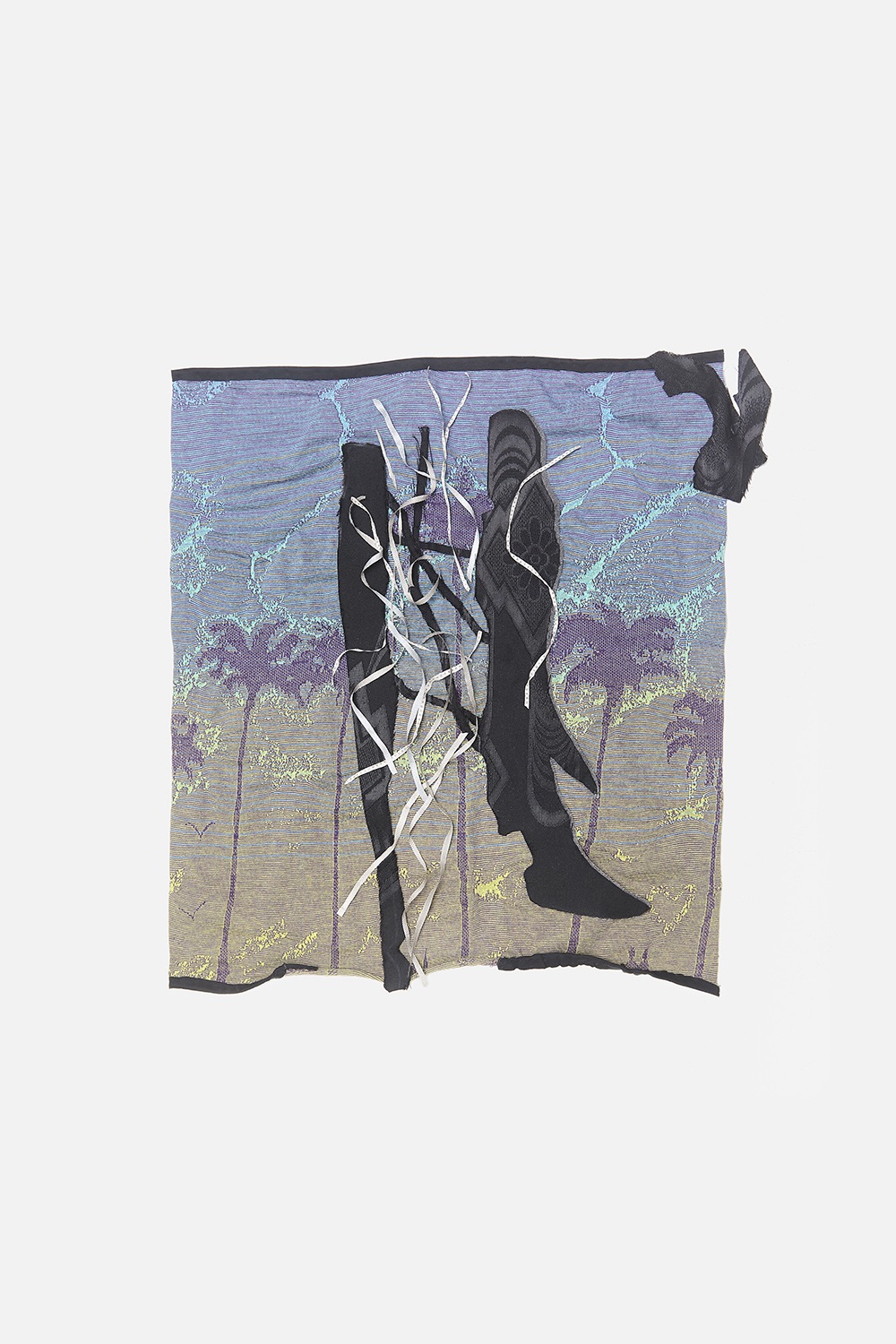
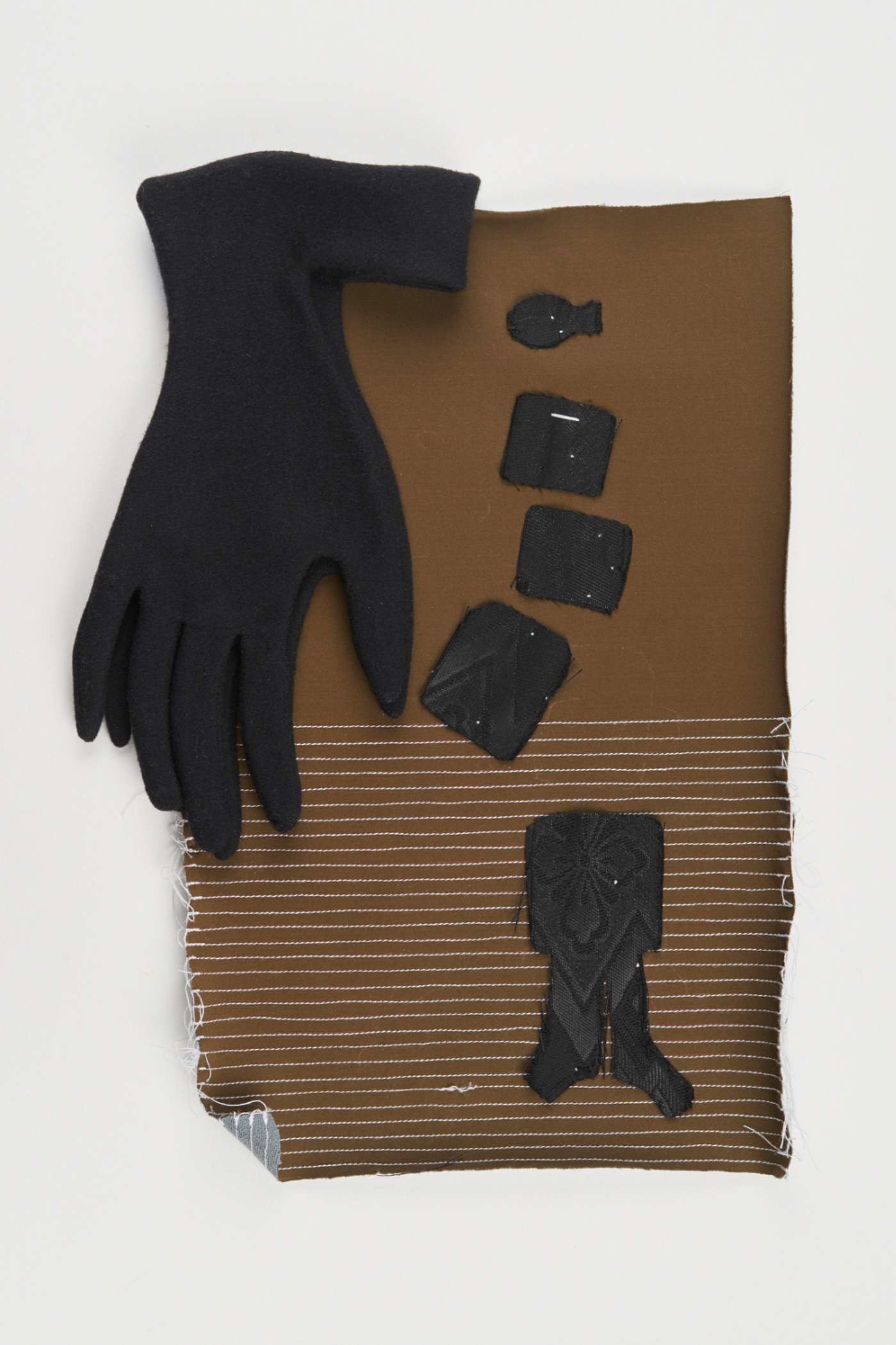
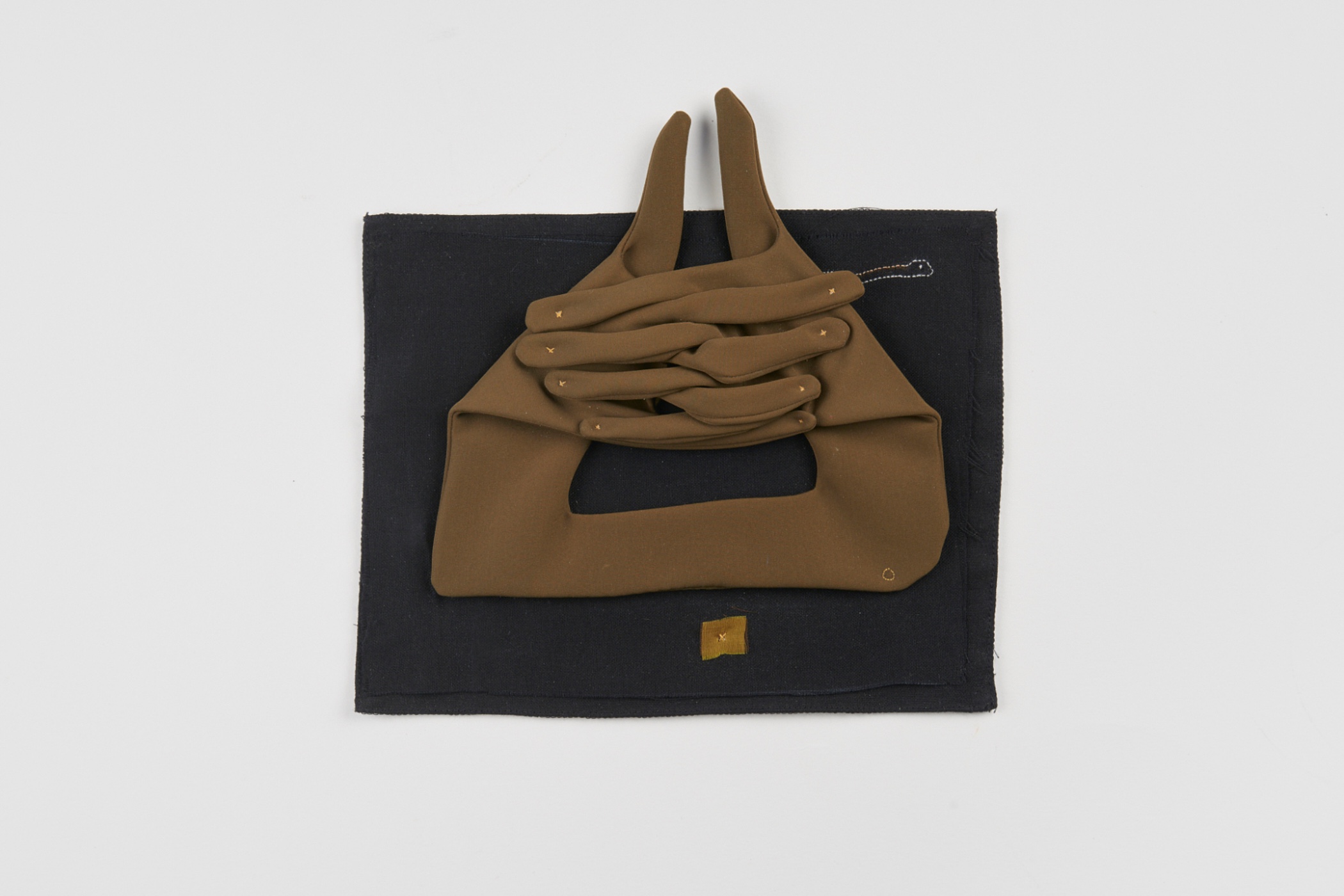
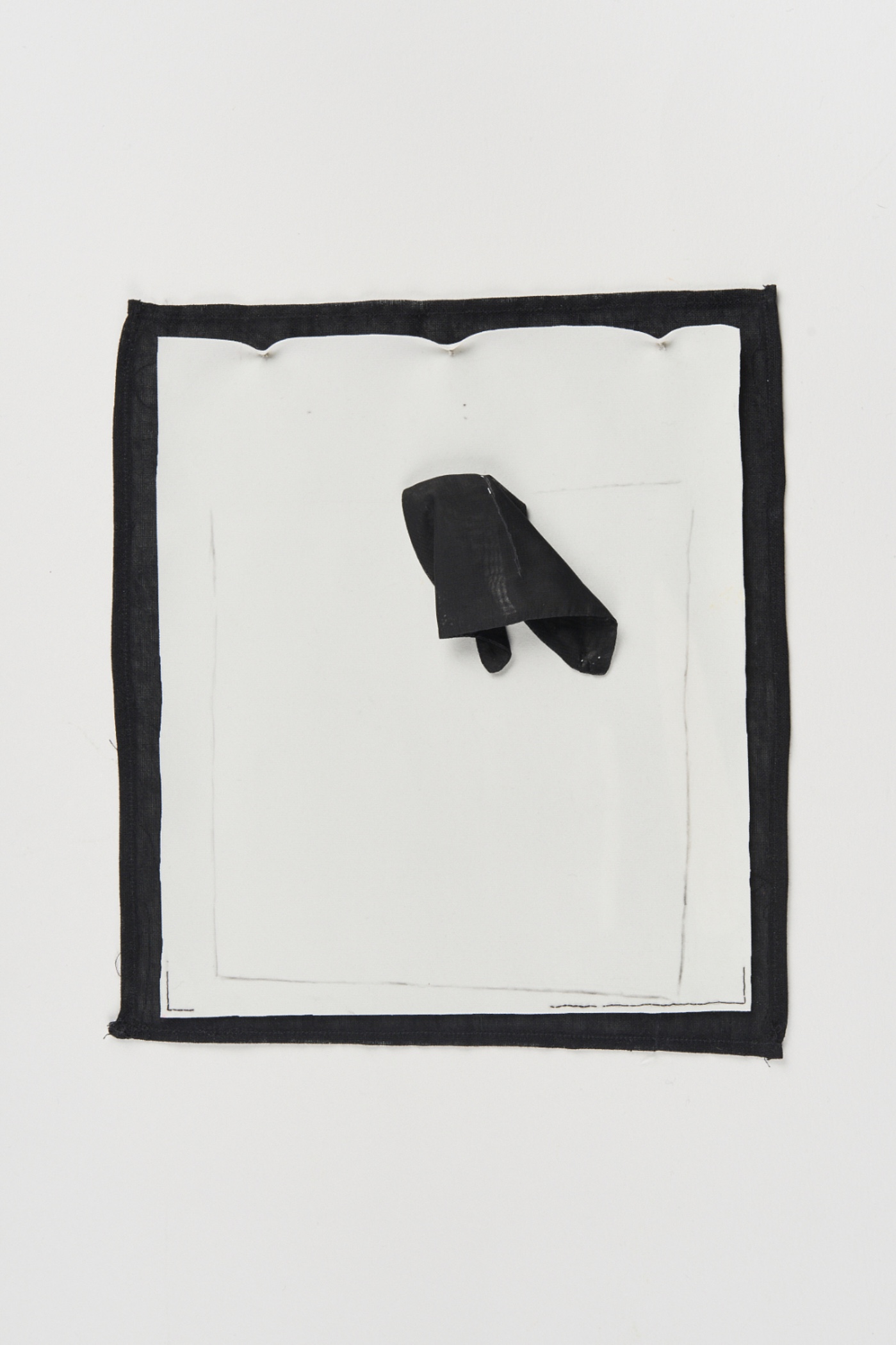
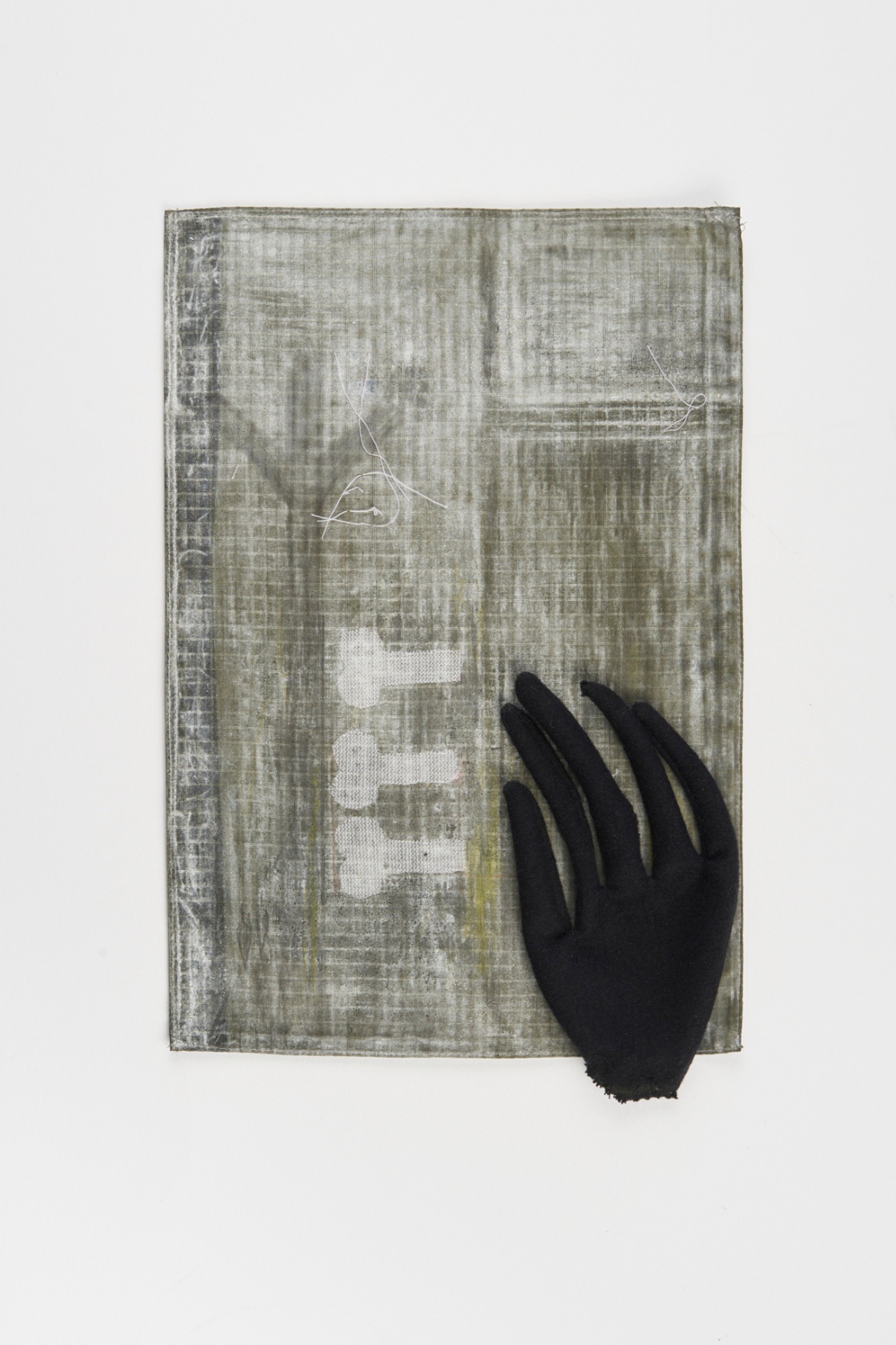
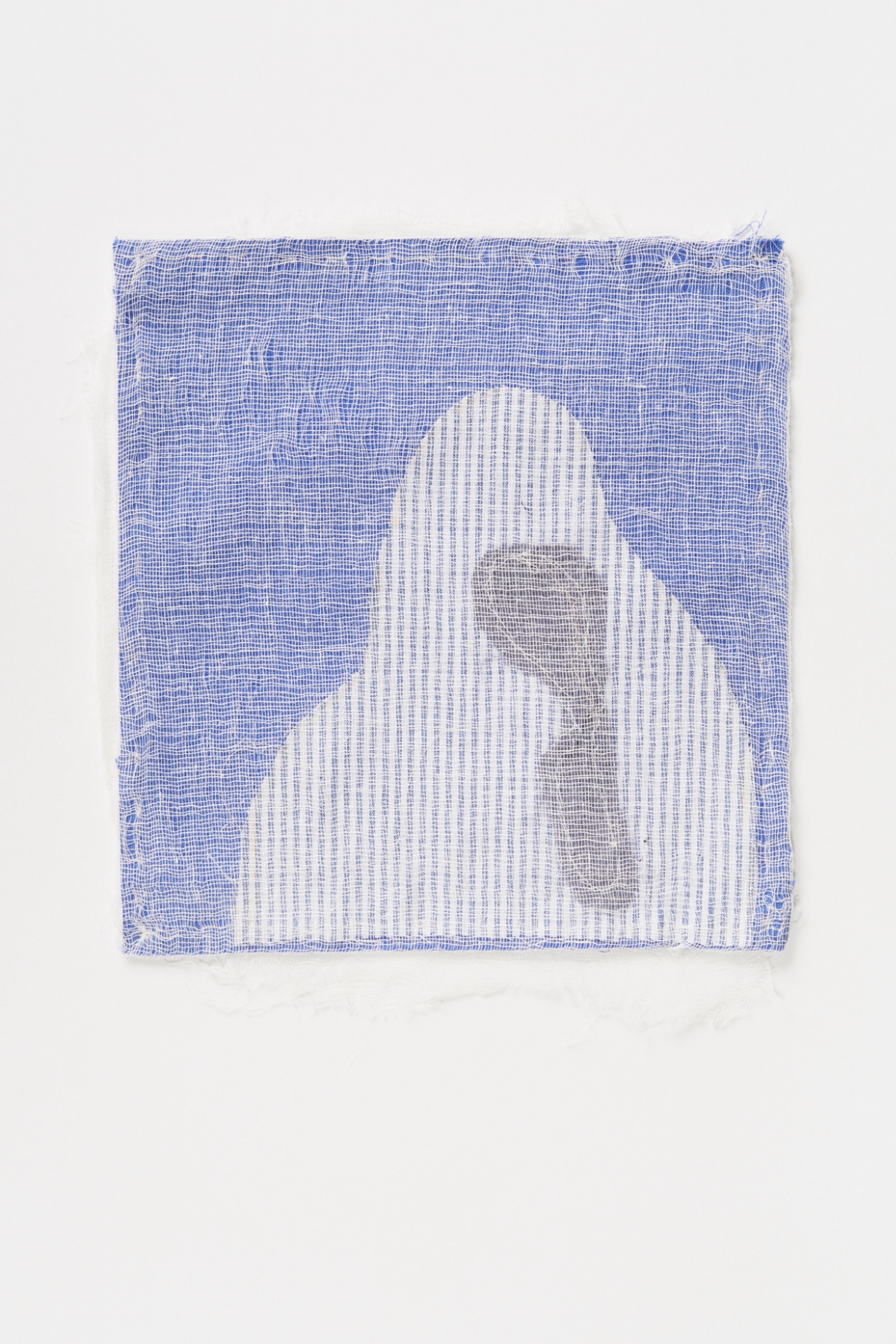
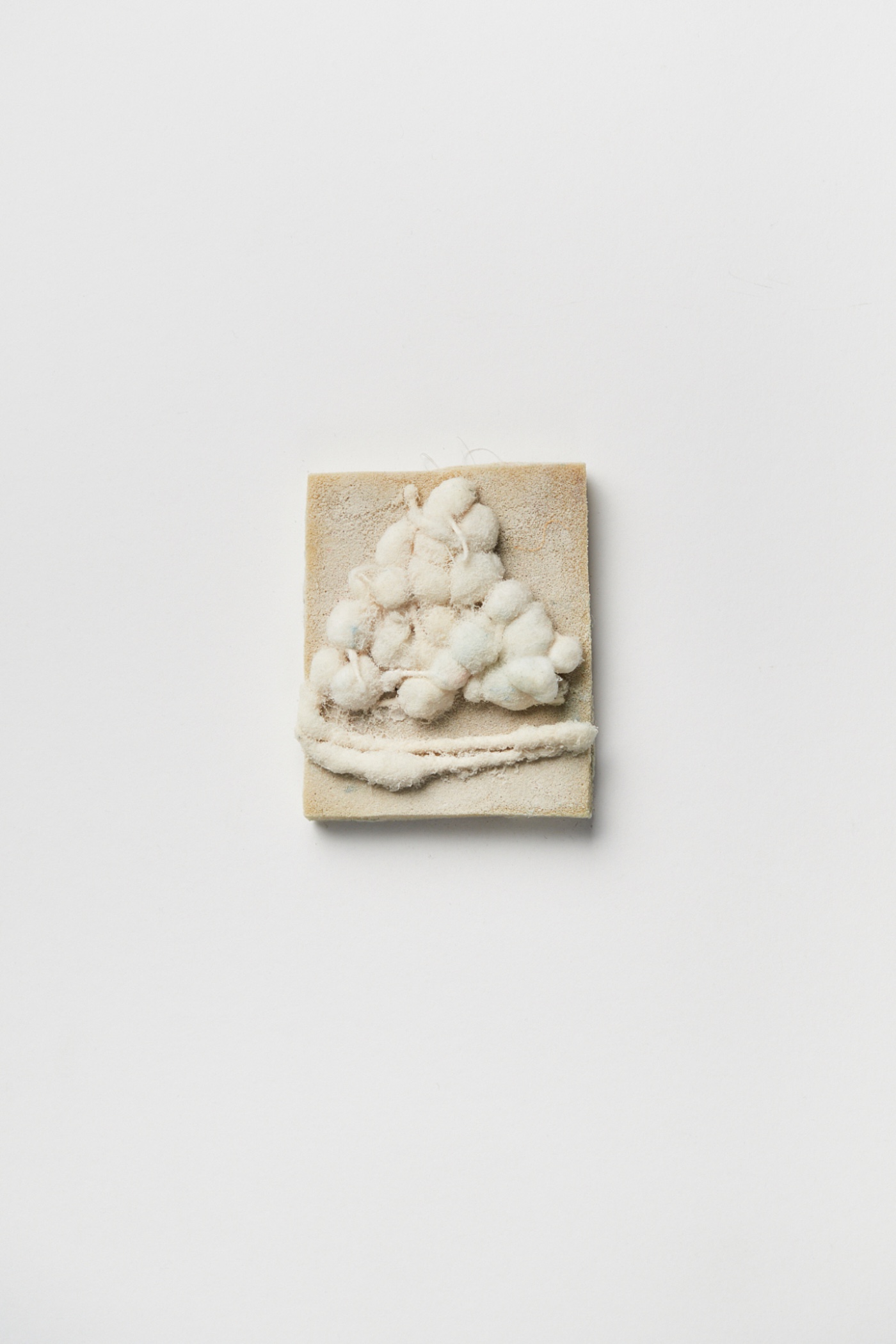
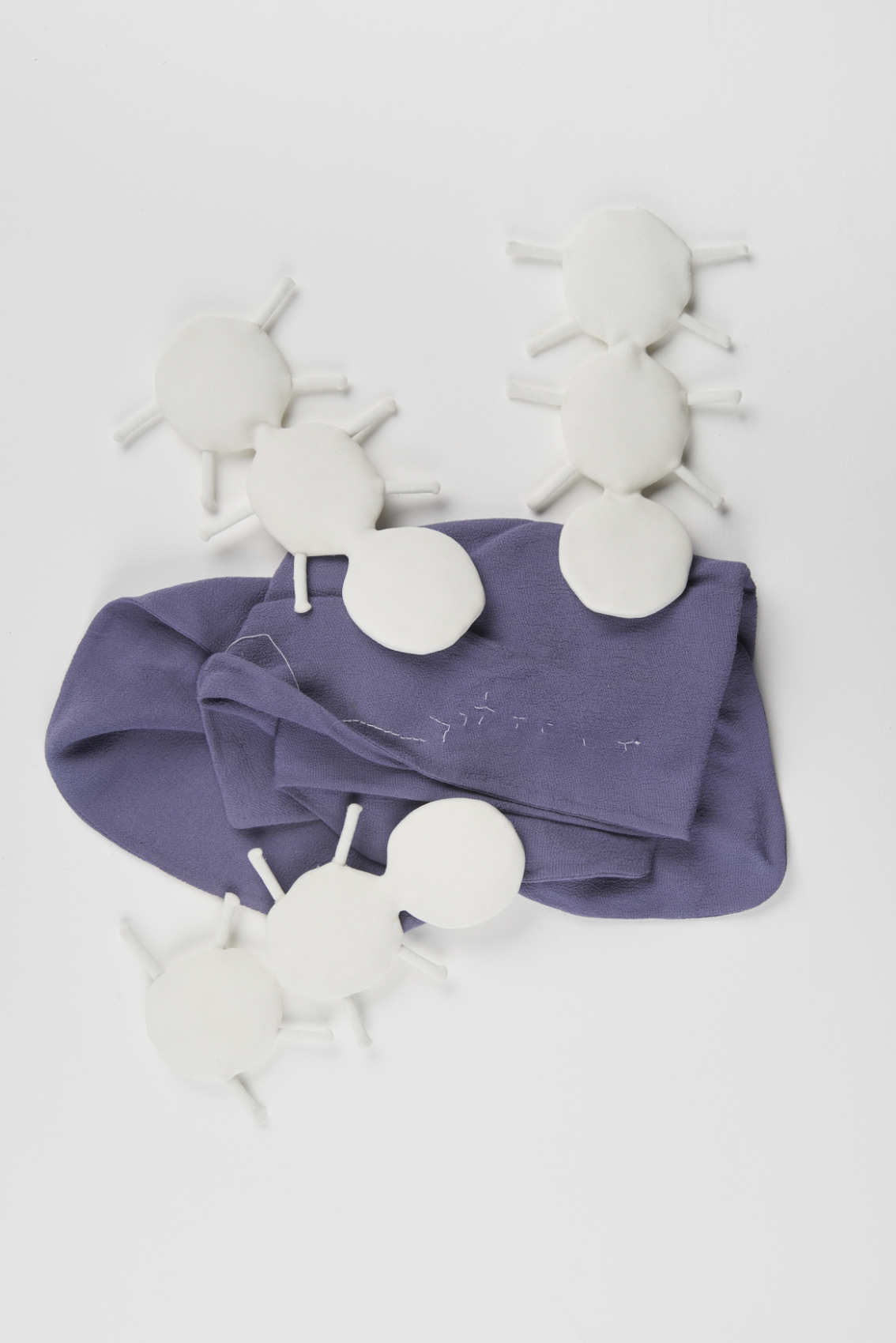
day residues (2018–)
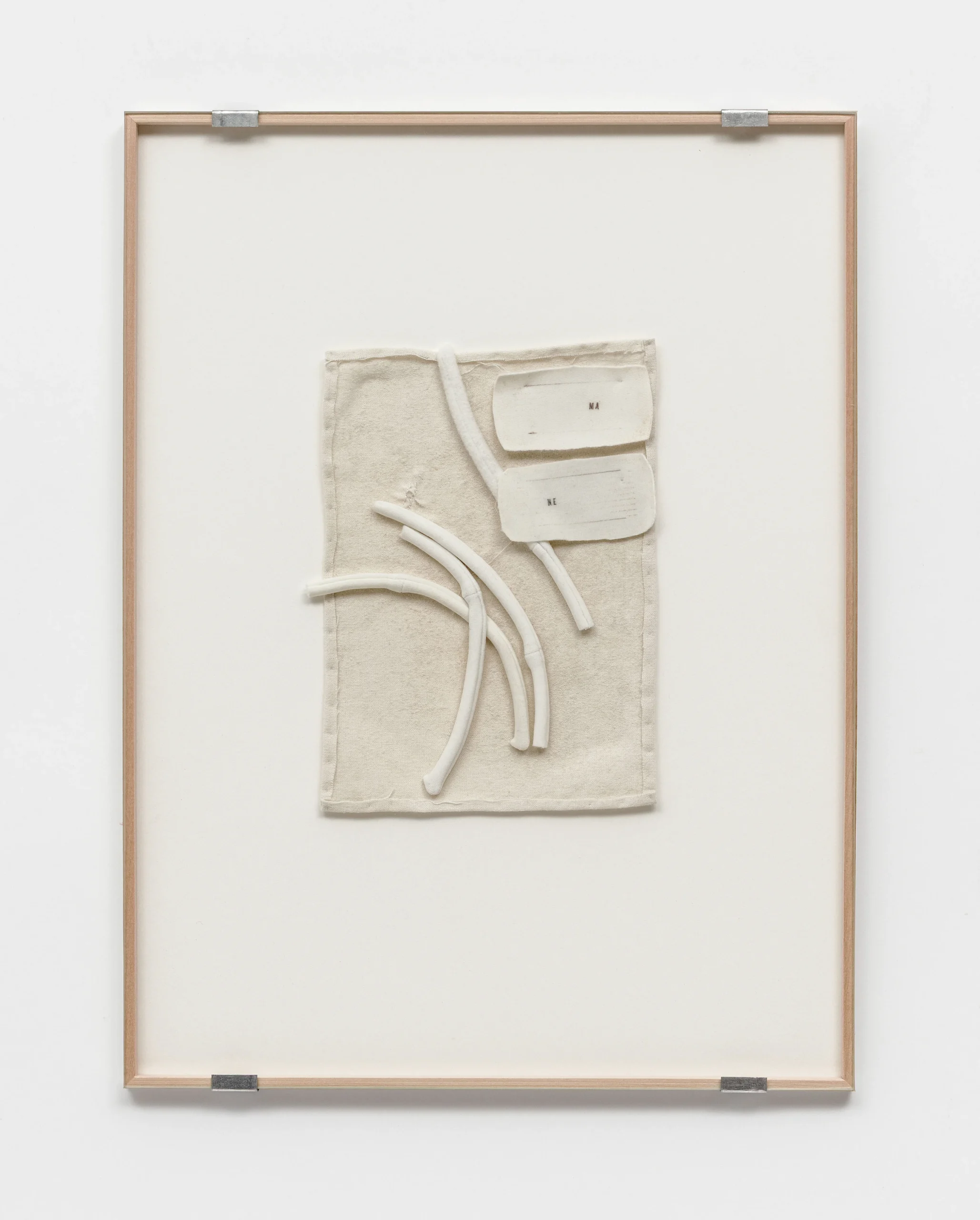
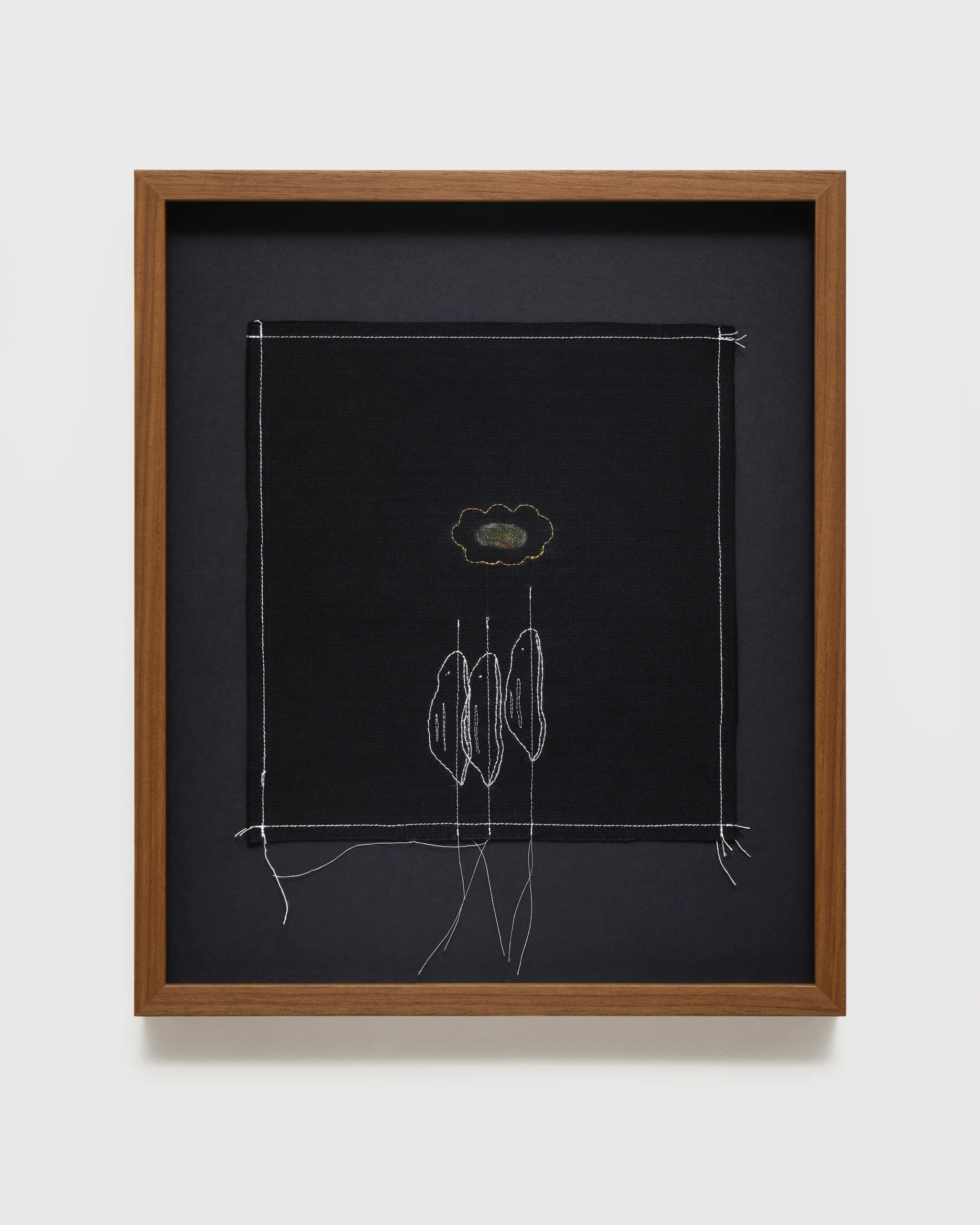
Ongoing series Embroidery and appliqué on deadstock cotton and silk, paint, thread; artist’s frames
Dimensions variable, individual works between 11 × 11 and 30 × 42.5 cm
day residues works in fabric, thread, and paint have their roots in dreams. Unlike Freud’s day residues, they do not supply dreams with material; they come out of them— recurring motifs and figures in a small format, lately a growing part of her practice.
The cloth is deadstock: surplus from the storerooms of haute couture and textile companies. Material declared over while it is still whole.
The first series, in 2018, was black and followed the mourning of her mother. The present one follows her own arrival as a mother, and what is less readily said about it: that becoming two is also a loss. Nothing died; what ended was a set of possible continuations. Deadstock carries both senses — stock as inventory, put away and written off; stock as descent, as what is handed down.
The residues are created intuitively; chance is part of the process; spontaneous thoughts can be pursued more easily here than within the installations. Technically some of it might be a preliminary stage, but often enough it is simply a sketch – and that means: a picture.
The frames are handmade and unique to each piece, chosen to underline its topic.
Since 2026 this way of working extends into a new series, why does white paper yellow (warum vergilbt das weiße papier), which continues research from Epstein’s AUFTAKT fellowship at Kunststiftung NRW.
Tagebuch der bösen Taten (logging bad deeds)
2018 –
Alongside the textile work, logging bad deeds runs as a form of self-archiving. Since 2018 Epstein has recorded her own transgressions in writing, and since 2021 in video performances as well. The hand-bound books that hold these entries are called loggings.
In the performances she puts on the Prayer Mitten (Bet-Handschuh) from the group Single-Purpose Gear — a garment that closes the hands in a praying posture and can only be put on with the help of the mouth. It marks where private repentance turns into public performance, and gives guilt a shape you can watch someone take on.
The loggings are currently available in German; an English translation and English editions are planned for the second half of 2026.
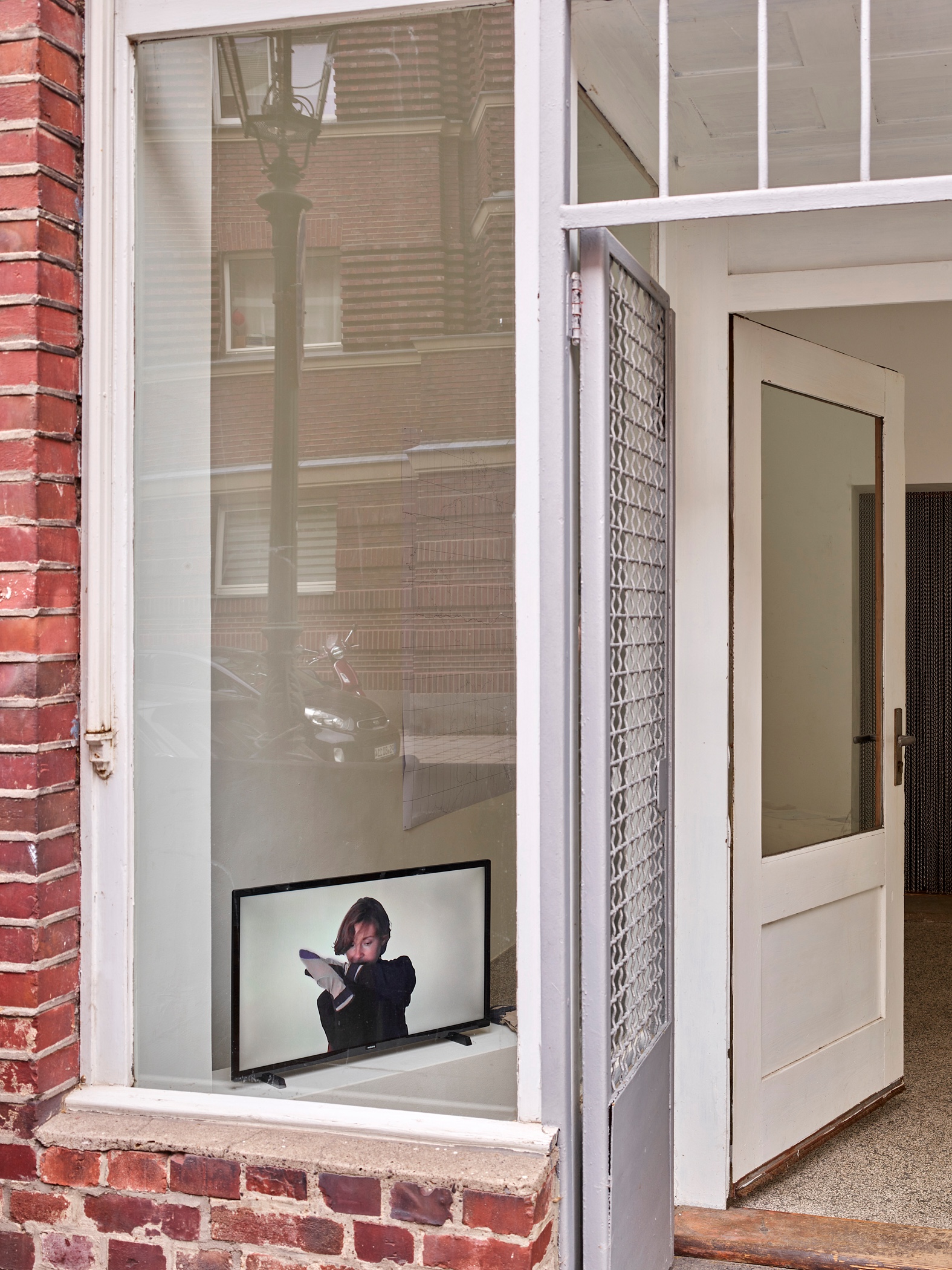
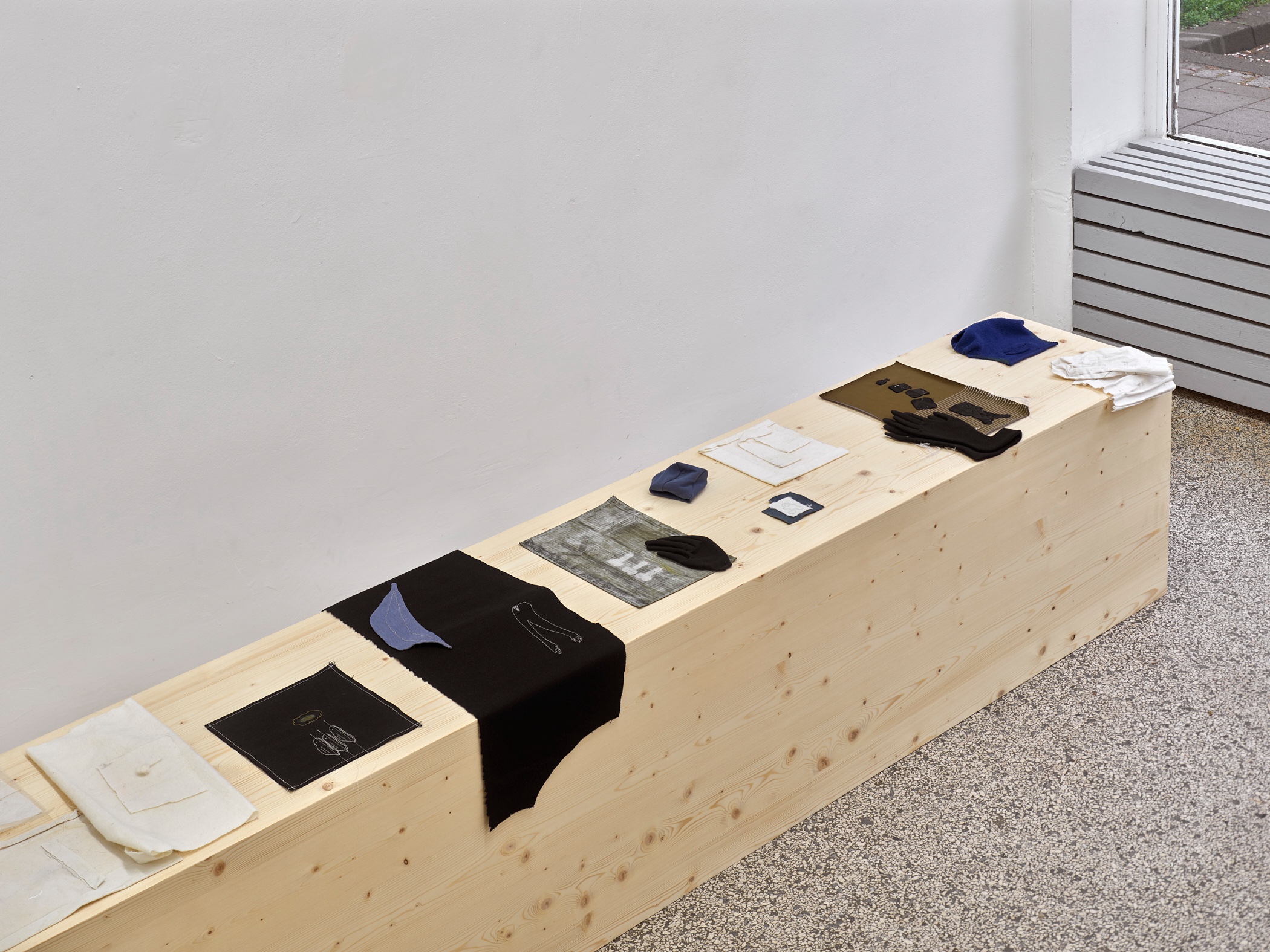
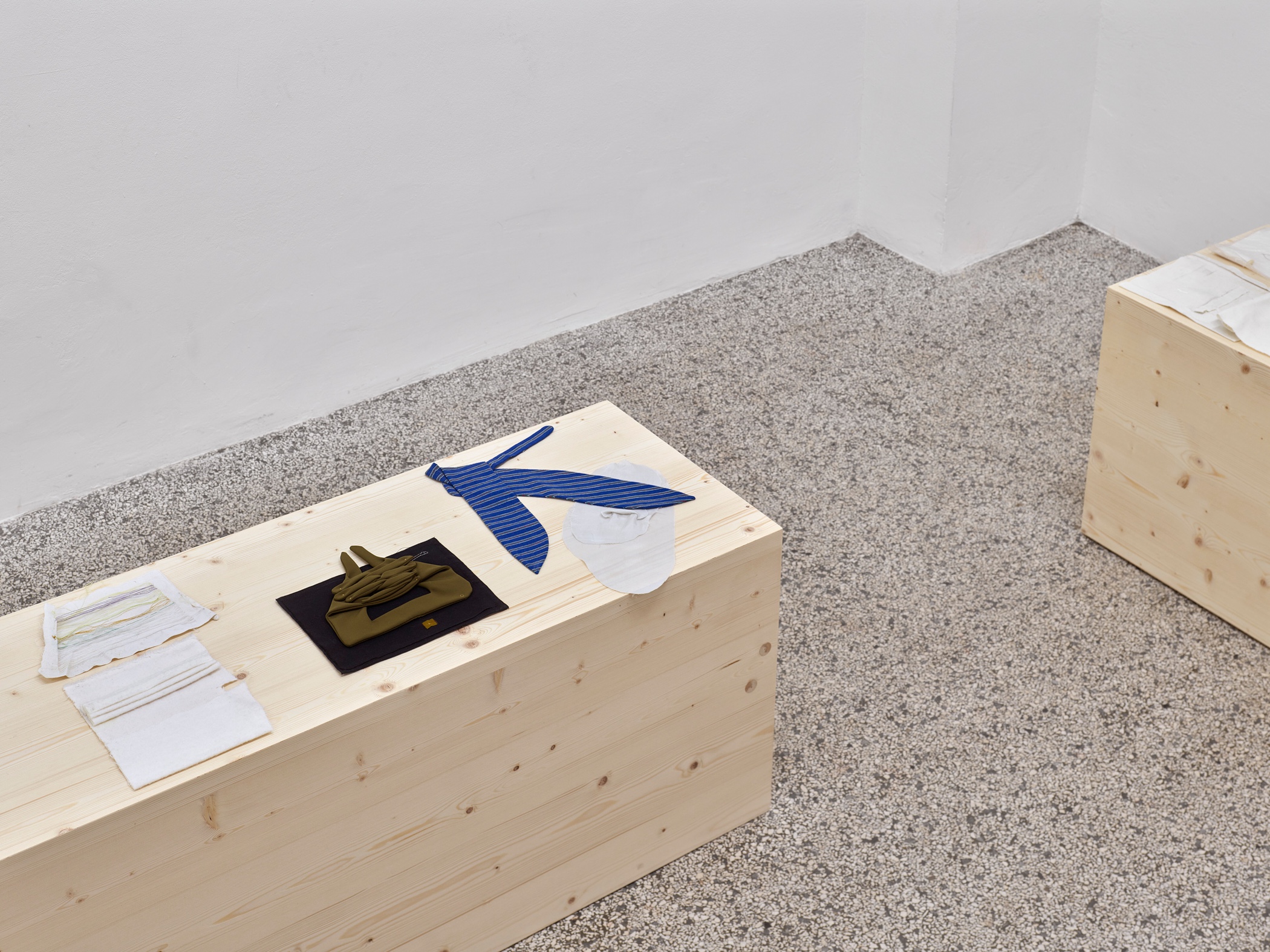
day residues und logging bad deeds 19 I at BLOOM, Düsseldorf (2021)
DISTANT CALL, two-person exhibition with Jürgen Krause BLOOM, Düsseldorf, April 24 – May 5, 2021
Curated by Jisue Byun
Materials:
Textiles, video performance with structure-borne transducer on glass (9:12 min)
Dimensions:
Dimensions variable
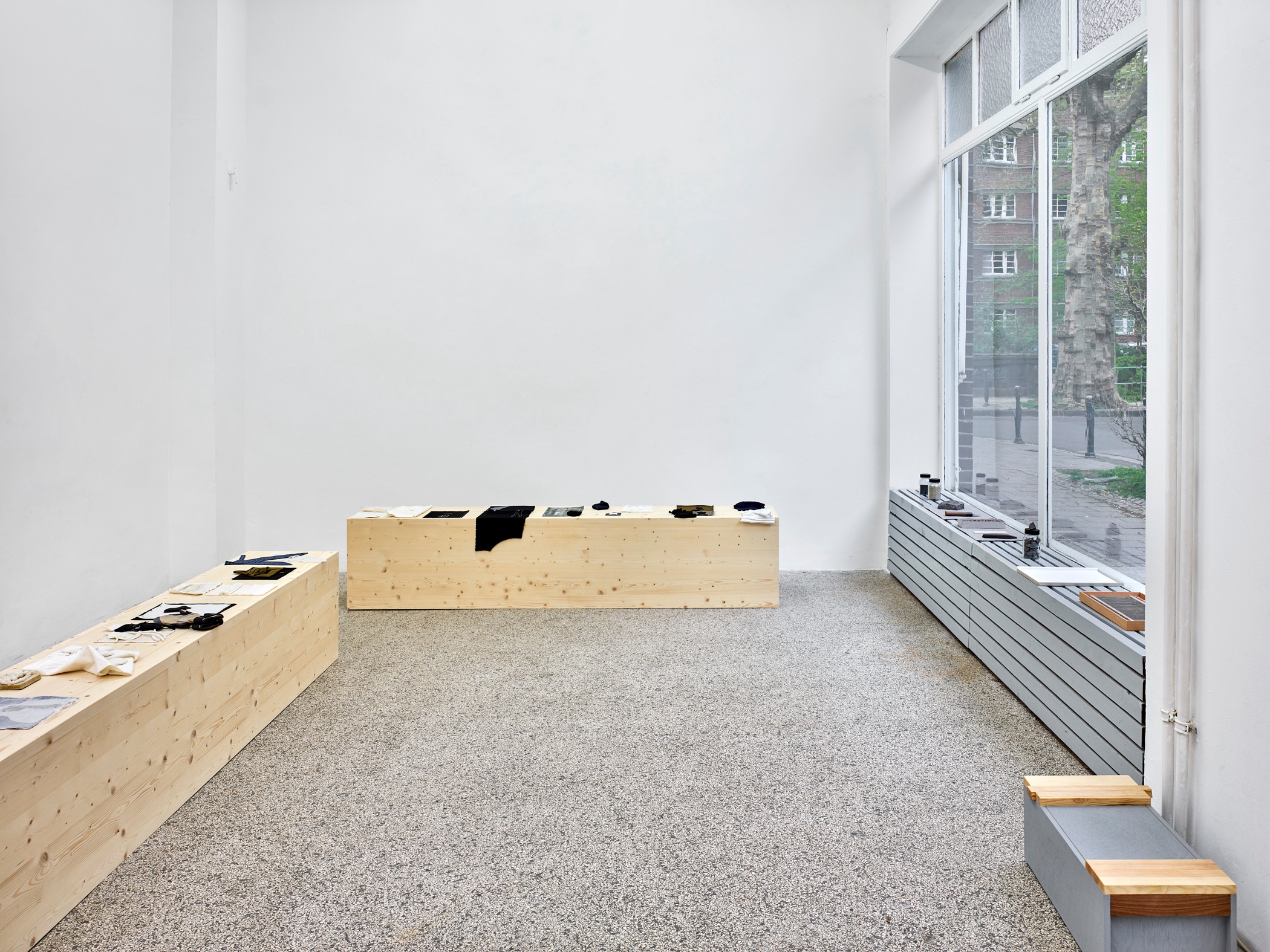
In 2021, under lockdown conditions, BLOOM in Düsseldorf staged DISTANT CALL, a two-person exhibition with Jürgen Krause, curated by Jisue Byun. The title was the programme: the show put distance into its own form and gave art somewhere to be seen at a moment when the institutions were shut. It was seen from the street.
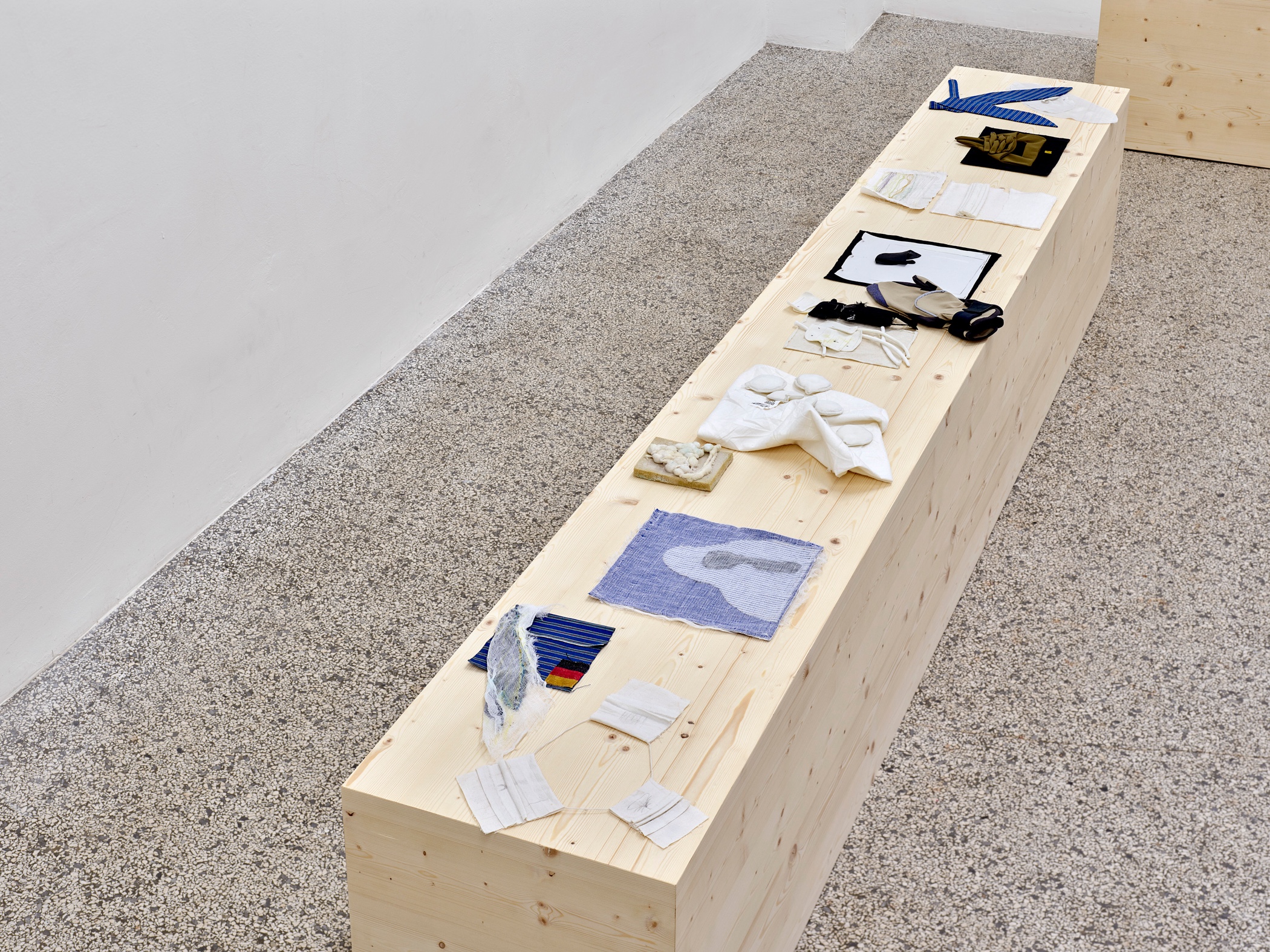
A screen in the shop window ran the video performance logging bad deeds 19 I (Tagebuch der bösen Taten 19 I). A contact microphone on the pane carried the sound outside, where it reached the pavement as a whisper. Two versions of the Prayer Mitten were shown in the room as objects, and the day residues lay on a long wooden plinth at the centre.
In the video a speaker reads from chapters of the loggings. After each confession the artist puts on the Prayer Mitten, an added act of penance: the garment closes the hands in a praying posture and can only be put on with the help of the mouth. In the room, the two mittens are what ties the performance to the cloth on the plinth.
Image 1 ghosts on vacation, 2024 — day residue, 30.5 × 29.5 cm
Image 2 N22, 2023 — day residue, 25.5 × 21 cm
Image 3 N39, 2025 — day residue, 22.5 × 21.5 cm
Image 4 environmental management, 2021 — day residue, 24 × 22 cm
Image 5 N38, 2025 — day residue, 23 × 18 cm
Image 6 N66, 2019 — day residue, 23.5 × 23 cm
Image 7 N25, 2019 — day residue, 11 × 11 cm
Image 8 N33, 2022 — day residue, 29.5 × 42.5 cm
Image 9 first syllables, 2025 — day residue, textile in artist’s frame, 40 × 30 cm
Image 10 partykell, 2024 — day residue, textile in wooden frame, 30 × 24 cm
Photos 1–8, 10: reproductions by Felix Adam
Photo 9: reproduction by Johannes Bendzulla
Images 11, 12, 14, 15 Installation views
Image 13 Exterior view of the shop window
day residues and logging bad deeds 19 I
BLOOM, Düsseldorf, 2021
Photos by Achim Kukulies
© VG Bild-Kunst, Bonn 2026