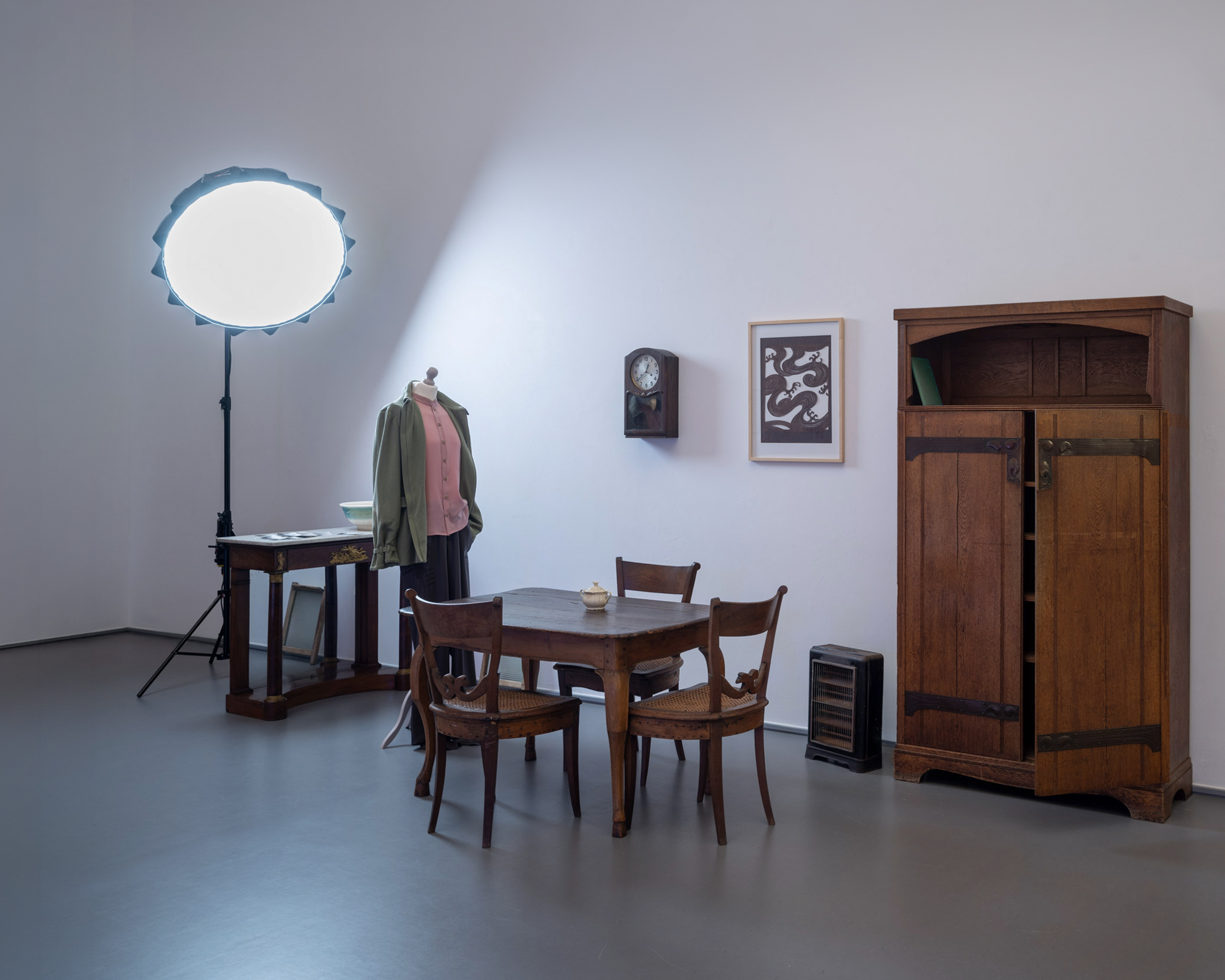
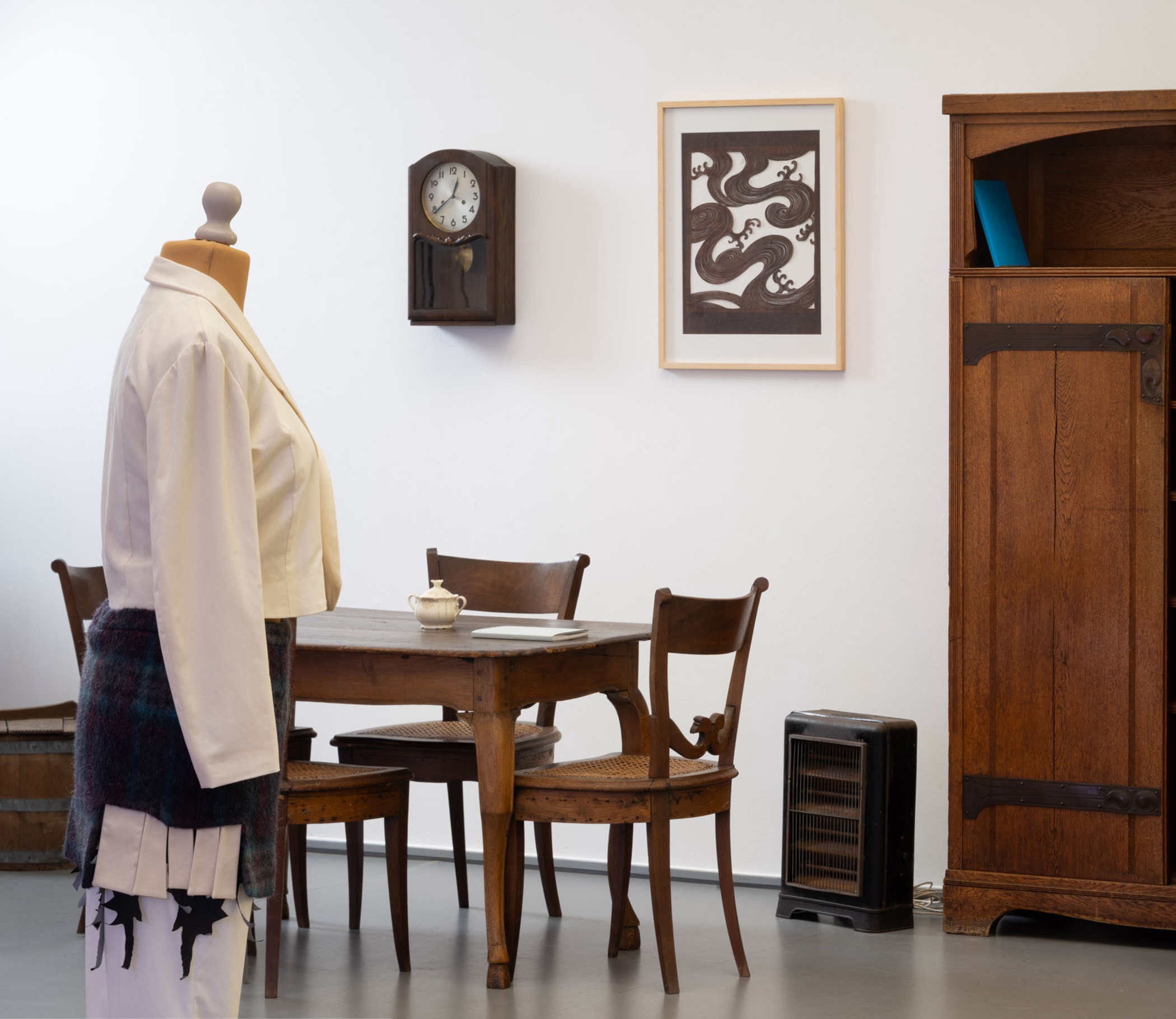
Installation and Performance at the Krefeld Art Museum, from May 24 to October 6, 2024
Curated by Dr. Magdalena Holzhey and Dr. Sylvia Martin
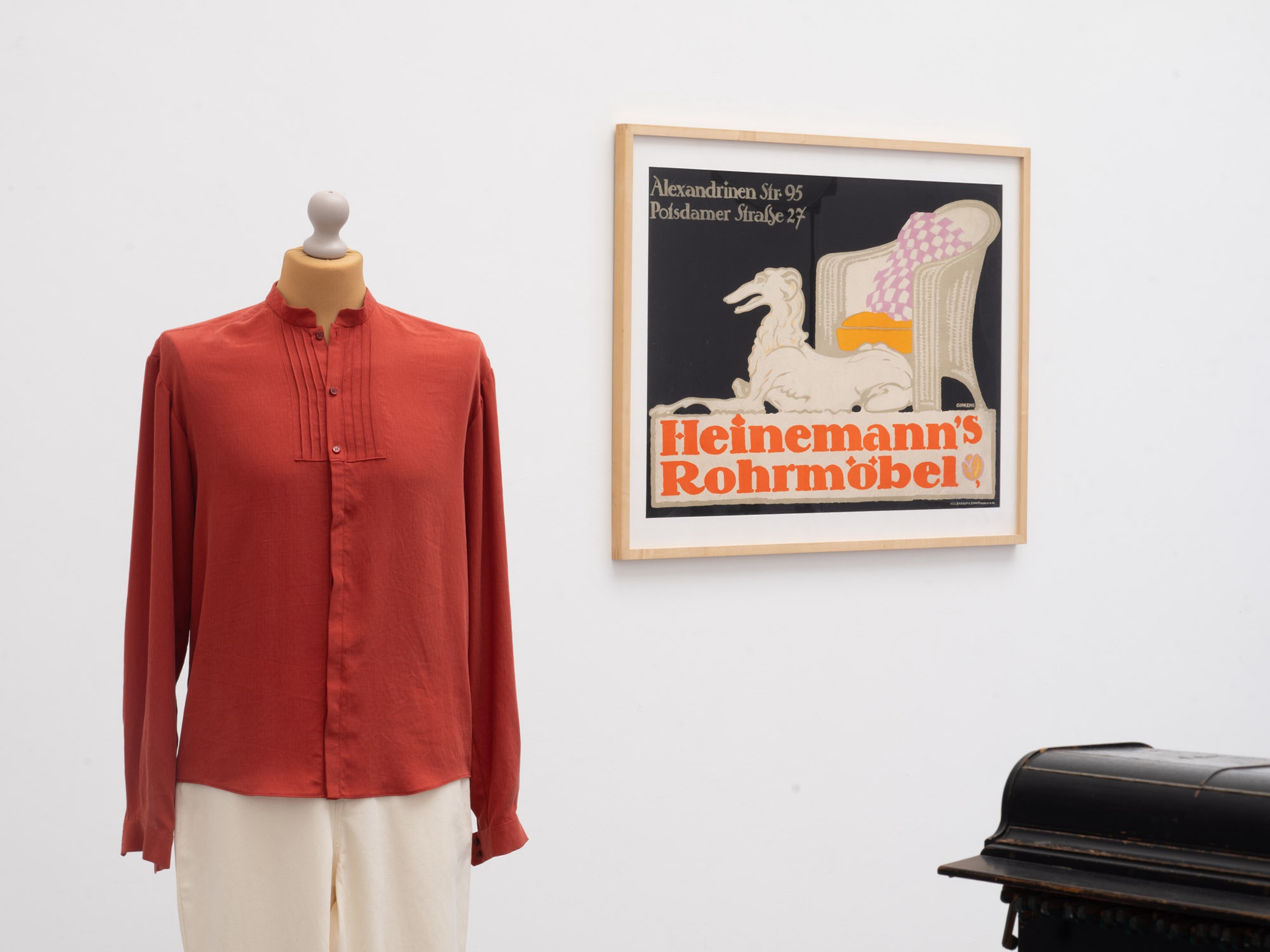
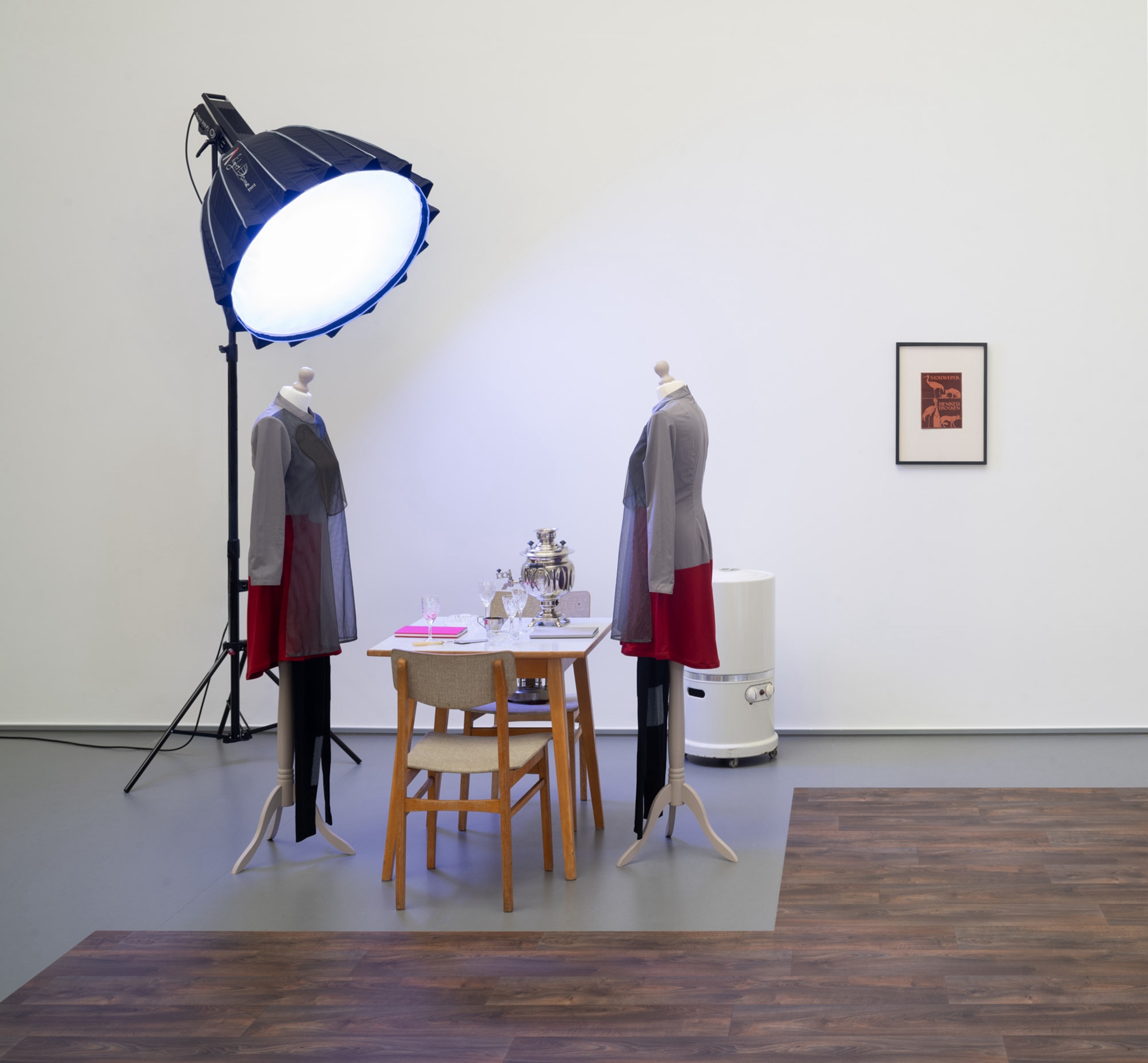
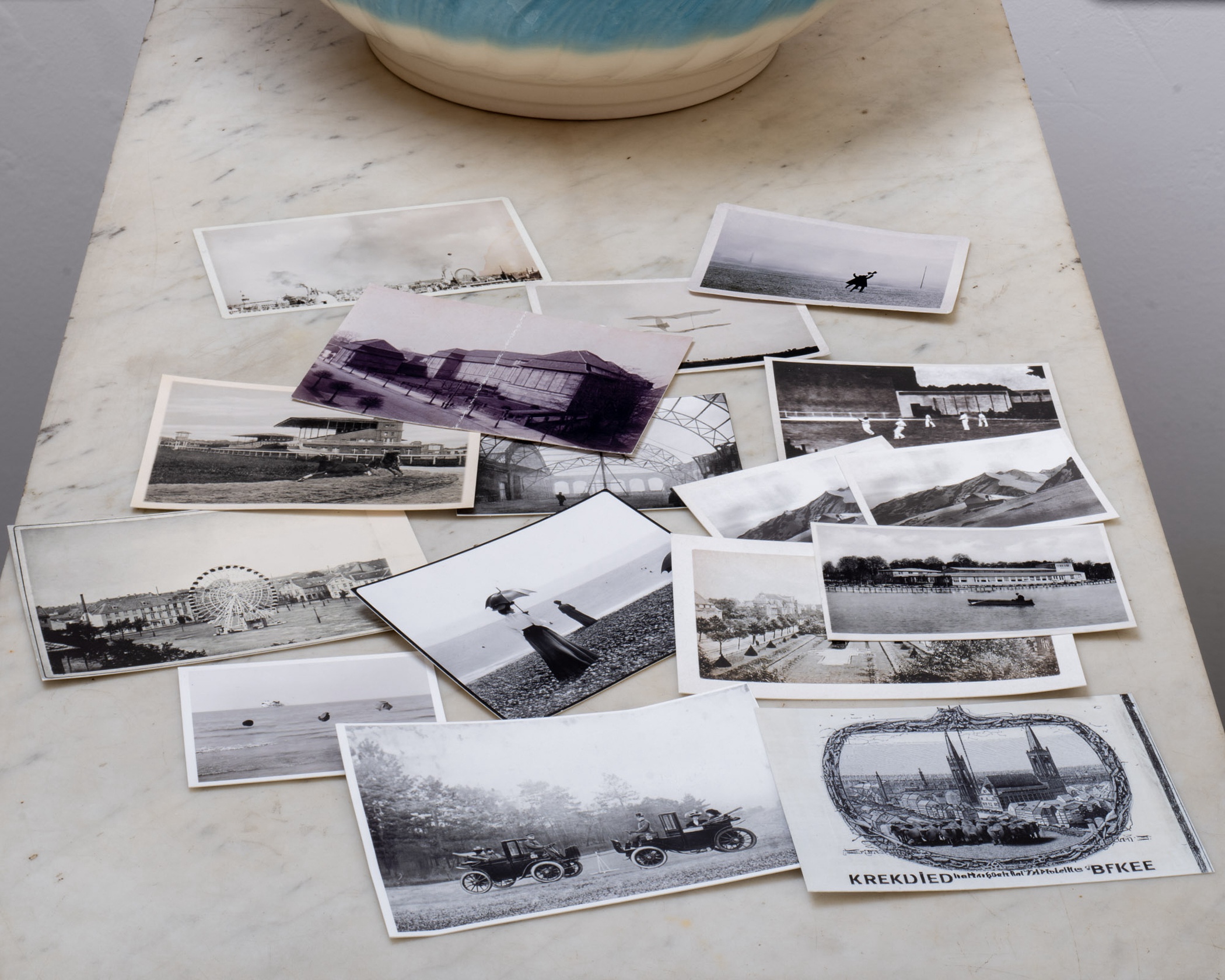
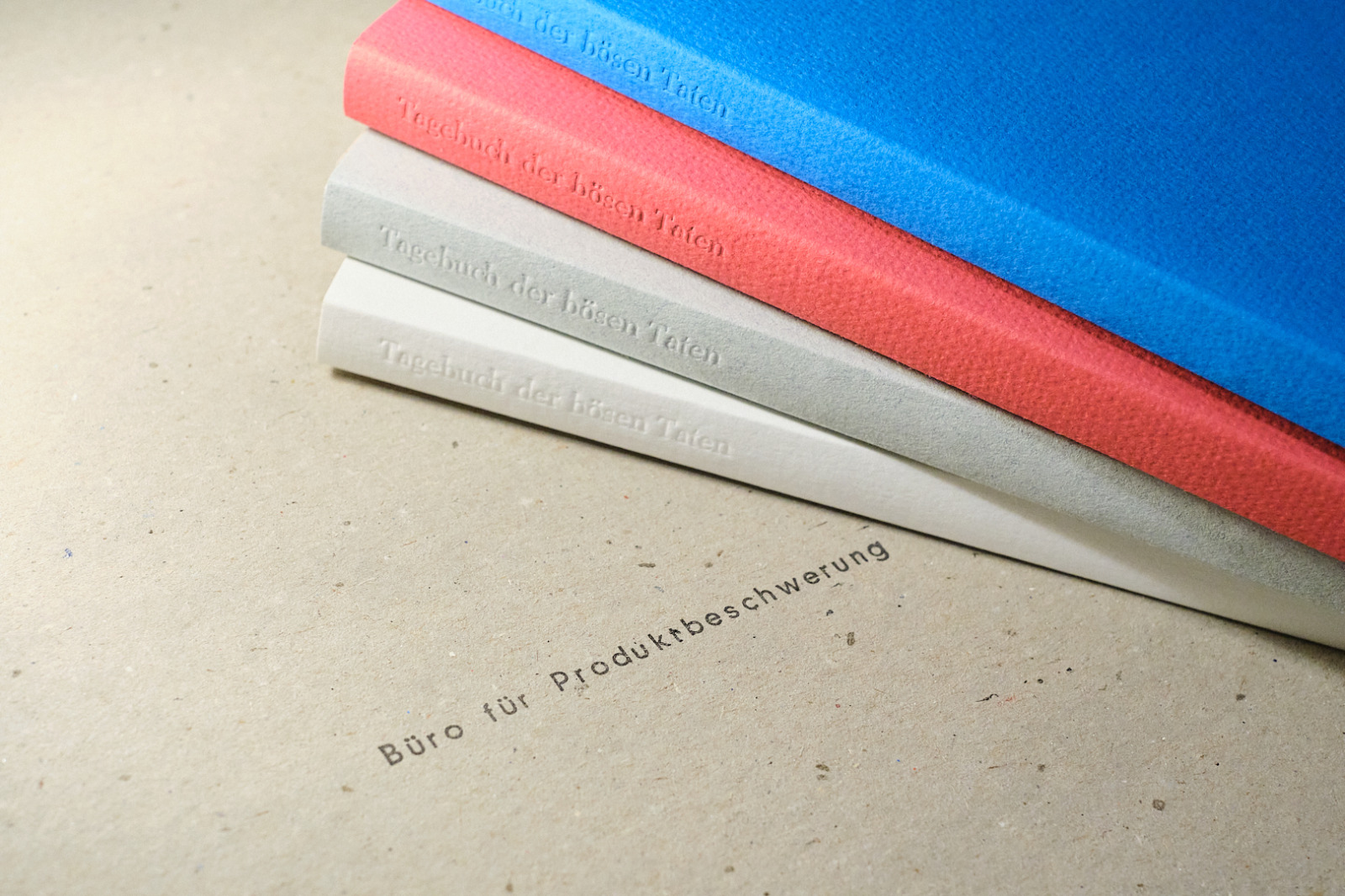
Materials: Textiles, 2 Studio Lamps Prolycht Orion 300 FS, Aputure LS C300D II Kit Bowens, 3 Aputure Light Dome II, 3 Tripods, Whistle, Magazine (Art Nouveau from 1898), Glasses, Cocktail Shaker, Sponsored Bar with Bar Furnishings, Fan, Cash Register, Socialist Dining Table with 2 Chairs, Samovar, Small Pot, Vase, Carousel Toaster, 6 Mannequins, 8 Book Editions, Suitcase, Home Organ, Cupboard, 2 Chests of Drawers, Ceramic Pot, A Table with 4 Chairs, Wall Clock, Sugar Bowl, 10 Handmade Postcards, Space Heater, Vat, Laundry Bucket, Washboard, Laundry Pounder, Japanese Woodblock Print, 6 Advertising Posters, Screen (Paravent)
Size: Variable
The work exists in multiple iterations. First presented in 2023 under the title dispersed non-existence, it was later reinstalled and expanded as The Bar, with its structure and narrative adapting to each exhibition context.
The Bar is not conceived as a place of exchange, but as a deliberately positioned structure in which expectations of sociability and intimacy become visible without being fulfilled. The exhibition negotiates a tension between exhibition situation and everyday-related infrastructure.
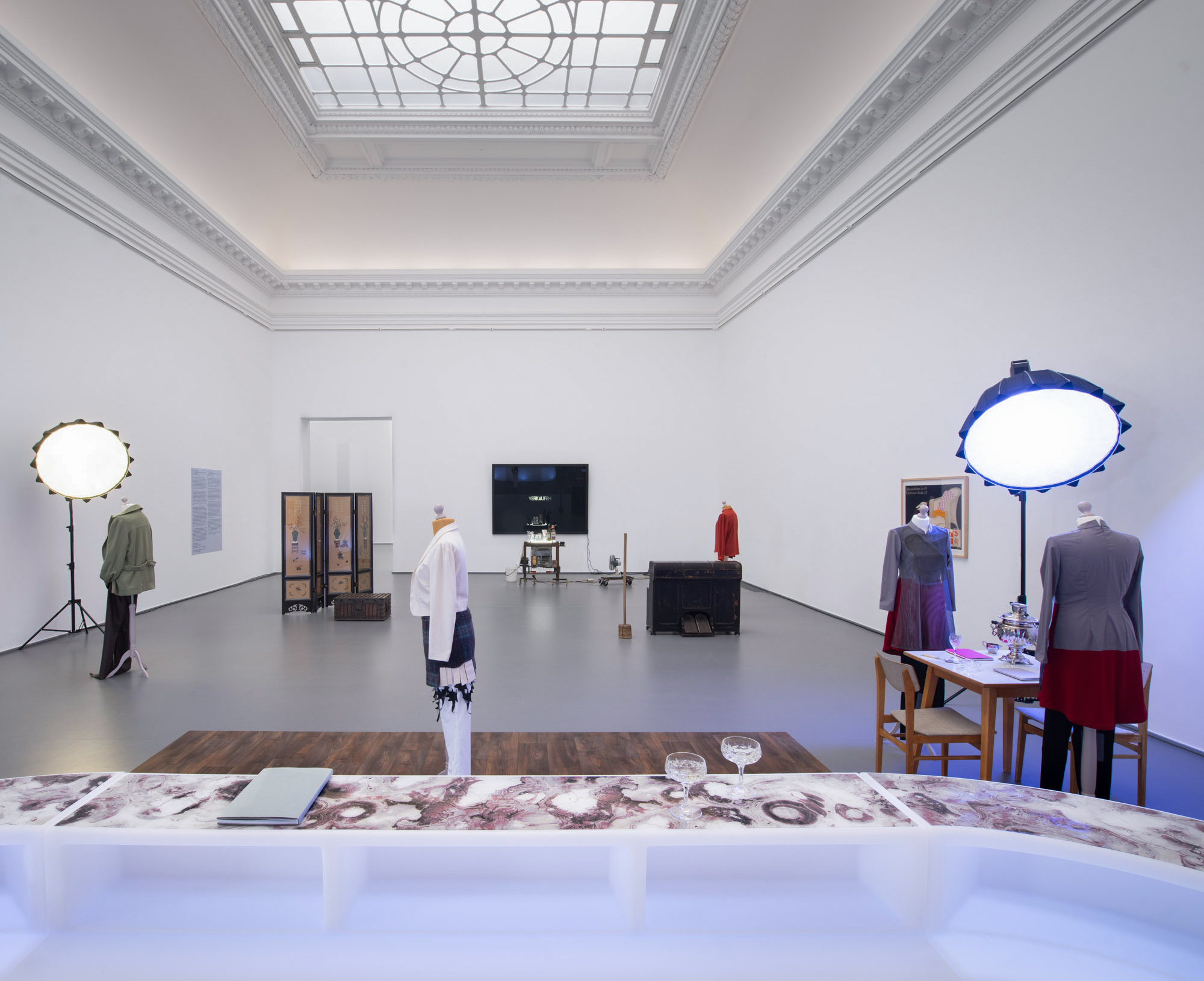
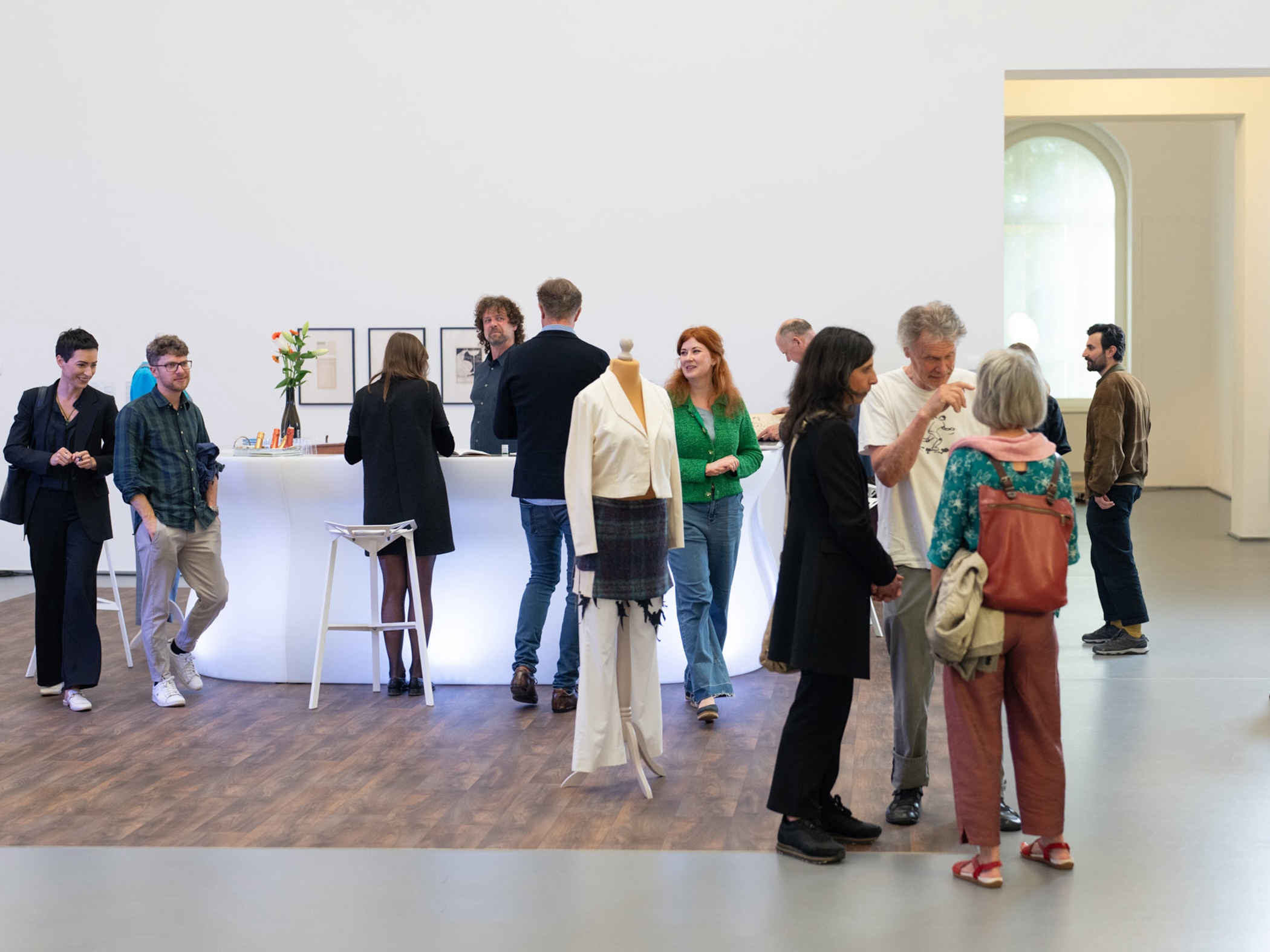
In the skylit hall of the Kaiser Wilhelm Museum in Krefeld, a fully functional bar counter stands at the center of the installation, whose use eludes actual execution.
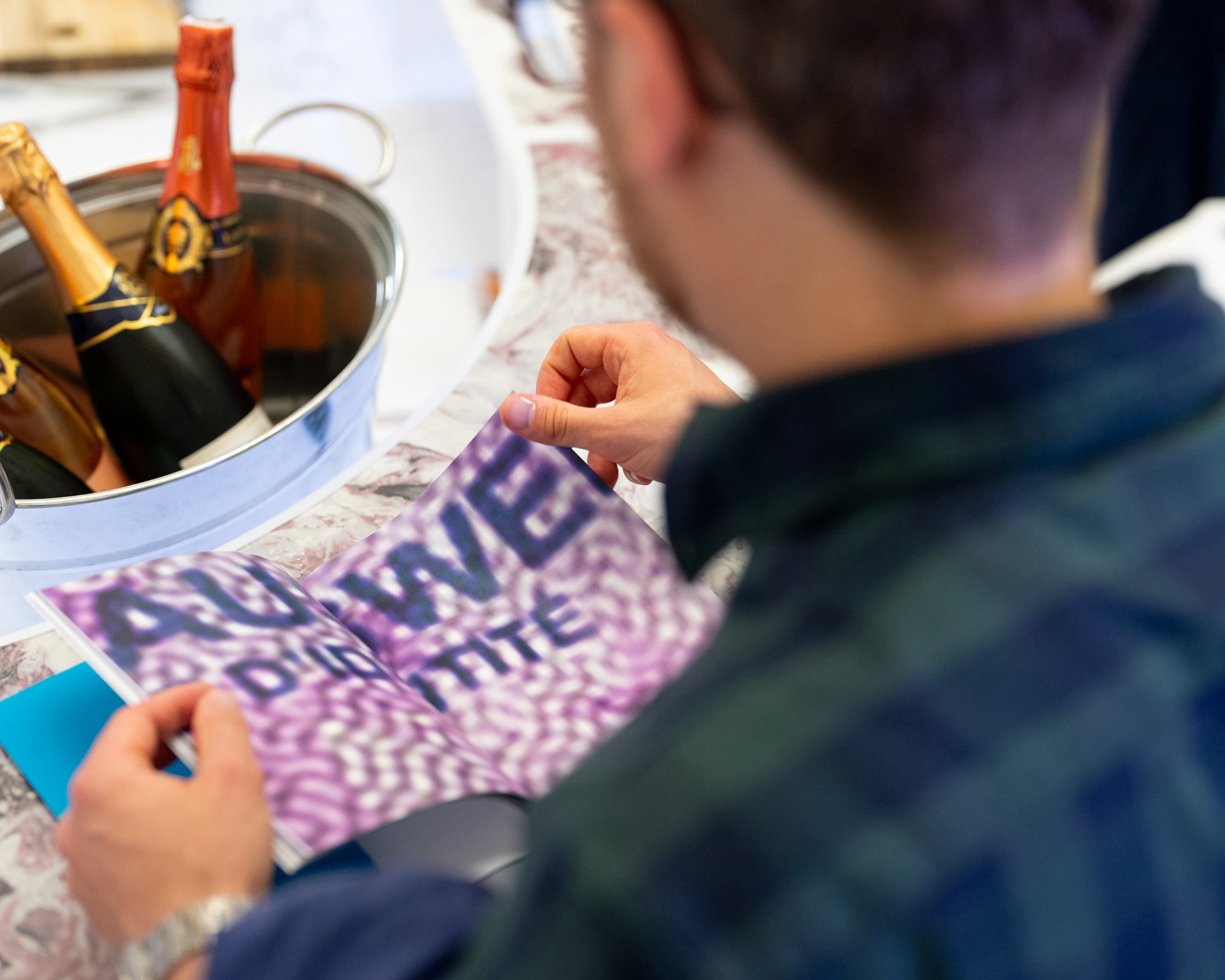
The promise of encounter associated with the bar remains suspended. Rather than functioning as a site of exchange, it operates as an aesthetically constructed model. Delicate consumption, conversation, and intimacy function as a surface beneath which a narrative layer is revealed, structured through the logging bad deeds. The occasional activation by a bartender is part of this proposition and reinforces the ambivalence between function and staging.
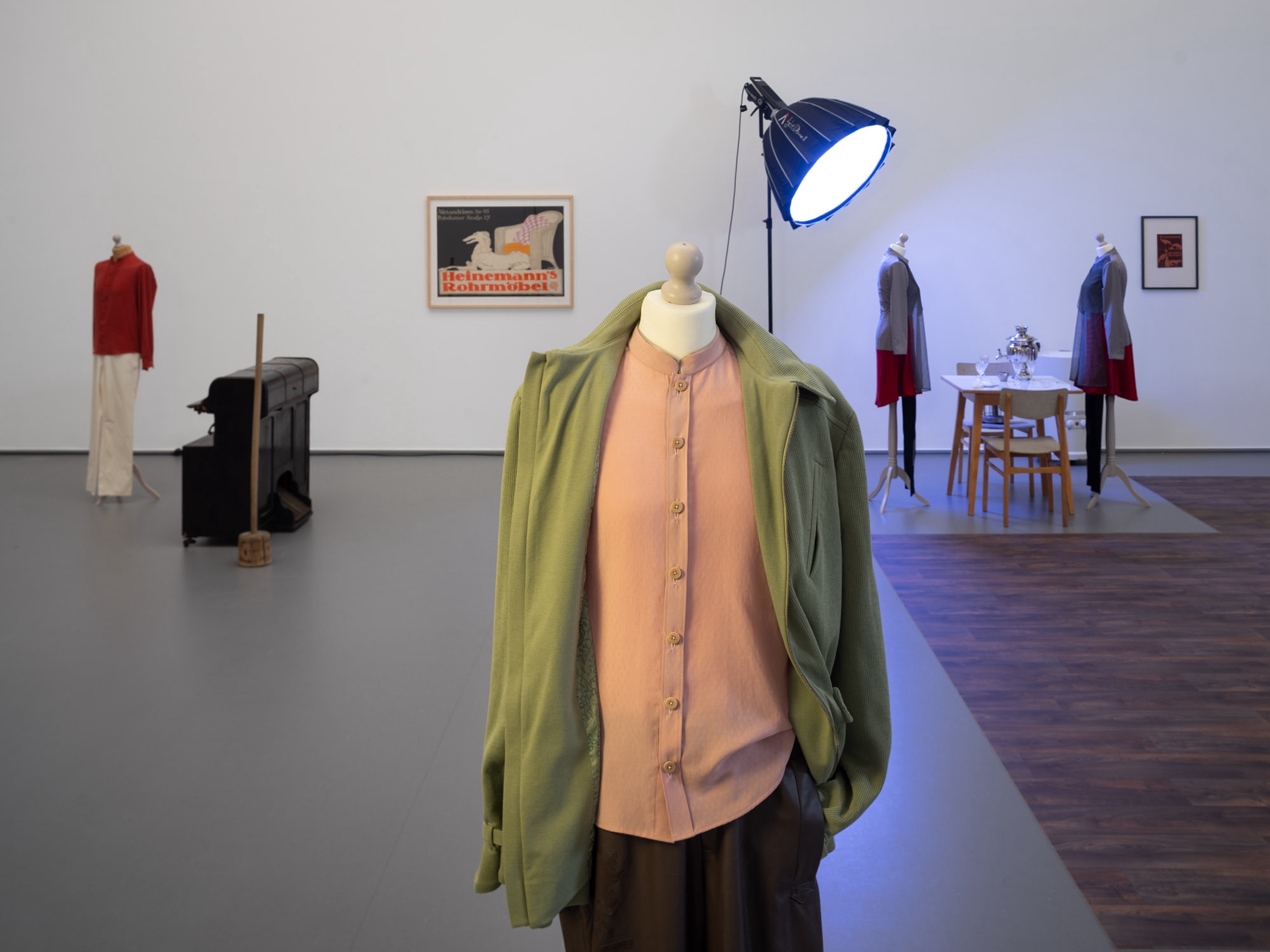
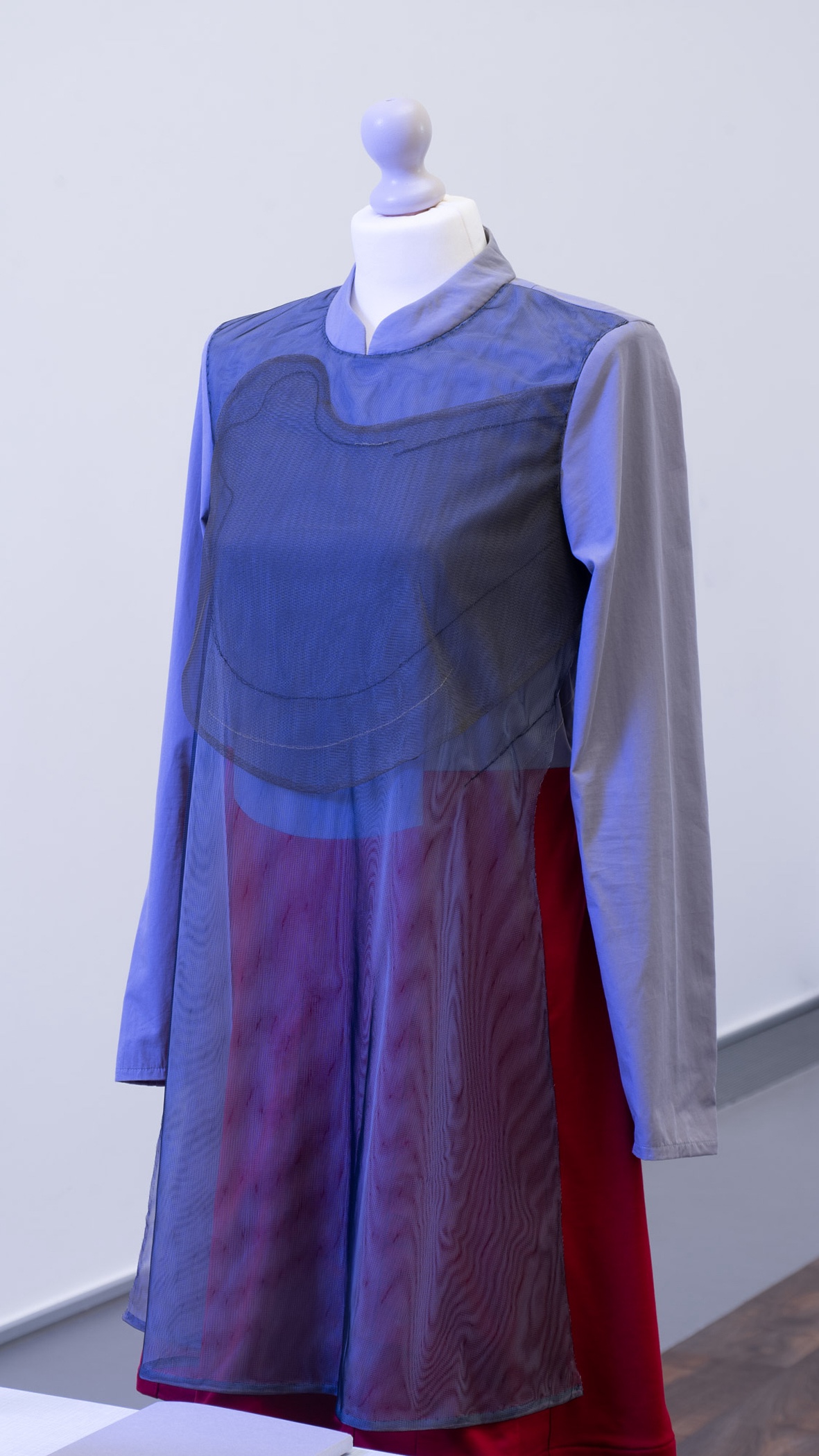
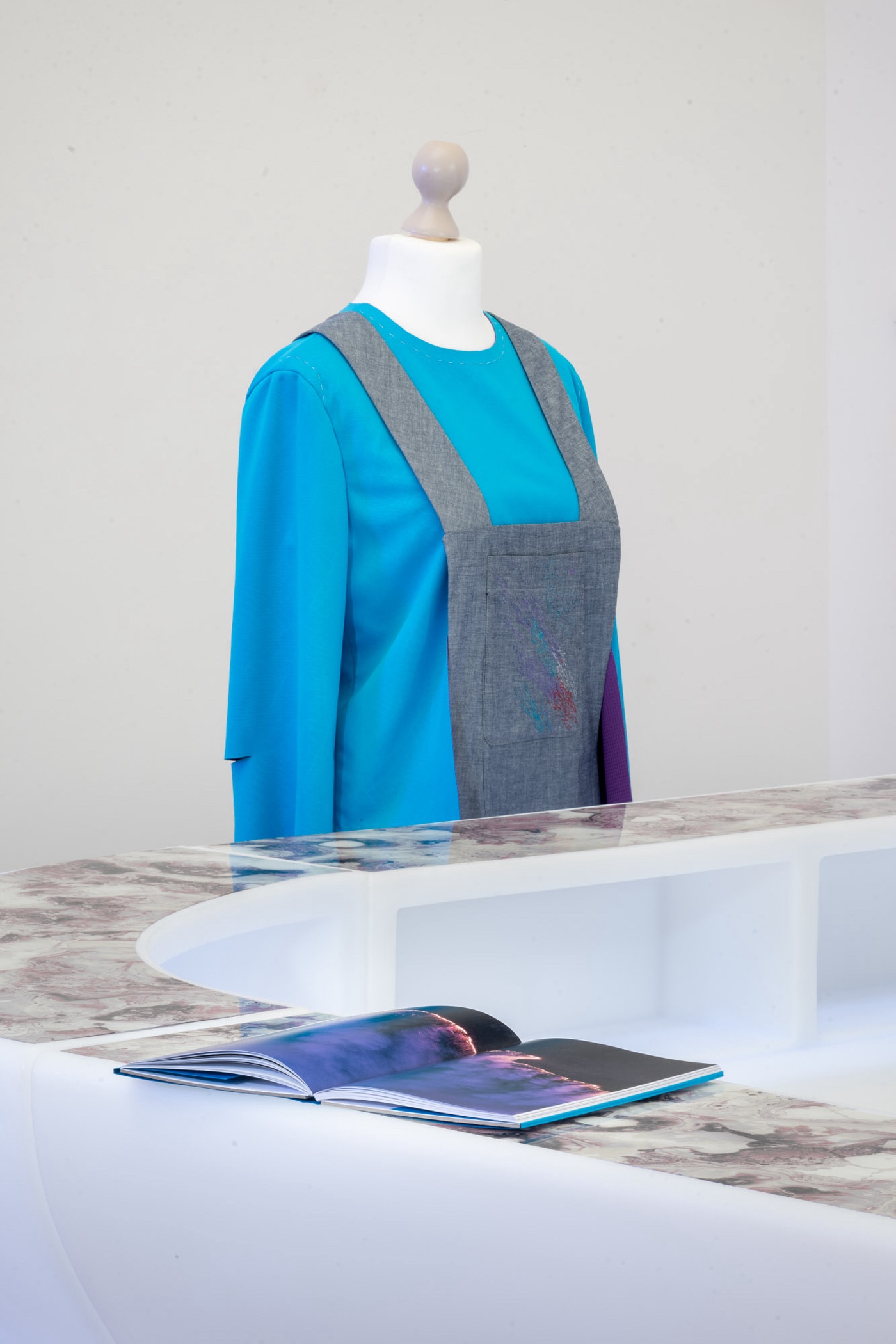
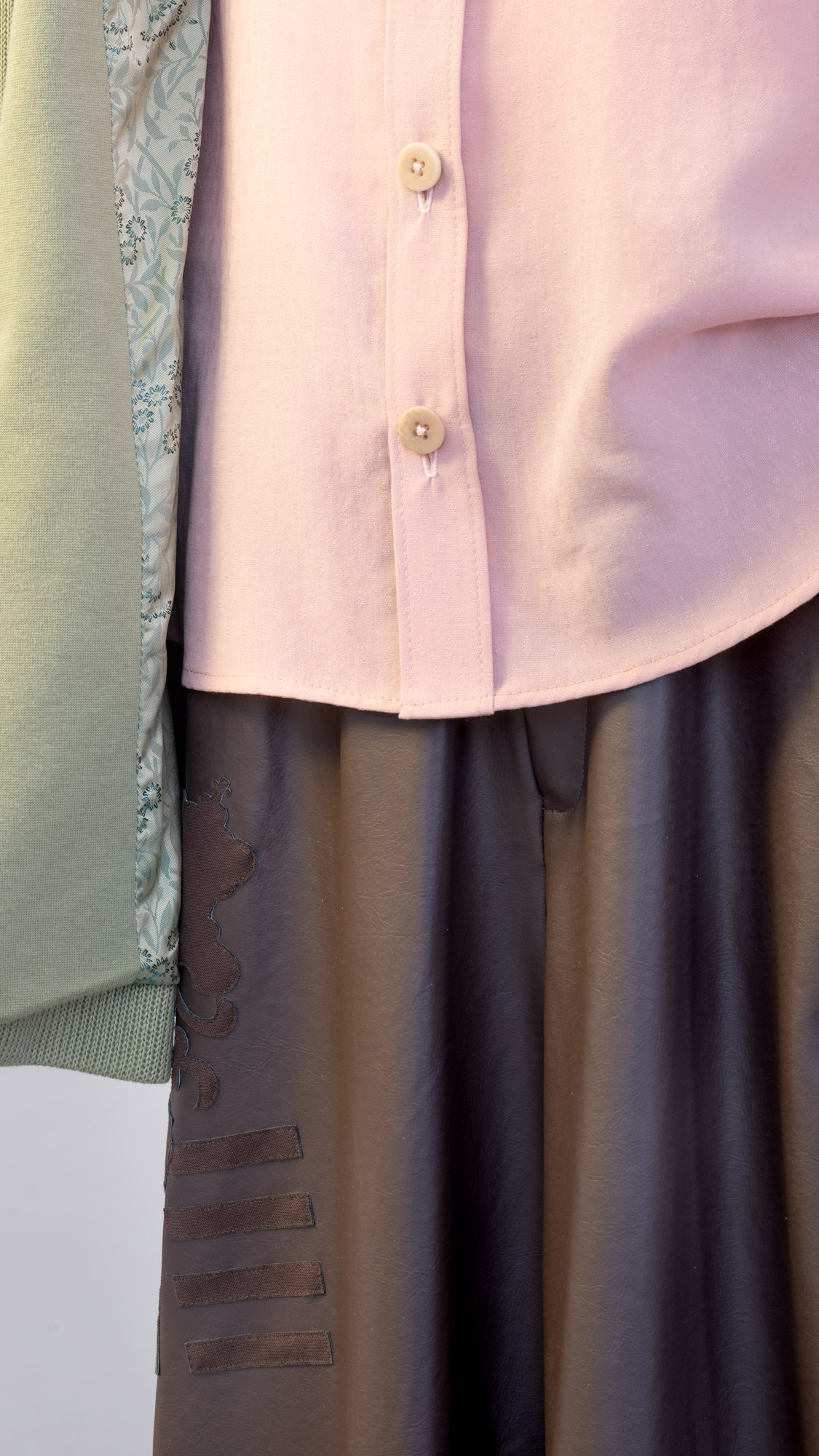
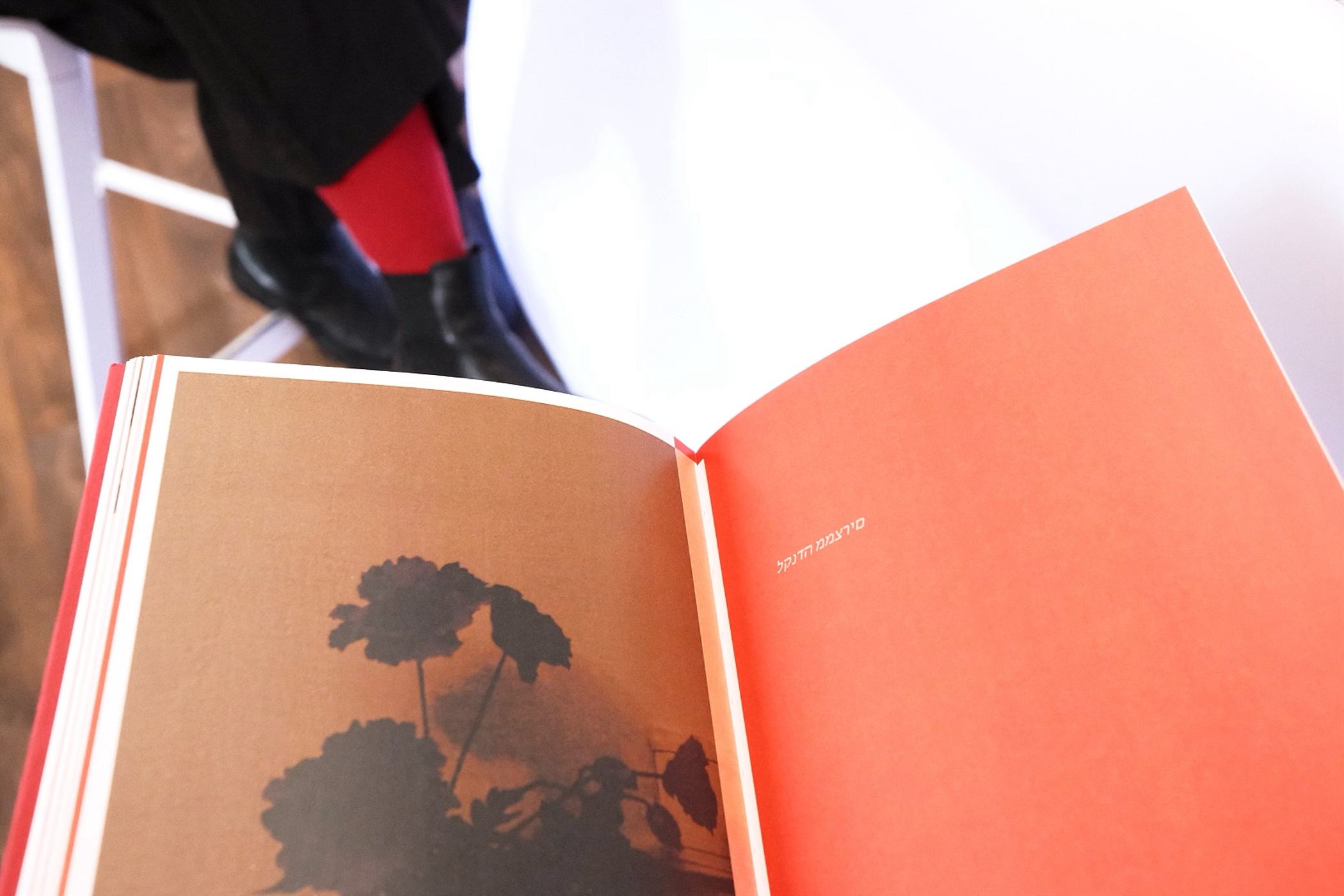
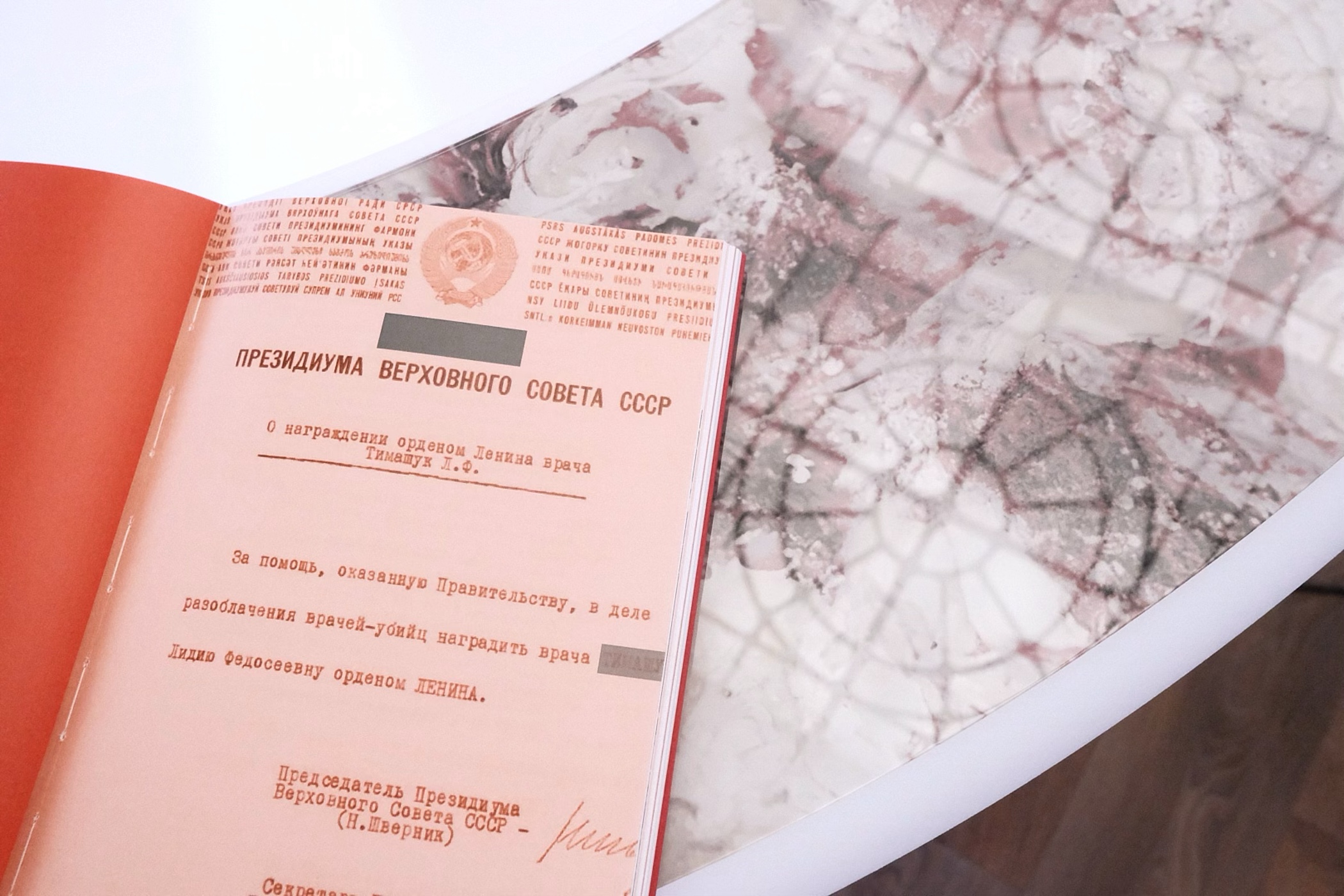
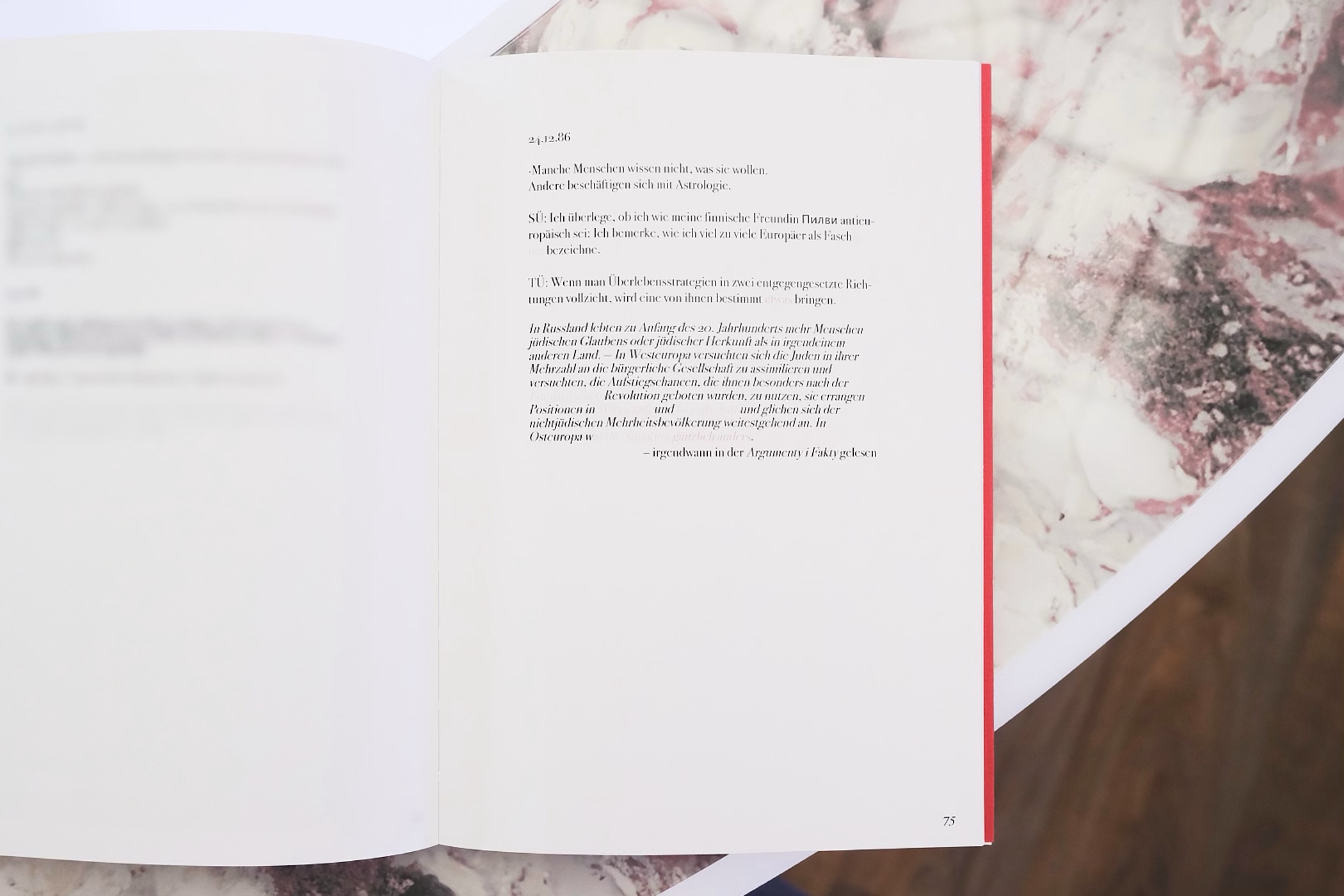
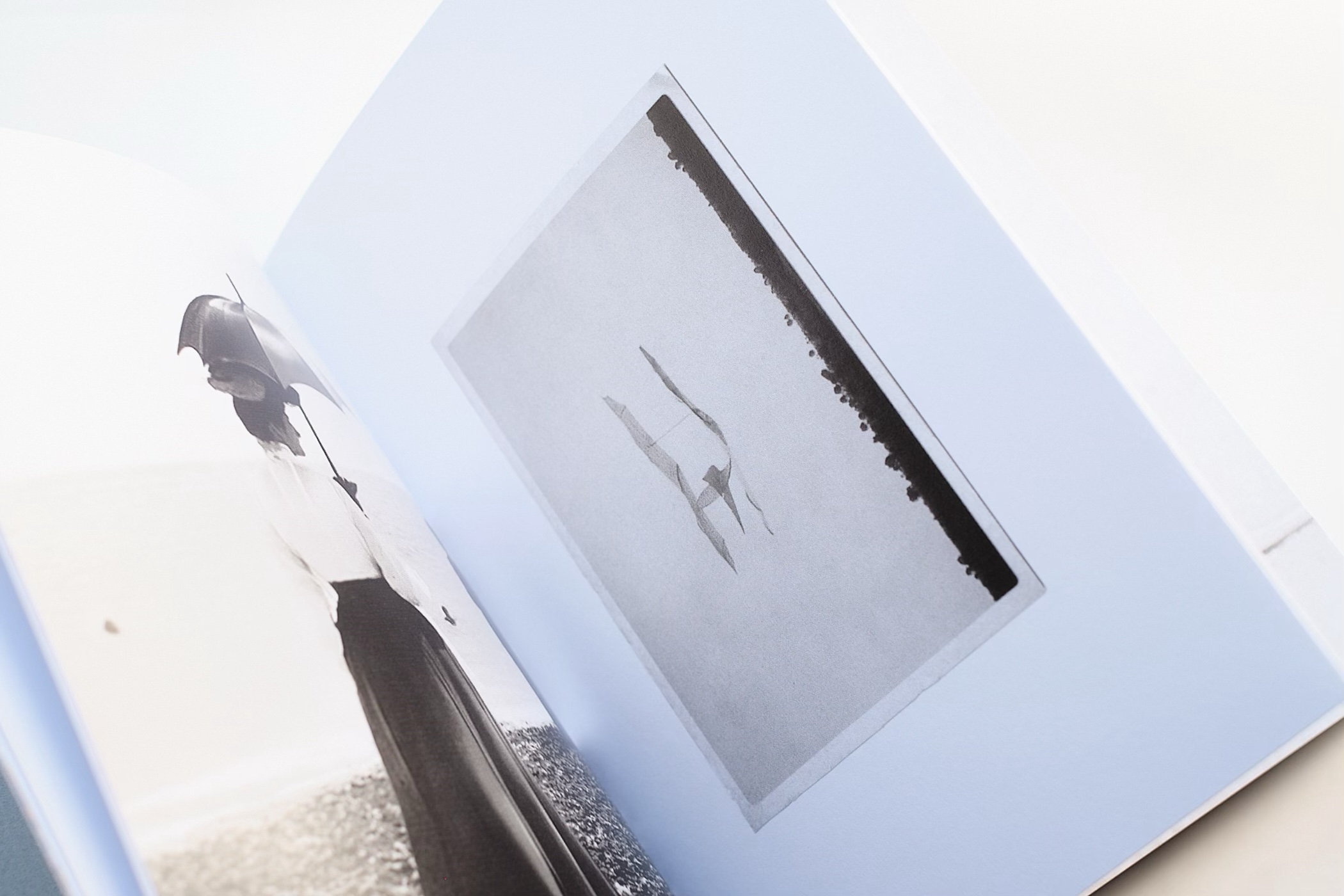
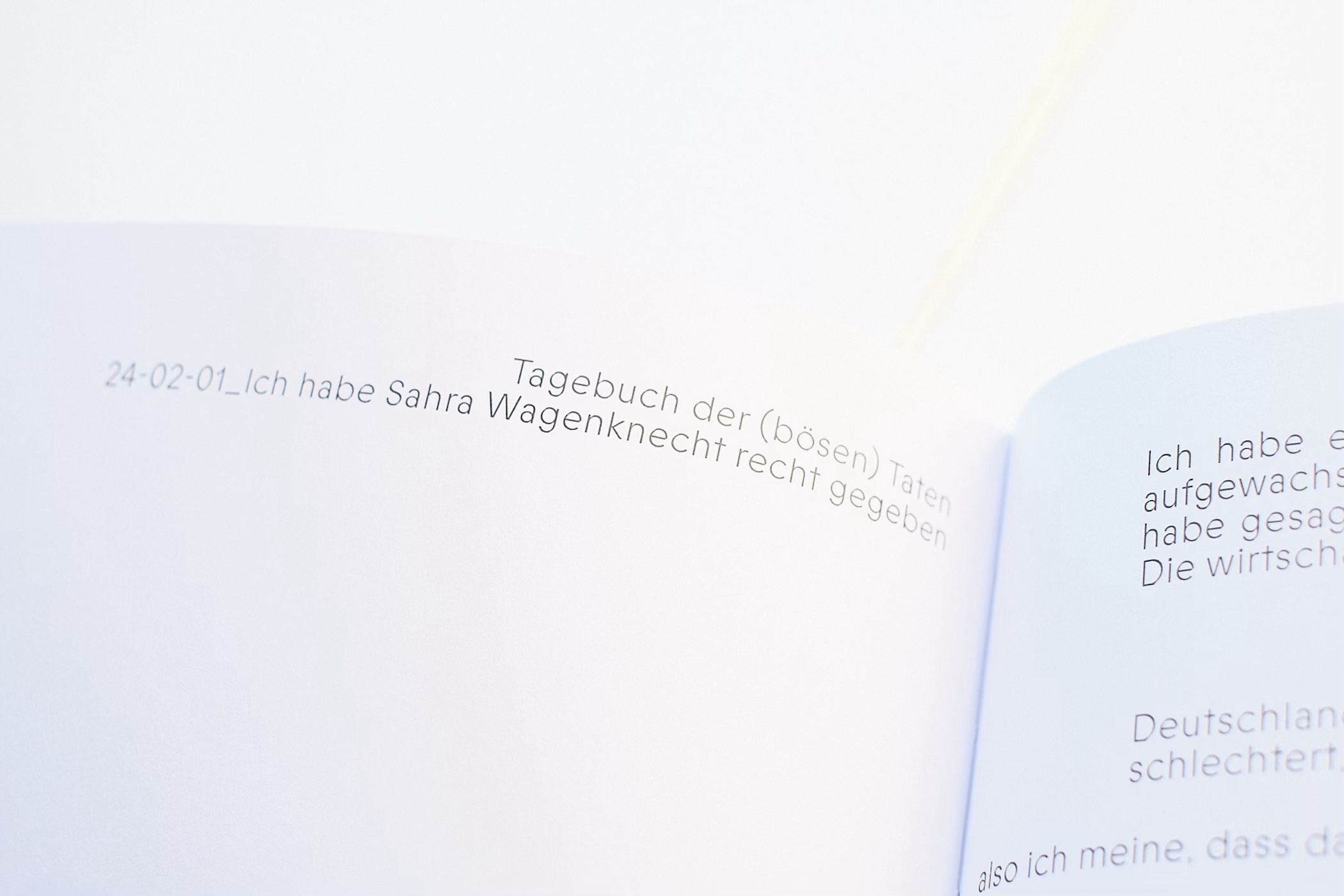
Around the bar, mannequins are positioned that mark different figures. Their costumes and accompanying text pieces refer to individual narratives whose status between biographical reference and fiction deliberately remains unresolved. The texts operate with autofictional fragments and attributions, generating a field of tension between personal narration and the analytical consideration of so-called “bad” deeds.
The bar constructs a situation that appears familiar while simultaneously being strictly regulated. It makes visible how everyday life functions as a scenographic construction: every component—from the counter and the lighting to the figures—is part of an arrangement that transfers visitors into an artificial, almost dreamlike scenery.
Realized with the kind support of the Stiftung der Sparda-Bank West, Party.Rent Group, and the Schauspielhaus Düsseldorf.
in easy words
The Bar is an artwork.
It is an installation and a performance.
It was shown at the Krefeld Art Museum.
From May to October 2024.
The artwork exists in different versions.
The first version was made in 2023.
It was called: dispersed non-existence.
The artwork changes with every exhibition.
In a big museum hall stands a real bar.
There is a counter, glasses, a cocktail shaker and a cash register.
There are lamps and furniture. But the bar is not really used.
Nobody gets a drink. Sometimes a bartender works at the bar.
Then you ask yourself: Is this bar real? Or is it theater?
Mannequins stand around the bar.
Mannequins are dolls from shop windows.
Every mannequin shows a different figure.
The mannequins wear special costumes.
Next to them there are texts.
The texts tell stories about the figures.
Some parts are true. Some parts are made up.
The stories come from my work: logging bad deeds.
logging bad deeds means: writing down bad actions.
The diaries tell about „bad“ actions.
And they ask: was this really bad?
Everything in the artwork is arranged very exactly.
The bar looks familiar. But it also feels strange.
A little bit like a dream.
The artwork shows: Our everyday life is also a kind of stage.
This work was supported by: Stiftung der Sparda-Bank West,
Party.Rent Group and Schauspielhaus Düsseldorf.