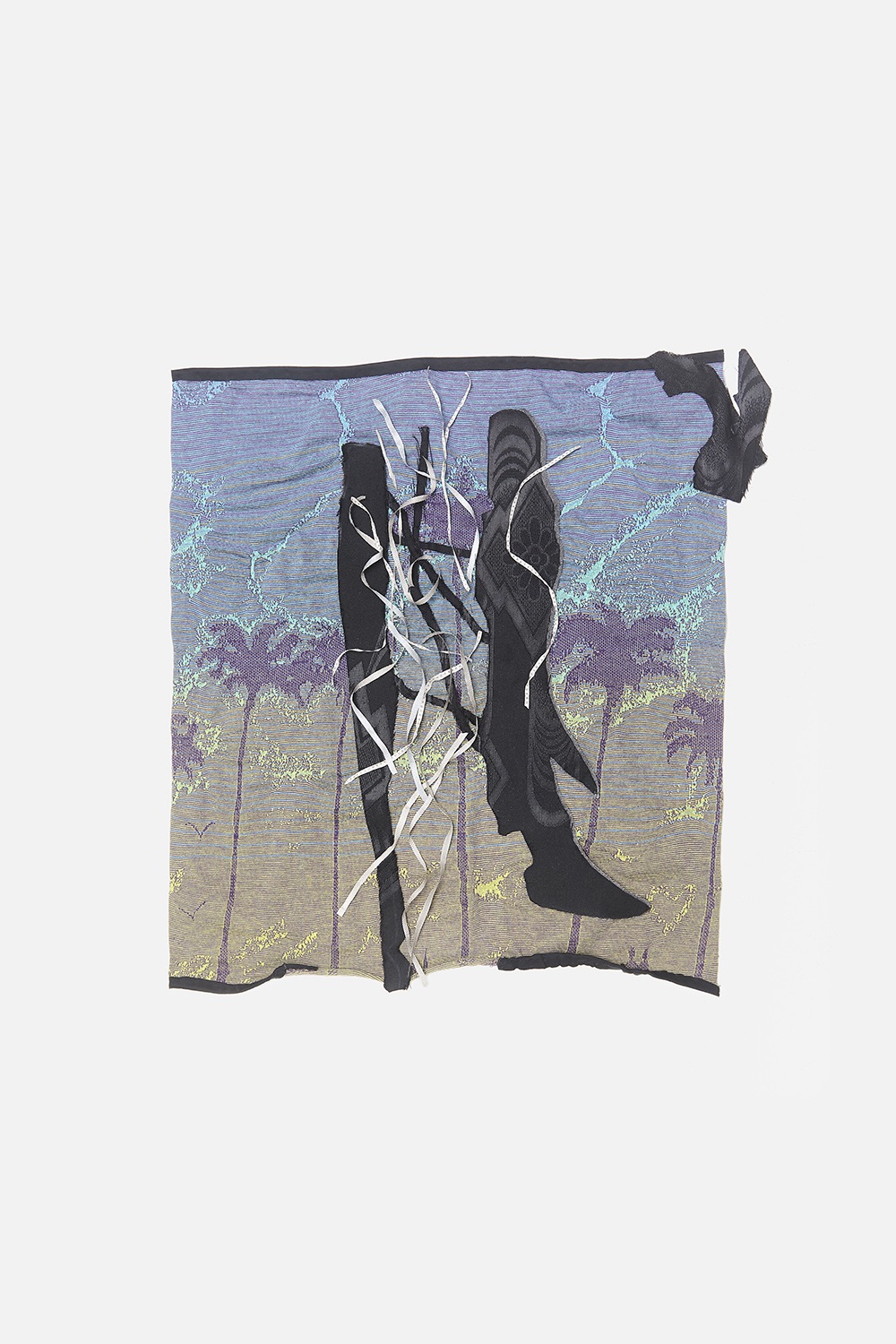
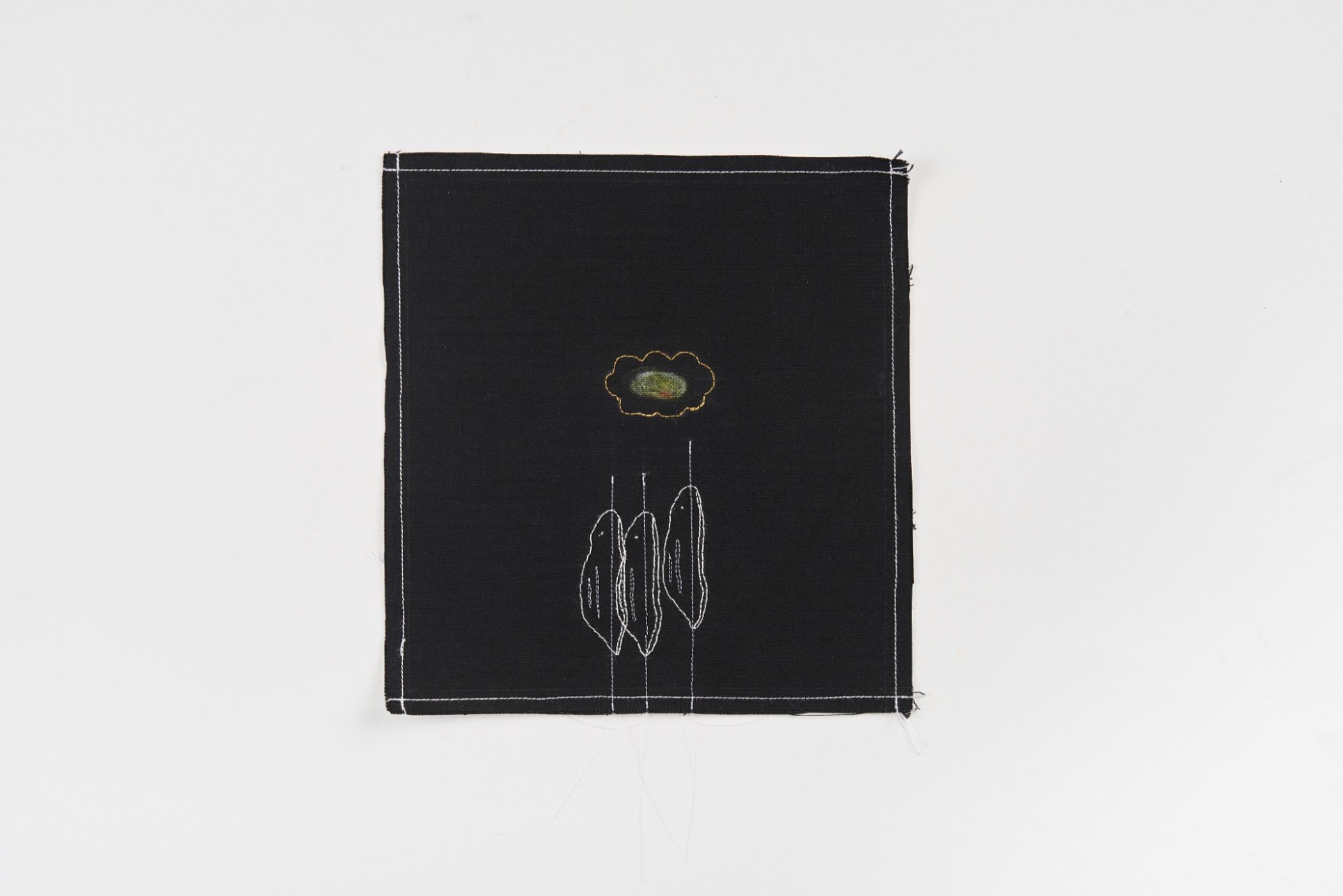
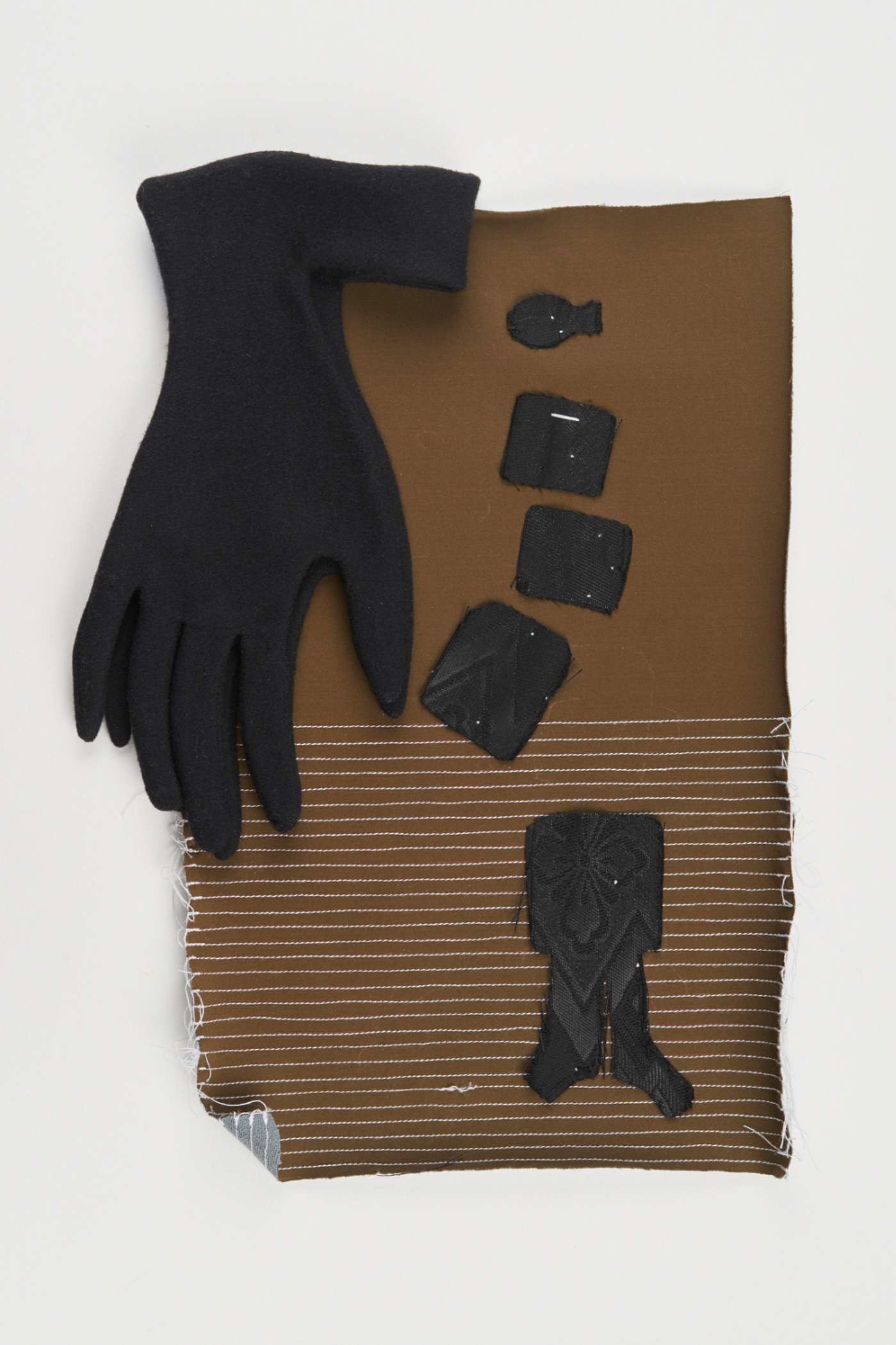
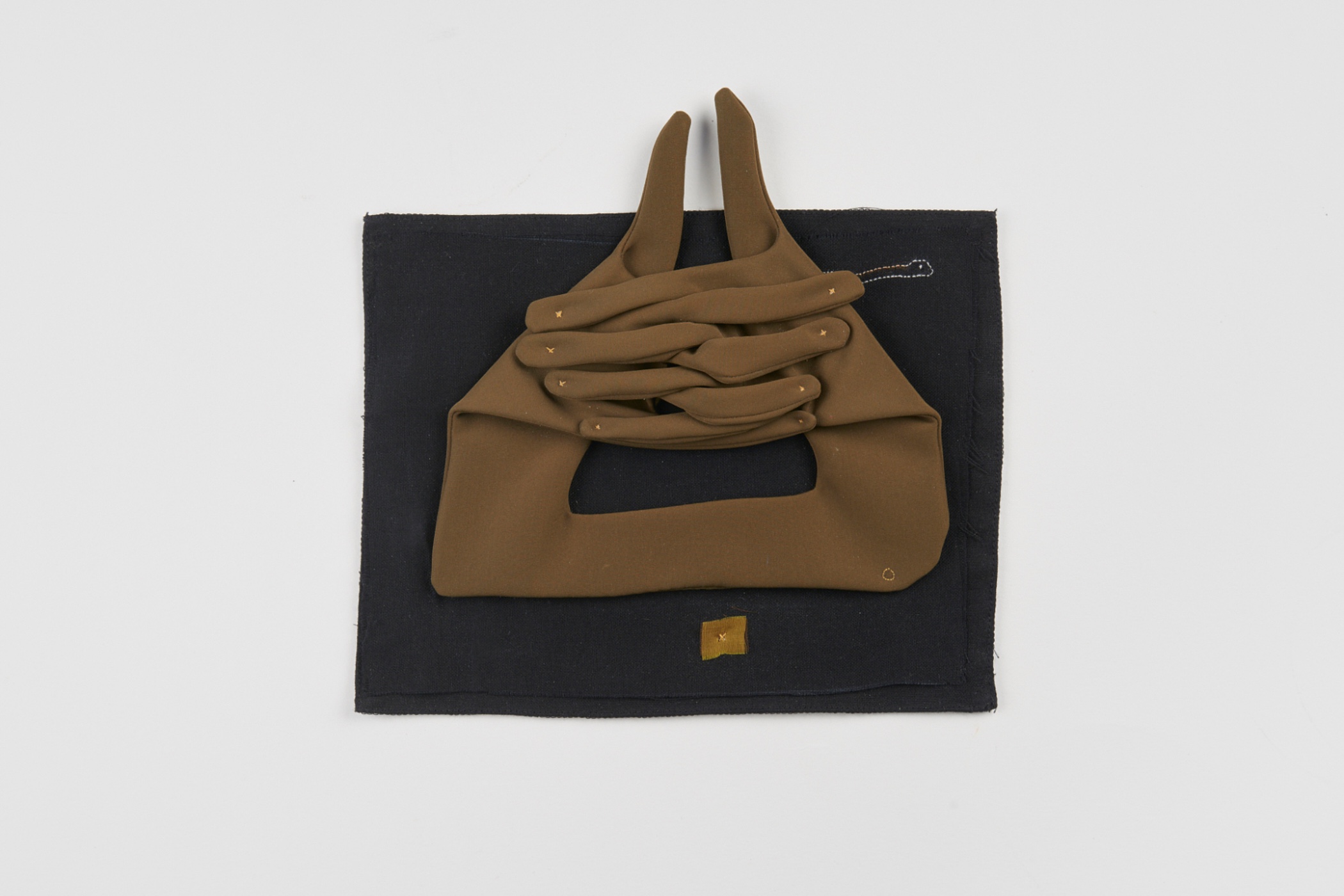
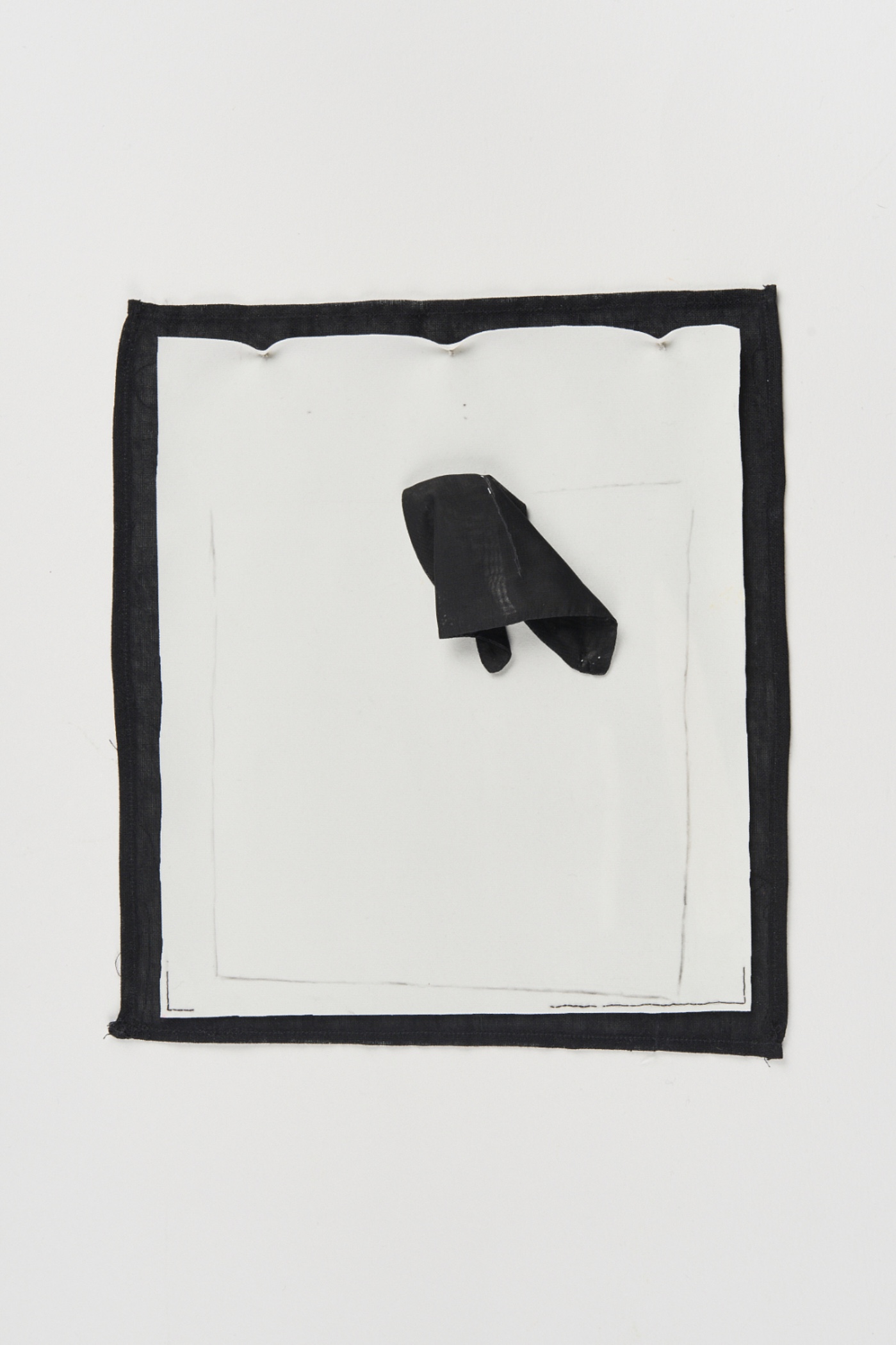
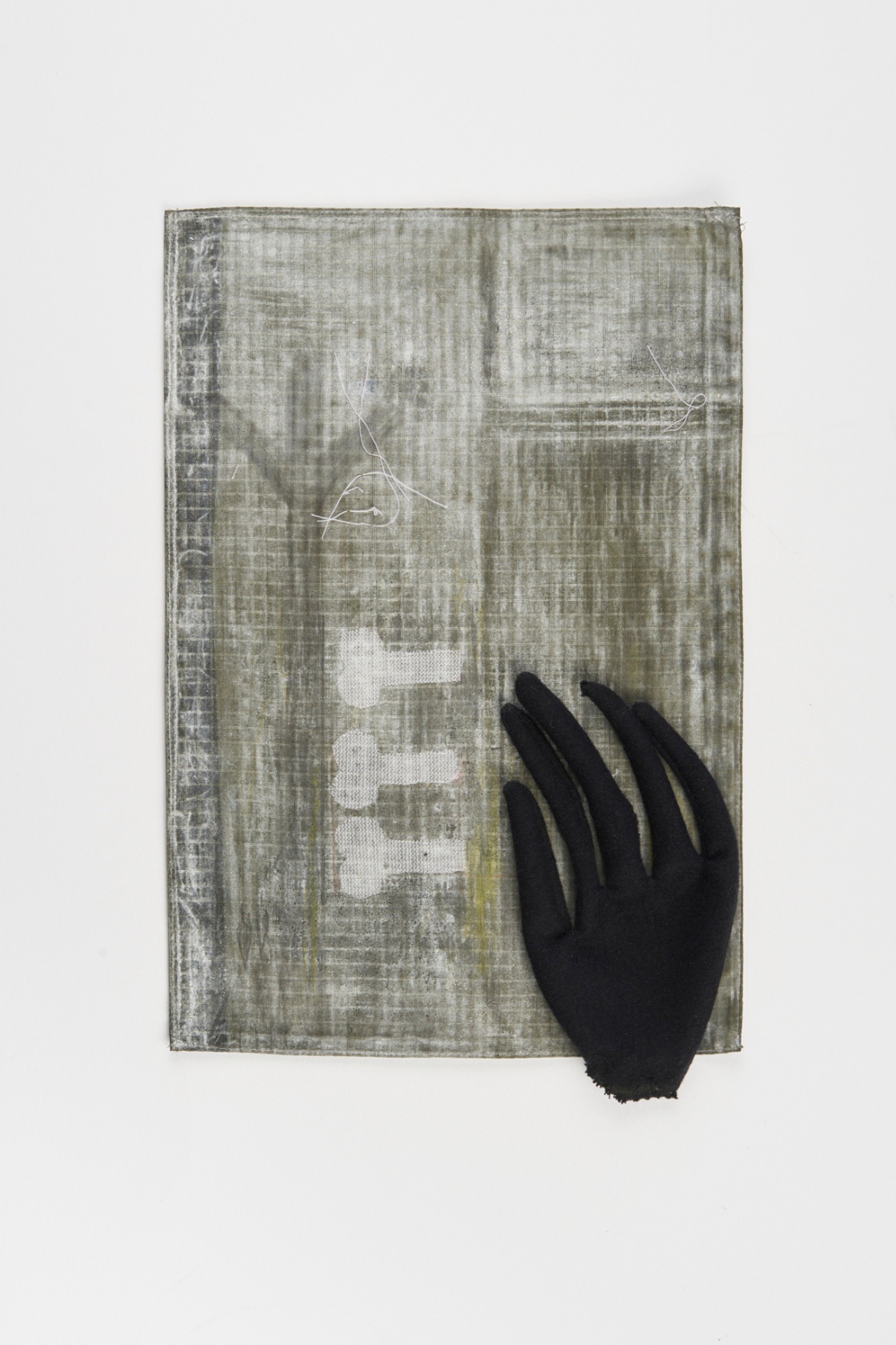
Textile pieces / Counter-archives (2018–)
Medium: Mixed media textile (e.g., embroidery, appliqué on cotton/silk), pigments, thread
Size: Variable
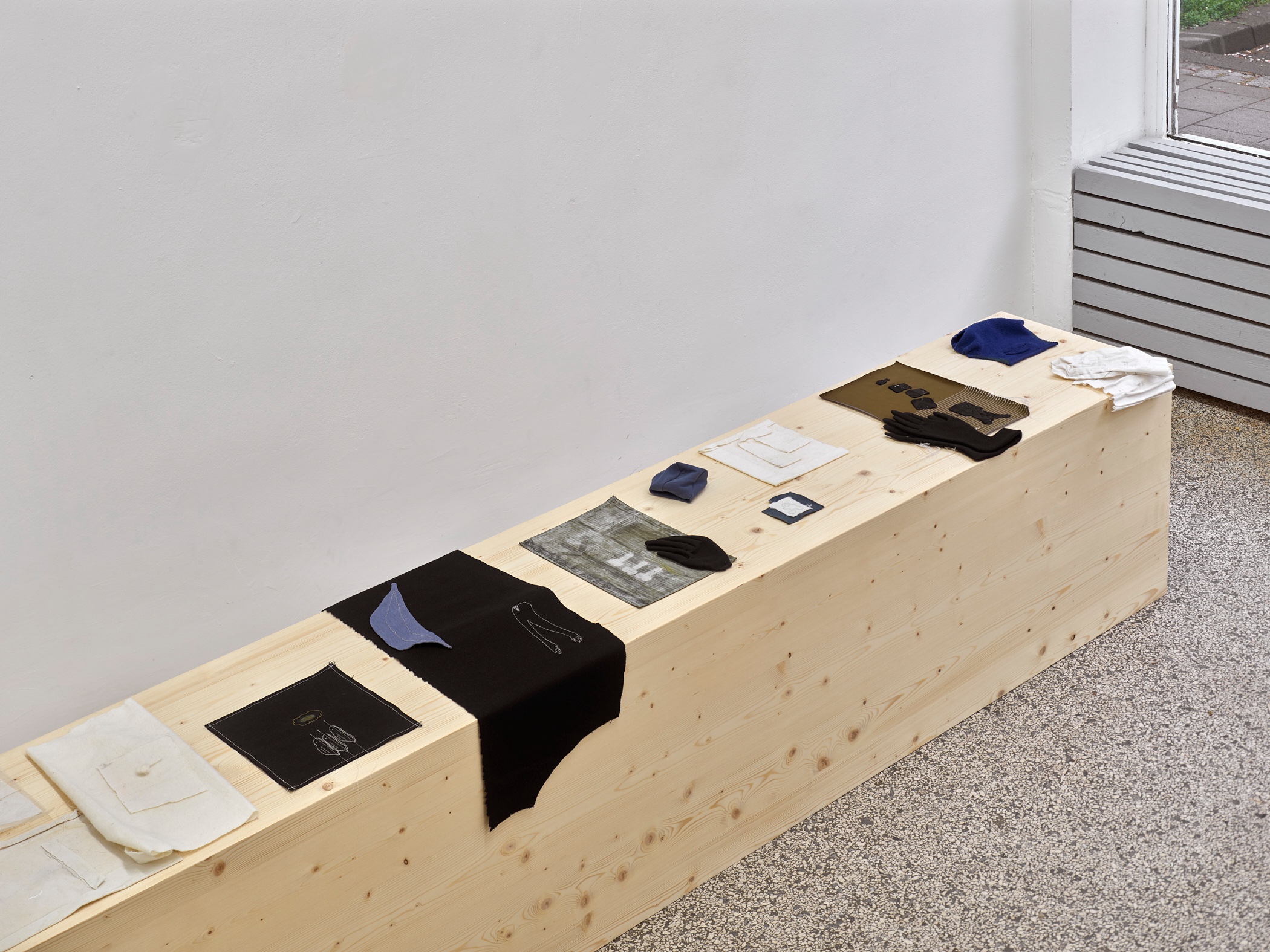
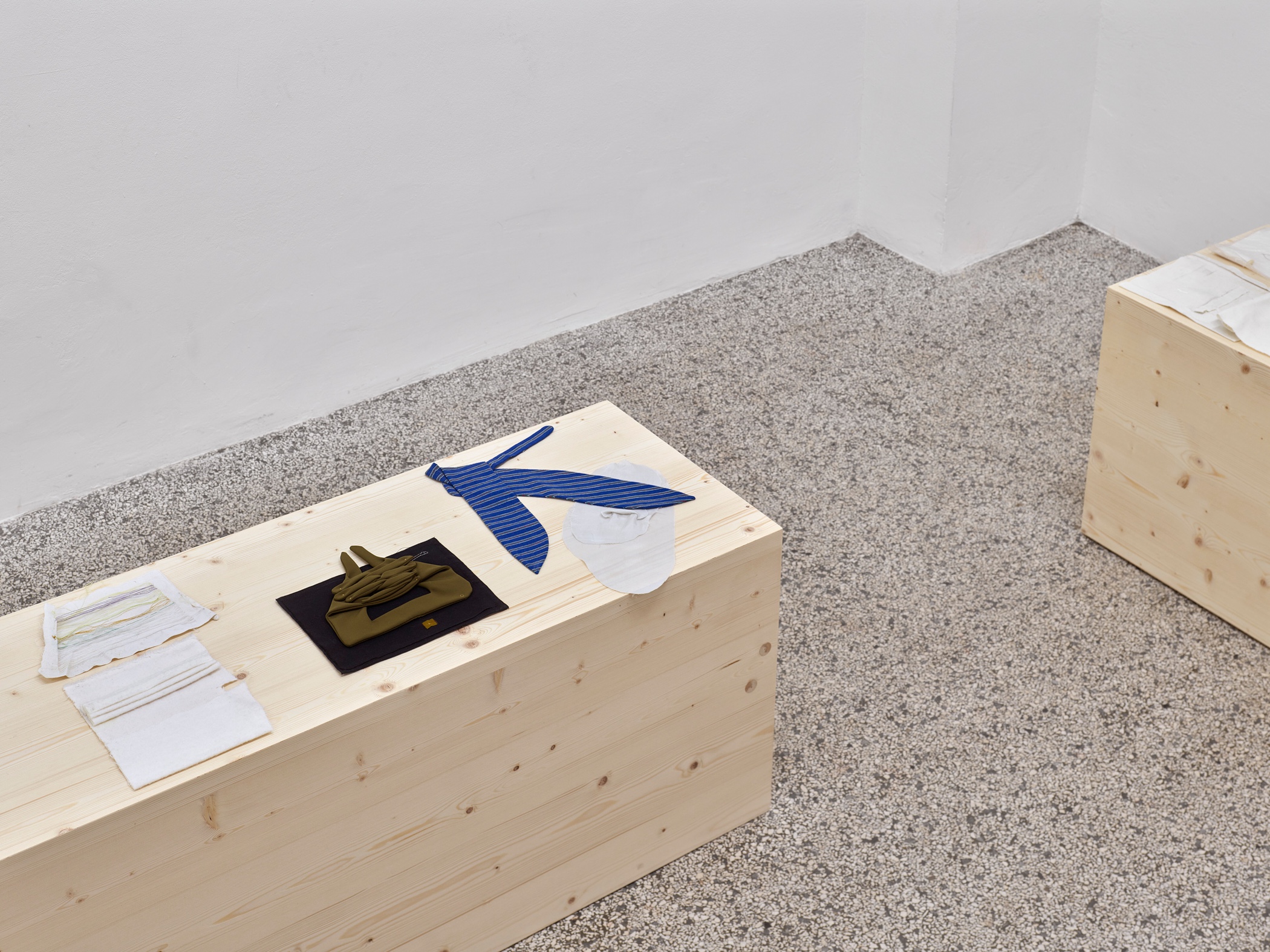
These textile pieces emerge with the gesture of a sketch, resisting a definitive assignment of meaning. They are material articulations that translate affects into surface, color, and seam.
In the current project series warum vergilbt das weiße Papier (supported by the Kunststiftung NRW, 2026), this approach expands into a speculative counter-archive. Confronted with fragmentary Tatar traditions, Epstein employs a science-fiction aesthetic to detach traditional ornamentation from a purely folkloric reading, transforming it into textile agents.
Tagebuch der bösen Taten (Diary of bad beeds)
2018 –
In parallel, the process-based work Tagebuch der bösen Taten operates as a form of self-archiving. In hand-bound books and video performances (since 2021), transgressions are recorded both in writing and visually. The use of the ritual prayer glove (Bethandschuh) marks the intersection between private repentance and public performance; it transforms the abstract concept of guilt into a visible, almost sculptural act of self-reflection.
Distant Call (2021)
Installation in the Bloom Exhibition Space, Düsseldorf
Curated by Jisue Byun
Medium: Textiles, television, wall-mountable output device
Size: Variable
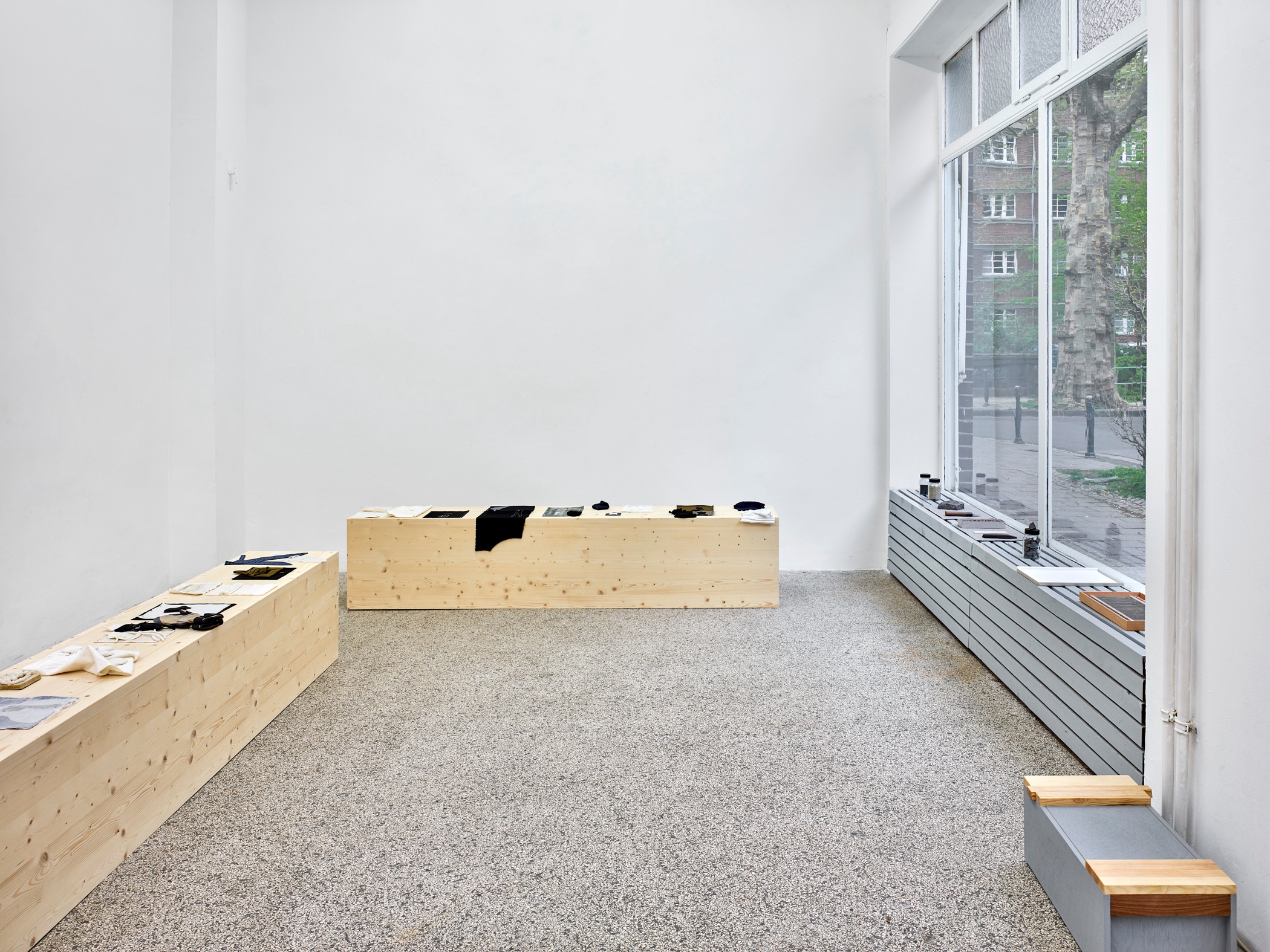
Under the extraordinary circumstances of the 2021 lockdown, a duo exhibition with the artist Jürgen Krause was organized in the BLOOM exhibition space in Düsseldorf. Programmatically titled DISTANT CALL, the show reflects the experience of distance in form and content, while simultaneously creating a space—despite pandemic-related restrictions—where art and culture can be experienced again.
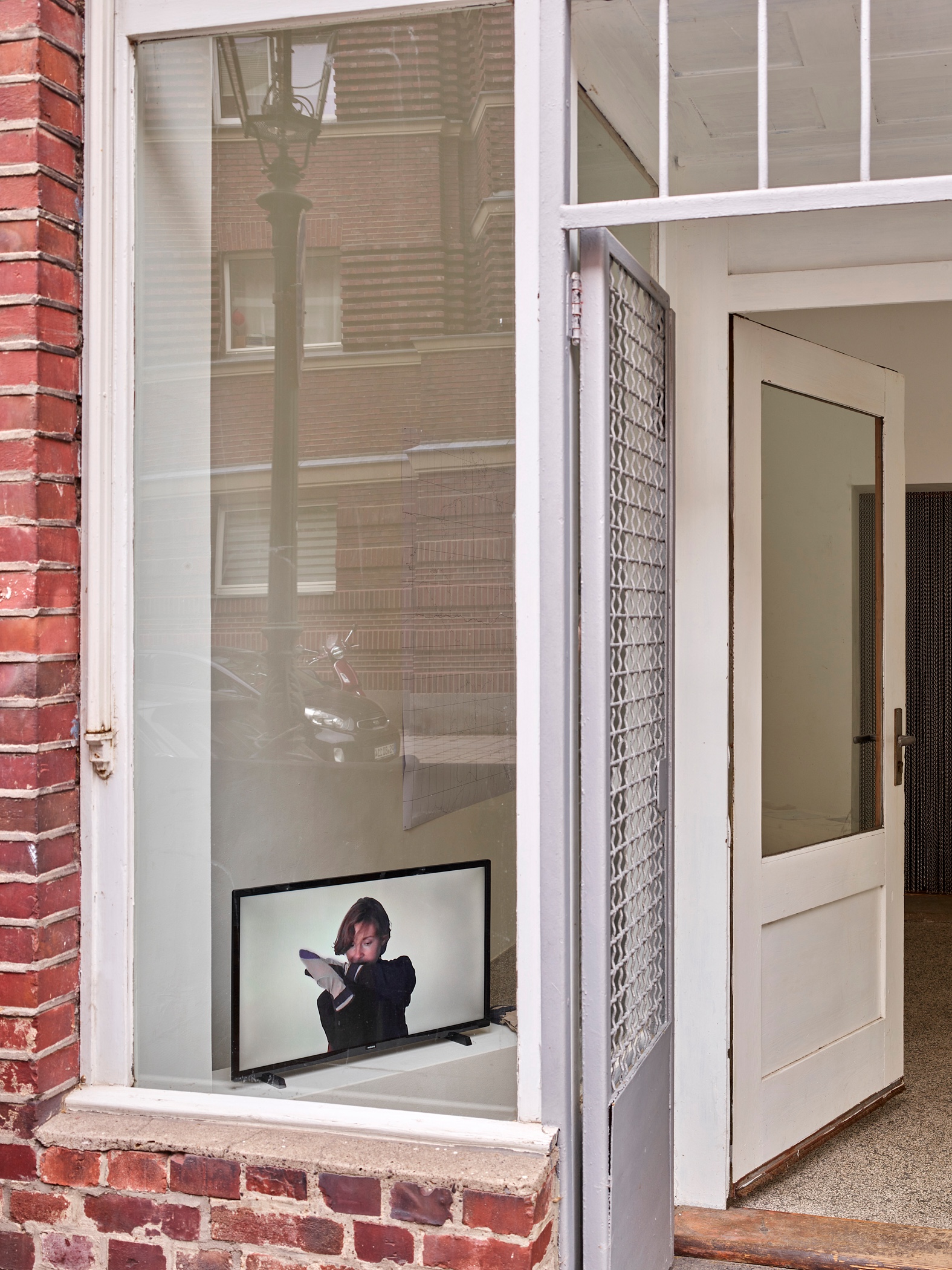
In the shop window, the video performance Tagebuch der bösen Taten 19 I (Diary of bad deeds 19 I) is running on a screen: A speaker reads from chapters of the diary of bad deeds. The sound, captured via a contact microphone on the windowpane, can be heard like a whisper on the sidewalk. After every secret confession, the video images show the artist—an act of additional penance—putting on her Bet-Handschuh (Prayer Glove). This custom-made functional garment encloses the hands in a praying posture and can only be put on with the aid of the mouth.
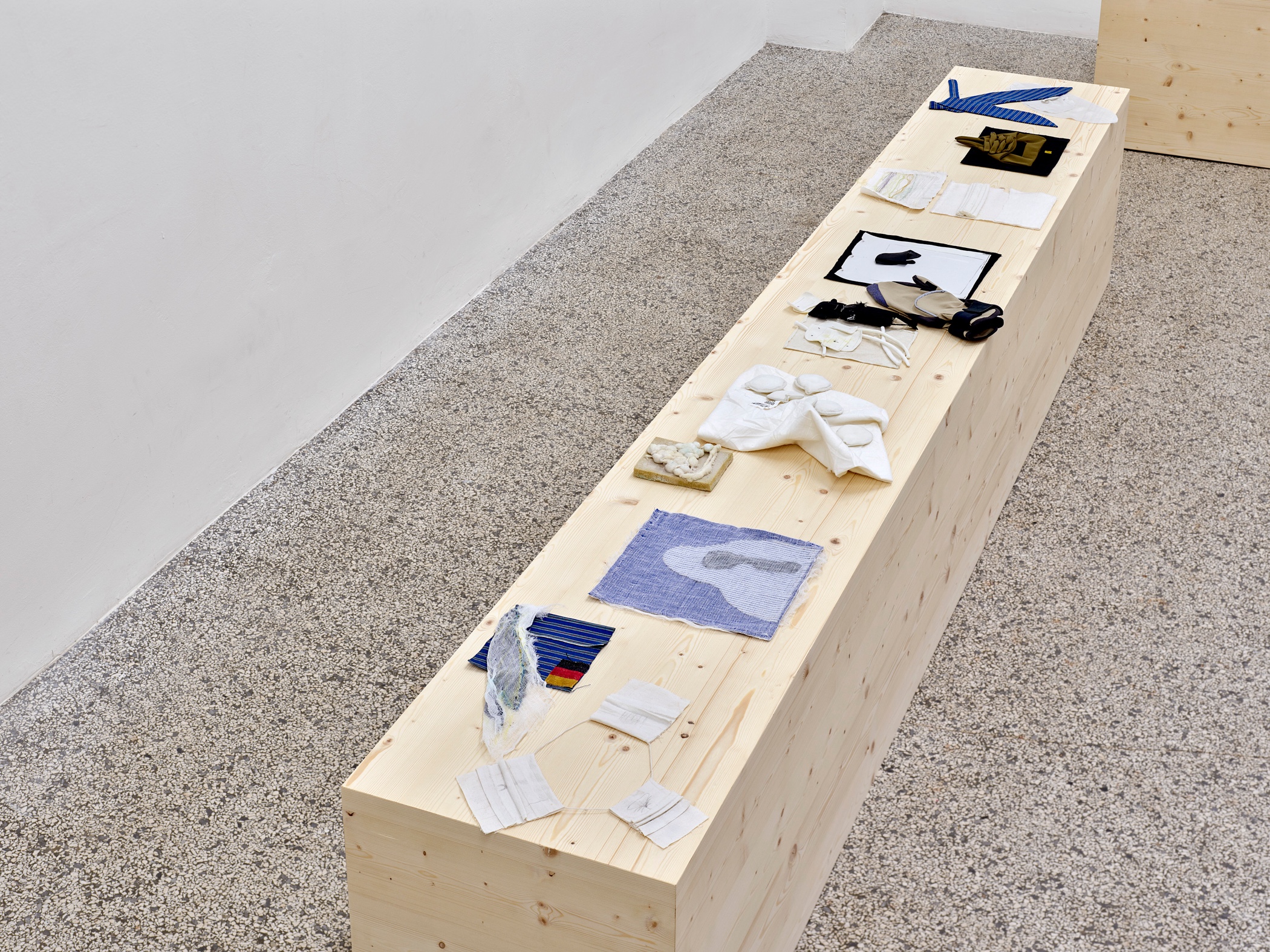
Two models of the Prayer Glove are positioned as artifacts in the exhibition space, thus functioning as a link between the performance and the series of Textile Pieces, which were visible on a linear wooden pedestal in the center of the room.
Image 1-6 Textile pieces, 2023
Photos by Felix Adam
Image 7-11 Installation view
Textile pieces, Diary of bad deeds 19 I and Prayer Glove
Gallery BLOOM Düsseldorf, 2021
Photos by Achim Kukulies
© VG Bild-Kunst, Bonn